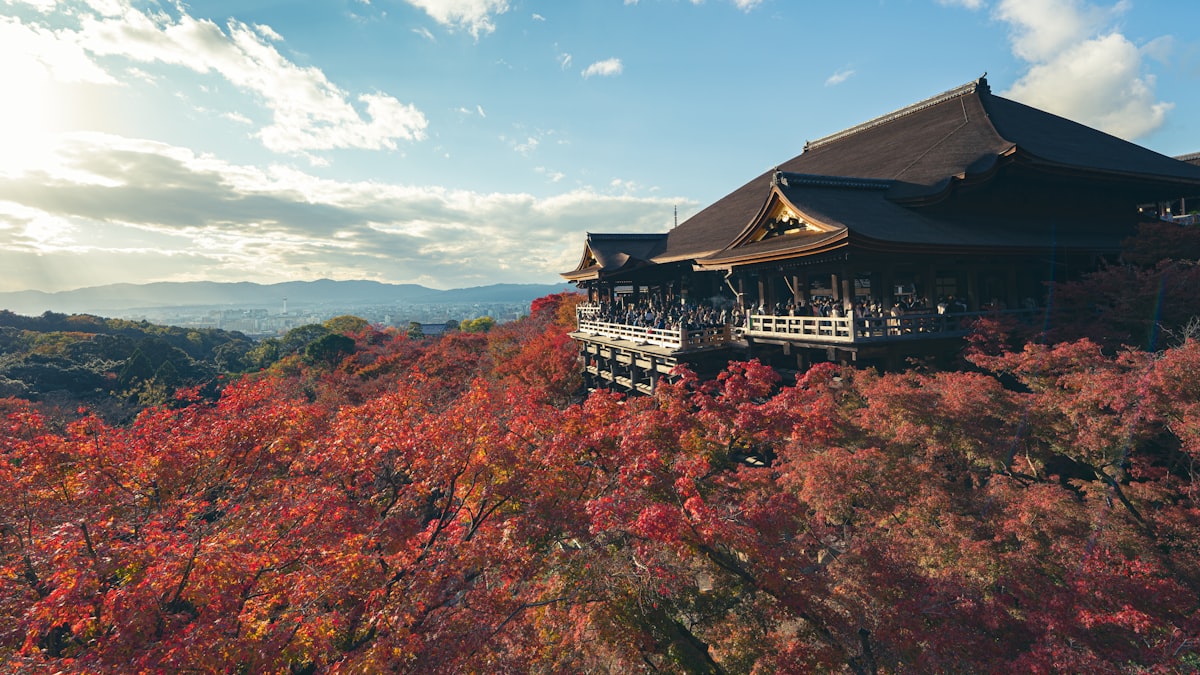
Japan’s autumn foliage (koyo) rivals its cherry blossoms — fiery maples, golden ginkgo, and temples framed in red. Here’s when and where to catch the colors.
When does it happen?
- Hokkaido: from mid/late September.
- Tokyo, Kyoto & central Japan: mid-November to early December (peak).
- Southern Japan: late November into December.
Colors move north-to-south and high-to-low elevation. Follow the annual koyo forecast as your trip nears — timing shifts each year with the weather. See best time to visit.
Best places for autumn colors
- Kyoto — temples like Tofuku-ji, Eikan-do, and Arashiyama are stunning; see Kyoto guide.
- Nikko — mountains, waterfalls, and shrines north of Tokyo.
- Hakone & Mt. Fuji area — colors with Fuji views.
- Kamikochi & the Japan Alps — alpine autumn near Takayama.
- Tokyo — Rikugien and the Meiji Jingu Gaien ginkgo avenue.
Don’t-miss experiences
- Evening light-ups at Kyoto temples — magical after dark.
- Momiji-gari (maple viewing) walks and mountain ropeways.
- Seasonal sweets and chestnut (kuri) treats.
Planning tips
- Autumn is peak season — book hotels and a ryokan early.
- Weekends at famous temples get crowded; go early morning.
- Bring layers — mountain mornings are cold. Check the packing list.
Prefer pink? Compare with our cherry blossom guide, and slot autumn into the 7-day itinerary.
What things cost
- Most autumn foliage viewing is free — temple grounds and public parks rarely charge extra for the season, though a handful of famous Kyoto temples add a modest JPY 300-600 fee for special evening illumination events.
- Ropeway and cable car rides to elevated viewpoints (like those near Hakone or in the Japan Alps) run JPY 1,500-3,000 round-trip and are often the easiest way to see a wide swath of color without a long hike.
- Autumn is peak-season pricing for hotels and ryokan in famous foliage areas, often on par with or exceeding cherry blossom season rates — booking 2-3 months ahead for well-known spots is standard practice, not overcautious.
Common mistakes to avoid
- Planning a trip around a fixed date without checking the yearly koyo forecast — peak color shifts by 1-3 weeks year to year depending on temperature patterns; if your dates are flexible at all, checking forecasts 2-3 weeks out before finalizing your itinerary improves your odds significantly.
- Only planning for Kyoto — while famous, Kyoto’s temple gardens get extremely crowded in peak color weeks; Nikko, the Japan Alps, and Tokyo’s own parks (Rikugien, Meiji Jingu Gaien) offer excellent color with meaningfully smaller crowds.
- Underestimating temperature swings — mountain and highland viewing spots can be 10-15°C colder than nearby cities at the same time of year; pack real layers, not just a light jacket.
Chasing color across the country
Because color moves from north to south and high to low elevation over about two months, a longer trip can genuinely chase peak foliage across multiple regions — starting in Hokkaido or the Japan Alps in late September/October and finishing in Kyoto or southern Japan in early December, turning a single season into a much longer travel window than cherry blossom season allows.
Pairing foliage with seasonal food
Autumn in Japan is also a major food season — chestnuts, sweet potato, matsutake mushrooms, and Japan’s famous fruit season (grapes, pears, early mandarins) all peak alongside the leaves, so building in a food-focused stop (a depachika food hall or a rural farm stand) rounds out a foliage-focused trip nicely.