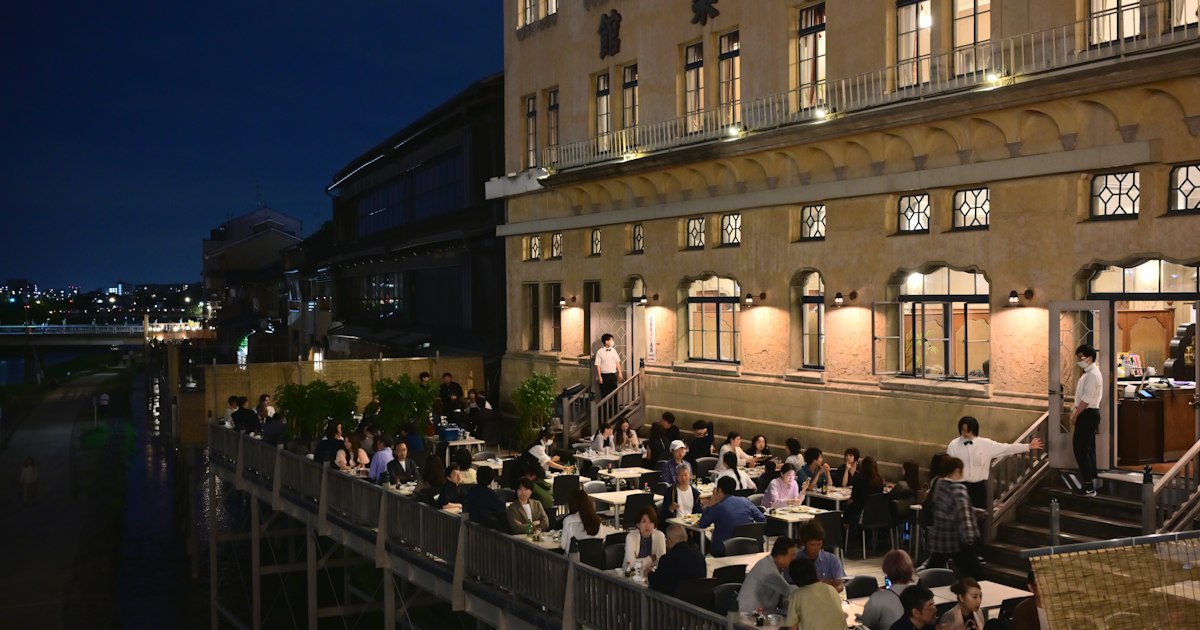
Every June, Kyoto builds itself a second set of dining rooms — wooden platforms suspended just above the water, where the temperature drops a few degrees and the sound of the river replaces the air conditioning. This is kawadoko (川床), and for visitors who book one correctly, it’s one of the most memorable meals in Japan. For those who show up without a reservation in late July expecting a table, it’s one of the most frustrating. Here’s how the system actually works.
What kawadoko actually is
Kawadoko literally means “river floor.” Restaurants build raised wooden decks over or directly beside a river and serve meals on them from late spring through early autumn, when Kyoto’s basin-trapped summer heat becomes genuinely oppressive. The idea isn’t just scenery — it’s thermoregulation. Moving air off flowing water is noticeably cooler than a street-level dining room, which is why the custom developed in the first place, centuries before anyone had air conditioning to compete with.
There are two distinct kawadoko experiences in the Kyoto area, and mixing them up is the single most common planning mistake:
- Kamogawa yuka — terraces built off restaurants along the Kamo River, mostly between Shijo and Nijo, on the Kiyamachi/Pontocho side. Urban, walkable, lantern-lit at night.
- Kibune (Kifune) kawadoko — platforms built low over a narrow mountain river in Sakyo-ku, north of the city near Kurama. Rural, shaded by trees, much cooler, and the one people mean when they show you a photo of a platform built right over flowing water with your feet almost at river level.
Kibune: the iconic version, and how to get there
Kibune is a single short street of ryotei (traditional restaurants) lining the Kibune River, and it’s the destination most “kawadoko Kyoto” photos are taken from. It runs roughly from Kawai Bridge up to Kifune Shrine and is reachable by:
- Eizan Railway (Kurama Line) from Demachiyanagi Station to Kibuneguchi Station — about 25-27 minutes, roughly ¥470 one way.
- From Kibuneguchi, either a Kyoto Bus (about 4 minutes, ¥170-ish) or a 20-25 minute uphill walk along the river to the restaurant row.
The most accessible and tourist-friendly spot here is Hirobun, known for nagashi somen — cold noodles sent sliding down a bamboo flume that’s built into the platform itself, so you catch them with chopsticks as they pass. A bowl runs about ¥1,300-1,500 and no reservation is needed for this casual noodle service, though you should expect a queue on weekend afternoons. Hirobun also serves a fuller kawadoko kaiseki lunch/dinner that does require booking.
The formal kaiseki ryotei along the same street are a different budget tier: multi-course river-platform dinners in Kibune typically run ¥15,000-30,000+ per person, and many require reservations by phone, often in Japanese, sometimes weeks ahead for peak summer weekends. If you don’t speak Japanese, ask your hotel concierge to call for you — this is standard practice and nobody will think it strange.
Kamogawa yuka: the easier, more affordable option
If Kibune’s logistics or prices feel like too much, the Kamo River terraces inside the city are far simpler. Dozens of restaurants along Kiyamachi-dori and Pontocho put up riverside decks from May through September, ranging from casual izakaya with beer and yakitori (roughly ¥3,000-6,000 per person) to proper kaiseki restaurants (¥8,000-20,000+). These are a short walk from Gion-Shijo or Kawaramachi stations, so there’s no bus or mountain road involved — you can simply walk the riverside street in the early evening and see which terraces have availability, though for dinner on a Friday or Saturday in July or August, walking in without a booking is a gamble.
A smaller, quieter cluster of riverside platforms also exists at Takao, further northwest near Jingo-ji temple, built over the Kiyotaki River. It’s less crowded than Kibune and worth considering if you want the cool-platform experience without the queue.
When the season runs
Kawadoko is strictly seasonal — the platforms are physically installed and removed each year.
- Kibune: generally May 1 to around September 30, though exact dates vary slightly by restaurant and by water levels that year.
- Kamogawa yuka: similar window, roughly May through September, with some restaurants starting a little later in May.
The sweet spot for comfort is June and September: warm enough to enjoy the breeze off the water, but short of the brutal humidity of late July and August, when even a riverside platform only takes the edge off the heat rather than eliminating it. If you’re booking specifically for the cooling effect rather than the novelty, June evenings and early September are the better bet than mid-August.
How to actually book a table
Reservation norms differ sharply between the two areas:
- Kibune ryotei: phone reservations are standard, often required days to weeks in advance for summer weekends. Some upscale properties take bookings through hotel concierges or Japanese restaurant-reservation platforms rather than direct English-language booking.
- Kamogawa yuka restaurants: many now take online reservations in English through their own websites or mainstream reservation apps, and walk-ins are realistic on weekday evenings, though not guaranteed on weekends.
- Hirobun’s nagashi somen: no booking, but arrive before noon or expect a 30-60 minute wait during peak summer.
Whichever you choose, confirm the cancellation policy when you book — many kaiseki ryotei charge a cancellation fee inside 24-48 hours, and rain doesn’t automatically cancel a reservation since most platforms have retractable roofs or awnings.
What to order and what to wear
Summer kawadoko menus lean into seasonal Kyoto specialties: hamo (pike conger eel), ayu (sweetfish), and cold somen are menu staples specifically because they’re considered refreshing in the heat. If you’re an adventurous eater already curious about unusual Japanese seafood, a kaiseki kawadoko dinner is a good place to encounter dishes in the same spirit as shirako — seasonal, texture-forward ingredients that don’t always travel to tourist-focused restaurants. Lighter kaiseki courses may also include konnyaku or shirataki prepared simply, as a palate-cleansing course between richer dishes.
Dress code at casual terraces is anything goes, but at a formal Kibune ryotei, smart-casual is the norm — leave flip-flops and tank tops for Hirobun’s noodle counter, not the kaiseki room next door. And whichever platform you choose, bring mosquito repellent: you’re dining a few feet above moving water in a Japanese summer, and the restaurants’ citronella coils only go so far.
Common mistakes to avoid
- Confusing Kibune with Kamogawa. Search results and photos blend them constantly; confirm which one your booking is actually for.
- Booking a weekend dinner in August with no backup plan. Popular Kibune ryotei can be fully booked a month out for peak dates.
- Assuming the platforms stay open past September. Arrive in October expecting kawadoko and you’ll find the decks already dismantled for the year.
- Underestimating the walk from Kibuneguchi Station. It’s manageable but uphill and shadeless in parts — budget extra time if you’re going in the day’s remaining heat before sunset.
Done right, a kawadoko dinner is less about the specific dish and more about the setting — water moving a few feet below your table, the city’s heat held at bay for a couple of hours. Book ahead, pick the right river for your budget and patience, and aim for June or September if comfort matters more to you than peak-summer bragging rights.