Photo by Elist Nguyen on Unsplash
Getting invited to a Japanese wedding as a foreign visitor is a genuine honor, and it usually comes with a flicker of panic about what to wear. Japanese wedding dress codes are more codified than Western ones—certain colors are off-limits, certain necklines are frowned on, and showing up underdressed (or overdressed) stands out immediately. The good news is that the rules are learnable in about ten minutes, and if you didn’t pack formalwear, every major city has rental shops that can outfit you same-day or with a few days’ notice.
The Dress Code Basics: What “Formal” Means in Japan
Japanese wedding invitations almost always specify a dress code, most commonly “準礼装” (semi-formal) or occasionally “正礼装” (formal). As a guest, semi-formal is the default expectation unless you’re part of the wedding party. For men, that means a dark suit—black, charcoal, or navy—with a white dress shirt and a tie that isn’t black (solid black ties are reserved for funerals in Japan). For women, it means a knee-length or longer dress or two-piece set, often with a matching jacket (called a “ワンピース+ジャケット” set), in a color that isn’t white.
Receptions typically run 1.5 to 2.5 hours and are held in hotel banquet halls or dedicated wedding venues, so the dress code applies for the whole event, not just the ceremony. If the invitation says “インフォーマル” (informal), you still want business-smart attire—jeans and sneakers are never appropriate.
Women’s Guest Attire: Kimono, Dresses, and the Rules
A cocktail-length or long dress with sleeves (or a shawl/jacket covering bare shoulders) is the safest choice. Avoid pure white, ivory, or anything that could compete with the bride, who may wear both a white Western dress and a colored kimono over the course of the day. Avoid all-black outfits too, since they read as mourning wear unless broken up with a colorful accessory; Japan’s visual rules around black formalwear are strict enough that we’ve written a full guide to the opposite occasion in Mofuku: What to Wear (and Where to Rent It) If You’re Invited to a Japanese Funeral—worth skimming so you understand why black-on-black at a wedding feels off to Japanese guests.
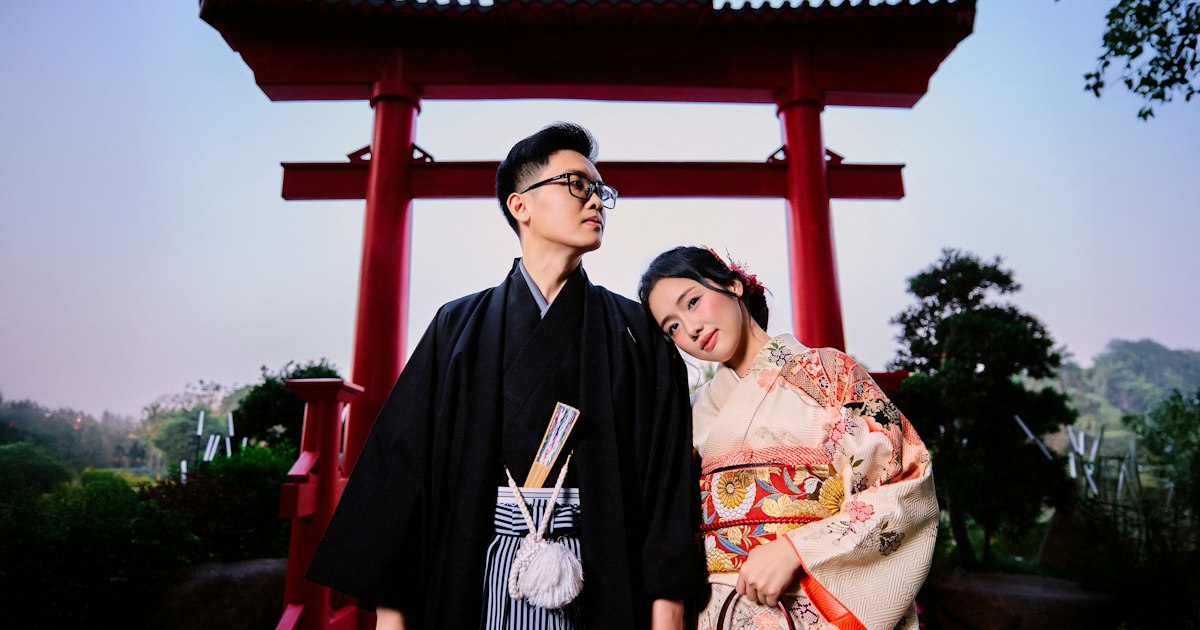
Some foreign guests choose to wear a visiting kimono (“訪問着,” hōmongi) or a formal kimono, which is always well received and often photographed. Rental shops can dress you fully, including the obi sash and undergarments, in about 45–60 minutes. Keep jewelry modest—no tiaras, veils, or anything bridal-coded—and bring a small clutch rather than a tote.
Men’s Guest Attire: Suits and Formal Rules
A two- or three-piece suit in black, charcoal, or dark navy is standard, paired with a white shirt and a silver, white, or softly patterned tie—never solid black or solid white, both of which are funeral associations. Black leather shoes and dark socks round it out; no boots, sneakers, or loafers without socks. If the invitation specifies “正礼装” (full formal), men sometimes wear a black morning coat or tailcoat rented specifically for the occasion, though this is more common for close family than general guests.
If you’re traveling light and didn’t bring a suit, our guide to Rental Formal Wear in Japan: Where Travelers Can Rent a Suit or Dress for a Wedding or Event covers nationwide chains that will fit you, alter hems on the spot, and have you out the door same-day.
Colors and Patterns to Avoid
- White or ivory: reserved for the bride, in any guest garment.
- All black: reads as mourning unless paired with a bright accessory, scarf, or corsage.
- Animal prints or leopard patterns: considered unlucky at celebratory events by many older guests.
- Bare shoulders, short hemlines, or deep necklines: fine at a Western wedding, but considered too casual for a Japanese banquet hall.
- Open-toe sandals: avoid, even in summer; closed-toe heels or flats are expected.
Where to Rent Wedding Guest Attire (and What It Costs)
Rental is common even among Japanese guests who don’t own formalwear, so shops are set up for quick turnaround:
- Budget (¥5,000–¥10,000): Chains like Kashiyama or local dress rental shops near major stations rent a dress-and-jacket set or a basic men’s suit, shirt, and tie package. Most locations are open roughly 11:00–20:00 and can fit you within the hour.
- Mid-range (¥10,000–¥20,000): Department store rental counters (Isetan, Takashimaya) offer higher-quality dresses and suits with free alterations and same-day pickup; some require booking a day ahead during peak wedding season.
- Splurge (¥25,000–¥50,000+): Kimono rental studios in Kyoto and Tokyo provide full hōmongi sets with professional dressing and hair styling—worth it if you want photos to remember. Book at least 3–4 days ahead since dressers need to be scheduled.
Most rental shops cluster near major train stations, so plan to pick up your outfit the morning of the wedding or the evening before, then store the return in a convenience locker if you’re sightseeing in between.
Shrine vs. Banquet Weddings: Dress Differences
If you’re invited to the ceremony itself at a Shinto shrine (rather than just the reception), dress slightly more conservatively—long sleeves, higher necklines, and quieter colors, since you’ll be standing close to the altar during a religious ritual. Many couples who marry at a shrine also write their wishes on an ema plaque afterward; if you’re curious about that custom, see our guide to Ema: Japan’s Wooden Wish Plaques and How to Write One at a Shrine. The banquet that follows is where the dress code loosens slightly and accessories can be brighter.
Common Mistakes Foreign Guests Make
- Bringing cash in a plain envelope. The monetary gift (goshūgi, typically ¥30,000 for a friend) must go in a special printed envelope (shūgi-bukkuro) tied with a gold-and-silver cord, sold at convenience stores and stationery shops—never hand over bare cash.
- Wearing new, uncreased white gloves or carrying a white bag, which visually echoes the bridal party.
- Assuming a casual “garden party” invite means casual dress. Unless explicitly stated as a casual party, default to semi-formal.
- Not checking the season. Spring (March–May) and autumn (September–November) are Japan’s peak wedding months, so rental shops book up faster—reserve attire 3–5 days ahead if you’re traveling during those windows.
With the dress code understood and a rental shop lined up, attending a Japanese wedding becomes one of the more memorable parts of a trip—you’ll be dressed appropriately, photographed happily, and treated as the honored guest you are.