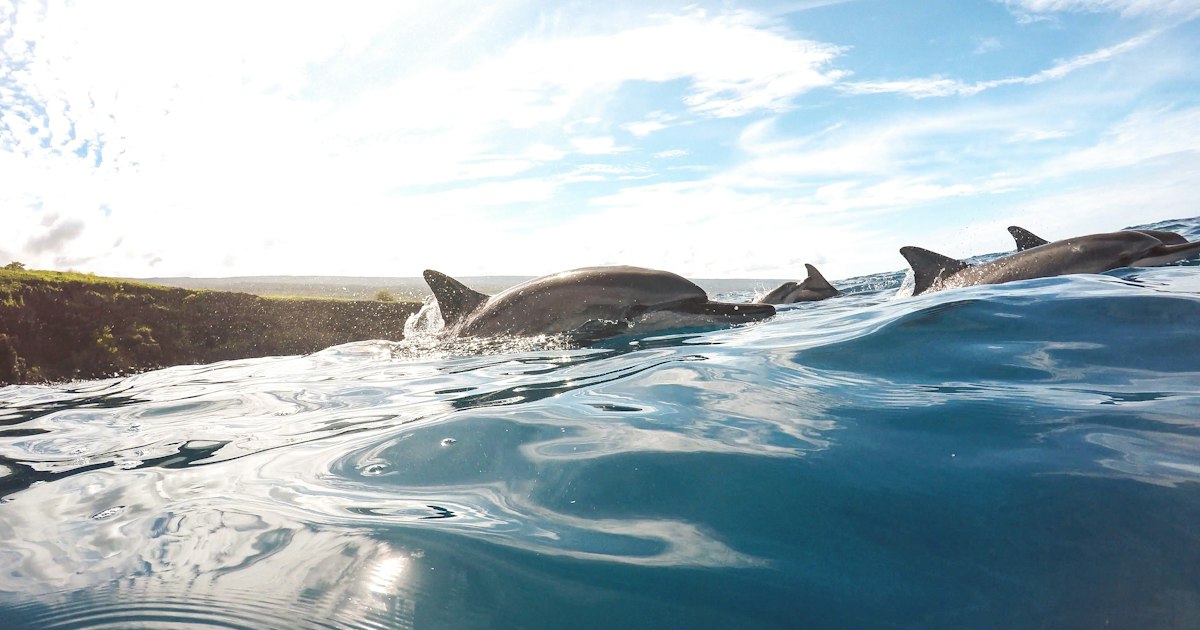
Photo by Anna Hill on Unsplash
Most people are stunned to learn that Tokyo Prefecture includes an island where you can swim alongside wild dolphins in open ocean. Mikurajima, part of the Izu Islands chain about 200 km south of central Tokyo, is home to a resident pod of Indo-Pacific bottlenose dolphins that has lived in its coastal waters for generations. It’s not a theme park and there’s no pool — you get in a boat, follow a licensed guide into the sea, and the dolphins decide whether to come close. Getting there is half the adventure, and the island runs on rules that first-time visitors often get wrong, so it’s worth planning carefully.
What Makes Mikurajima Different
Mikurajima is tiny — roughly 4 km across, with a year-round population of around 300 people — and almost entirely volcanic cliff, with no natural harbor. Boats dock at a small jetty, and in rough seas, arriving passengers and cargo are sometimes hoisted off the ship by crane rather than walking down a gangway. That same exposure to open ocean is exactly why the dolphins stick around: the water is deep, clear, and undisturbed by the kind of large-scale tourism infrastructure you’d find elsewhere. The entire island operates under a conservation-minded permit system for dolphin encounters, capping the number of swimmers per day to avoid stressing the pod.
How to Get There
There are two realistic ways in, and both require buffer time in your itinerary because cancellations are common.
- Overnight ferry (most common): Tokai Kisen operates the ferry from Takeshiba Pier in Tokyo, departing in the evening (around 22:30) and arriving at Mikurajima roughly 6.5–7 hours later, in the early morning (around 05:00–06:30), after first calling at Oshima, Toshima, Niijima, and Shikinejima. A one-way 2nd-class ticket to Mikurajima runs approximately ¥7,500–8,000; 2nd-class reserved and 1st-class cabins cost more. Because there’s no proper harbor, landing is cancelled if swells are too high — this happens often enough in winter and during typhoon season that locals treat a missed landing as routine, not a disaster.
- Fly to Hachijojima, then helicopter: ANA flies from Haneda to Hachijojima in about 55 minutes. From there, Toho Air Service runs a small nine-seat helicopter shuttle to Mikurajima (and other Izu Islands) in under 20 minutes, for roughly ¥10,000–13,000 one way. Seats are limited and need to be booked well in advance; this route is faster and skips the overnight ferry, but it’s pricier and still weather-dependent.
Whichever way you go, build at least one extra day into your trip on both ends. Island-hopping travelers used to checking ferry timetables for the Seto Inland Sea, as covered in our guide to island-to-island ferry hopping beyond Naoshima, will recognize the pattern — but Mikurajima’s exposed Pacific location makes it considerably more weather-sensitive than the sheltered Inland Sea routes.
The Dolphin Swim System: Not First-Come, First-Served
You cannot just show up and jump in. Dolphin swims are run exclusively through a small number of village-licensed guide operators, and demand is managed through a lottery (kuji) system because only a limited number of swimmers are permitted on the water per session to protect the dolphins from overcrowding. In peak season (July–August especially), getting a slot can mean entering the lottery and waiting, sometimes for several days, until a spot opens up — which is another reason not to plan a tight one-night visit.
All first-time participants must attend a mandatory orientation lecture, usually run by the village tourism association, covering dolphin safety rules (no touching, no chasing, keeping a respectful distance, proper fin-kick technique to avoid startling them) before you’re allowed in the water. Expect to pay roughly ¥10,000–13,000 per boat session for the guide and boat fee, plus wetsuit and fin rental if you don’t bring your own (typically a few thousand yen extra). Sessions run for a set window and sightings are never guaranteed — guides radio each other when the pod is spotted, and multiple boats may convene on the same group of dolphins.
Best Season and Timing
Dolphin swim tours generally operate from around April/May through October, when sea conditions are calmer and water temperatures are tolerable in a wetsuit; the island effectively closes the swim program over winter due to rough Pacific swells and cold water. Early morning departures are standard, since winds tend to pick up by midday. July and August are the most popular (and most booked-up) months; late spring and early autumn offer a reasonable compromise between decent weather and thinner crowds, though you should still expect some days lost to cancelled boats.
Where to Stay and What It Costs
There are no hotels on Mikurajima — accommodation is almost entirely family-run minshuku (guesthouses), many of which are directly tied to a dolphin-guide business, so booking lodging and a swim slot often happens through the same contact. Expect to pay roughly ¥8,000–12,000 per person per night including two meals (dinner and breakfast), which is standard minshuku pricing for a remote Japanese island. Budget travelers should know that cash is still the norm for many small operators; mid-range visitors get essentially the same experience since there’s no luxury tier here — the “splurge” on Mikurajima is really about booking more swim sessions or extra nights to improve your odds of good dolphin encounters, not nicer rooms.
Common Mistakes to Avoid
- Booking a tight 2-day trip from Tokyo. Between ferry cancellations, the lottery wait, and the fact that the return boat may also be delayed by swell, a Mikurajima trip needs flexibility — 3–4 days minimum is realistic.
- Not booking lodging and swim guides together, and early. Guesthouse rooms and swim slots are limited and often arranged through the same small operators; contacting them (often only by phone, and only in Japanese) weeks ahead is standard practice.
- Skipping travel insurance or refundable tickets. Given how often sailings are cancelled for weather, locking into non-refundable onward transport (like a shinkansen connection the same day) is a common and avoidable mistake.
- Expecting a guaranteed dolphin encounter. These are wild animals in open ocean, not a marine park — some sessions see nothing. Multiple sessions across a few days significantly raise your odds.
Once you’re back on the mainland after a few salty, unpredictable days on Mikurajima, Tokyo’s comforts hit differently — it’s a good excuse to unwind with a skyline view at one of Tokyo’s rooftop bars before you fly home. For travelers who enjoy this kind of boat-dependent, off-the-beaten-path logistics puzzle, it’s worth noting that mainland Japan has similar systems worth exploring, including car ferries in the Seto Inland Sea for island-hopping with your own vehicle.