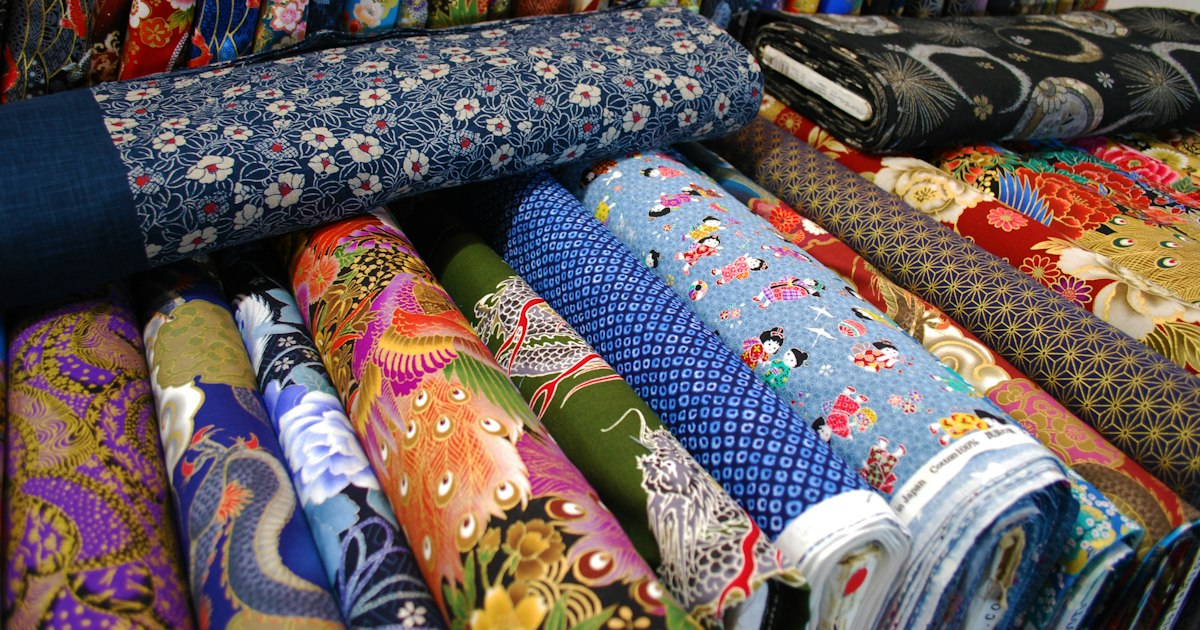
Photo by Chiara Guercio on Unsplash
Most visitors to Nagoya see the castle, eat hitsumabushi, and move on to Kyoto or Takayama without ever hearing the word “shibori.” That’s a shame, because twenty minutes south of downtown Nagoya sits Arimatsu, a former post town on the old Tokaido highway that has been hand-dyeing cloth into intricate puckered patterns since the early 1600s. It’s one of the few places in Japan where you can watch the craft being made, buy it directly from the families who make it, and walk a genuinely intact Edo-period streetscape — all in a half-day trip that most tourists skip entirely.
What Is Shibori, and Why Arimatsu?
Shibori is a resist-dyeing technique: cloth is bound, stitched, folded, or clamped before dipping it in indigo or other dyes, so the bound sections resist color and leave behind a pattern once untied. It’s often compared to tie-dye, but Japanese shibori is far more technical — some traditional Arimatsu patterns require binding thousands of individual pinches of cloth by hand, a single bolt sometimes taking months to complete.
Arimatsu became the center of this craft almost by accident. The village was built up around 1608–1610 to give travelers on the Tokaido a reason to stop between Nagoya and the next post town. A local samurai-turned-merchant started dyeing cotton cloth with tie-dye patterns to sell as souvenirs to passing travelers, and the technique spread through the town’s merchant families, who guarded their specific binding methods as trade secrets passed down within households. Today there are over 100 documented traditional shibori techniques, and Arimatsu still produces roughly 90% of Japan’s shibori output.
Walking the Old Tokaido Townscape
What makes Arimatsu worth the trip beyond the textiles is the town itself. The main street, Arimatsu-dori, is lined with two-story Edo and Meiji-era merchant houses — dark lattice windows, tiled roofs, and namako-kabe (checkered plaster) storehouse walls — recognized as a nationally designated Important Preservation District for Groups of Traditional Buildings. Unlike heavily reconstructed “historic streets” elsewhere, much of this is original fabric, not rebuilt for tourists, which also means some shops keep irregular hours and close without notice on slow weekdays.
Give yourself 45–90 minutes just to walk the street, since several of the old houses — including the Takeda Karo House, a former shibori wholesaler’s residence — are open for free viewing of their courtyards and storefronts on at least a partial basis. If you enjoy this kind of preserved streetscape, it’s a similar flavor (on a smaller, quieter scale) to Kanazawa’s Higashi Chaya District, minus the crowds and ticketed teahouses.
Getting There from Nagoya
Arimatsu is simple to reach and makes an easy half-day add-on to a Nagoya stop. Take the Meitetsu Nagoya Main Line from Meitetsu Nagoya Station toward Toyohashi or Gifu; local and some semi-express trains stop at Arimatsu Station, about 20–25 minutes away, for a one-way fare of roughly ¥360. From the station, the old townscape is a 5-minute walk. There’s no need for a rental car, which makes this an easy slot to fill if you’re also weighing day-trip logistics elsewhere in the country, like whether to self-drive at all (see international driving permit rules for Japan if you’re continuing on to a region where you will need to drive).
Where to See and Buy Shibori
Start at the Arimatsu-Narumi Shibori Kaikan (有松・鳴海絞会館), a small museum right off the main street. Entry is around ¥300 for adults, and it’s typically open 9:30–17:00, closed Mondays and around New Year’s — worth confirming the day of, since hours at small regional museums shift. Inside, you’ll usually find an elderly craftsperson demonstrating hand-binding techniques at a work table, plus a ground-floor shop selling finished goods at fixed prices, which is the easiest single stop if you only have an hour.
Beyond the museum, several working shibori wholesalers along Arimatsu-dori sell directly out of their storefronts — look for shops with bolts of dyed cotton hanging in the entrance. These family businesses sell everything from small cotton goods to full yukata, and because they’re also the dyers, prices are often better than department store shibori and you can ask questions about which binding technique produced which pattern. Cash is still king in many of these smaller, older shops, so it’s worth reading up on currency exchange options in Japan before you go if you’re not carrying much yen.
Best Time to Visit: The Shibori Festival
If your dates are flexible, aim for the Arimatsu Shibori Matsuri, held annually over a weekend in early June (first full weekend, typically). The whole street turns into an open-air market — wholesalers set out seconds and overstock at discounted prices, craftspeople run hands-on binding demonstrations you can try yourself, and several of the old merchant houses open their interiors to the public for the only time all year. It’s by far the liveliest and most rewarding time to visit, but also the most crowded, so arrive early morning if you want to browse shops without a crowd. Outside festival weekend, Arimatsu is quiet nearly to the point of sleepy — which has its own appeal if you want an unhurried, photograph-friendly walk.
What to Buy, and What It Costs
- Budget (¥500–¥2,500): Tenugui (cotton hand towels) and small coasters or pouches are the easiest, most packable souvenirs, usually ¥800–¥1,500 for a hand-dyed tenugui.
- Mid-range (¥5,000–¥20,000): Scarves, cotton yukata-weight fabric by the meter, and small furoshiki wrapping cloths fall in this range, along with simpler ready-made yukata.
- Splurge (¥30,000+): A fully hand-bound, hand-dyed cotton yukata using a labor-intensive technique like hon-hitta can run well into the tens of thousands of yen, reflecting the hundreds of hours of hand-binding involved — ask the shop which specific technique was used, since pricing varies enormously by method, not just by fabric.
If textile and craft shopping is your travel focus generally, this pairs well with other maker-direct shopping guides, like finding hanging scroll specialists (hyogu-ya), or browsing the revival of other traditional work-wear fabrics in our guide to monpe farmer pants, which share some of the same indigo-dyed cotton aesthetic.
Common Mistakes to Avoid
The biggest mistake is treating Arimatsu as a quick photo stop and skipping the museum or shop interiors — the patterns and techniques only become interesting once someone explains how a given piece was bound, and that context is mostly inside, not on the street. Second, don’t assume every shop takes cards; many of the smaller family-run storefronts are cash-only or card-minimum, so bring yen. Third, if you’re visiting on a weekday outside festival season, call ahead or check that specific shops are open — several keep reduced hours or close for a day mid-week, and there’s no single tourist information center smoothing that over. Finally, resist buying the first tenugui you see at the station-adjacent museum shop without first walking the full street; prices and selection vary house to house, and the wholesalers further down Arimatsu-dori often have better value on the same quality of hand-dyed cotton.