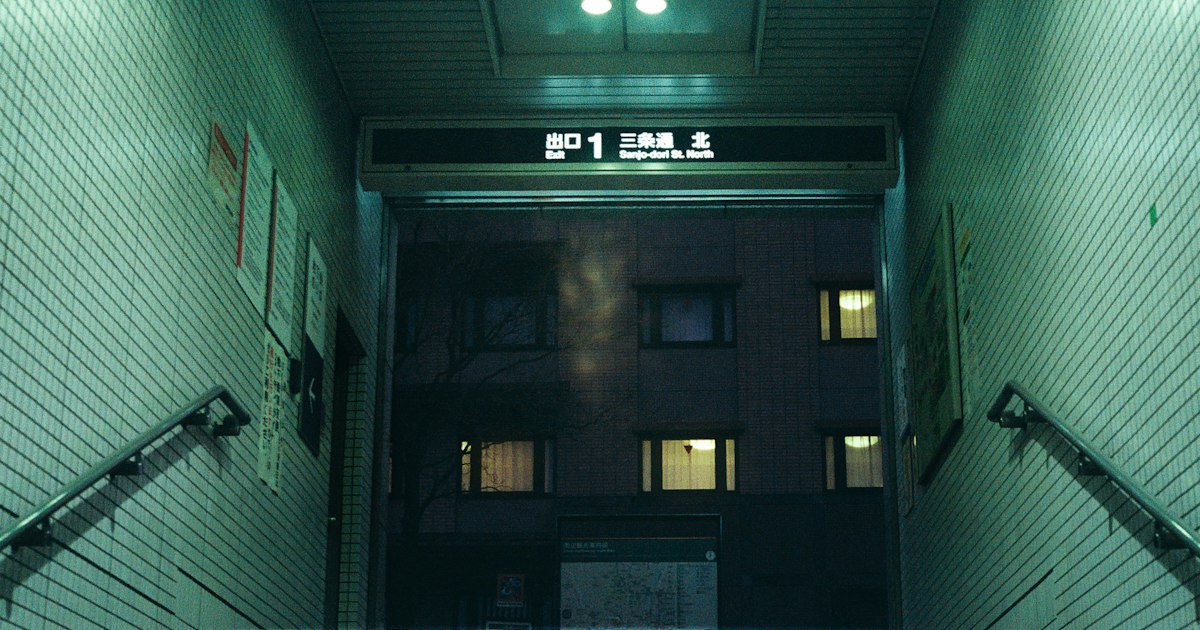
Photo by Misha Lee on Unsplash
Japan’s trains have a reputation for running like clockwork — which makes it easy to forget that most of them stop entirely for several hours overnight. The last train of the night, known as shuden (終電), can leave anywhere from 11:30pm to just after midnight depending on the line, the station, and even the direction you’re traveling. Miss it, and you’re not waiting ten minutes for the next one — you’re waiting until sometime after 5am. Here’s how shuden actually works and what to do if you cut it too close.
Why Shuden Catches Visitors Off Guard
In most major cities, public transit either runs 24 hours or tapers off gradually. Japan’s system does neither. Trains run on a tight, published schedule all day, then stop almost completely between roughly 1am and 5am — even in Tokyo, even on the Yamanote Line. There’s no late-night reduced service filling the gap; the rails are simply quiet. This catches a lot of travelers off guard, especially after a long dinner, a few drinks in an izakaya, or a late finish at a show, because the city itself doesn’t feel like it’s shutting down — the trains do.
How Last Train Times Actually Work
The term “last train” is a little misleading, because there isn’t one last train per line — there’s a last train for every station, and it’s not the same time everywhere. A train might depart its starting terminal at 12:40am, but if you’re boarding five stops down the line, your realistic last train is the last one that reaches your home station, which could be the 11:50pm departure, not the 12:40am one.
Direction matters too. The last train heading into central Tokyo from the suburbs often runs later than the last train heading back out, since more people are commuting home than toward downtown at that hour. And if your trip requires a transfer, the real constraint is whichever connecting line stops running earliest — you can catch the last train on line A only to discover the last connection on line B at your transfer station already left ten minutes ago, stranding you mid-journey rather than at your final destination.
Typical Last Train Windows
These vary by exact station, but as a rough planning guide for major urban lines:
- Tokyo (JR Yamanote, Tokyo Metro, private lines): most last trains from central hubs like Shinjuku, Shibuya, and Tokyo Station depart between 12:00am and 12:45am; trains reach outer suburban stations by around 1:00–1:30am.
- Osaka (Midosuji Line, JR Osaka Loop Line): generally similar, with last departures from Umeda/Namba around midnight to 12:30am.
- Kyoto: service winds down earlier than Tokyo or Osaka — many bus and local train routes have their last departures by 11:00–11:30pm, which trips up visitors staying outside the central tourist area.
- Airport trains: the Narita Express and Keisei Skyliner to/from Narita, and the Keikyu/Tokyo Monorail to/from Haneda, typically have their last departures in the 9:30–11:00pm range — much earlier than city-center trains, since the ride is long.
If you’re mapping out a travel day that includes a Shinkansen leg, remember that bullet trains also stop overnight; the last Nozomi, Hikari, or Kodama departures from major stations are usually done by around 9–10pm, well before local last trains. If you’re unsure which service fits your itinerary, our guide to choosing the right Tokaido Shinkansen train breaks down the schedule differences.
The One Big Exception: New Year’s Eve
On the night of December 31st into January 1st, many operators — including Tokyo Metro, Toei Subway, and JR East lines like the Yamanote — run trains all night so people can do hatsumode, the first shrine visit of the new year. This is a planned, well-publicized exception rather than a regular late-night service, and it doesn’t apply on other holidays like Obon or Golden Week, so don’t assume it extends to any other date.
You Missed Shuden — Now What?
If the last train is gone, you have a few realistic options, roughly from cheapest to priciest:
- Manga kissa (internet/manga cafe): many offer an overnight “night pack,” typically ¥1,500–¥2,500 for roughly 8–10 hours, with a reclining chair, shower access at some locations, and free drinks. Budget-friendly and genuinely common among locals who miss their train.
- All-night karaoke: a free-time overnight plan at a karaoke box often runs ¥2,000–¥3,000 per person, and it’s a reasonable option if you’re with a group.
- Capsule hotel: expect roughly ¥3,000–¥6,000 for the night in a city-center location. Rooms fill up fast on weekend nights, so this isn’t guaranteed to have space at 1am.
- Taxi: the most expensive but most direct option. Tokyo taxis add a roughly 20% late-night surcharge between about 10pm and 5am on top of the metered fare, so a cross-city ride that would cost ¥2,500 by day can run ¥3,500–¥4,500 or more at night — and considerably more over long distances. A taxi is fine for a short hop home but can get painfully expensive if you’re trying to cover real distance, like getting back from an airport.
- Wait it out: many 24-hour izakaya, fast-food spots, and convenience stores let you sit until the first train (shihatsu, 始発) resumes, usually around 4:30–5:00am. If you’re near your destination anyway, this costs nothing but time.
Common Mistakes That Strand Travelers
- Assuming “last train” means the same time for every line. Always check the specific line and direction, not a general city-wide cutoff.
- Not accounting for transfers. A multi-line trip is only as late as its earliest-closing connection — check the whole route, not just your boarding station.
- Underestimating airport access cutoffs. Flying into Narita or Haneda late at night and assuming you can just train into the city is one of the most common planning errors; verify the last airport train before you land.
- Forgetting Kyoto’s earlier curfew. Visitors used to Tokyo’s later trains sometimes get caught out by Kyoto’s buses and trains winding down well before 11:30pm.
Checking Shuden Times Before You Go Out
Japanese transit apps like Google Maps, Yahoo! Japan’s Norikae Annai, and Jorudan all show accurate last-train times for a specific route if you search a late-evening departure — the app will simply tell you if no train exists after a certain time. It’s worth checking this on your phone before you leave the bar or restaurant, not after. If language is a barrier when asking station staff about late connections, a tool like Pocketalk or another translation gadget can help clarify exactly which train is your last option. And if trains are done for the night but you still need to cover real distance between cities, it’s worth remembering Japan also runs overnight highway buses — Basta Shinjuku is the major hub for these, and a reasonable backup when the rails have gone quiet for the night.