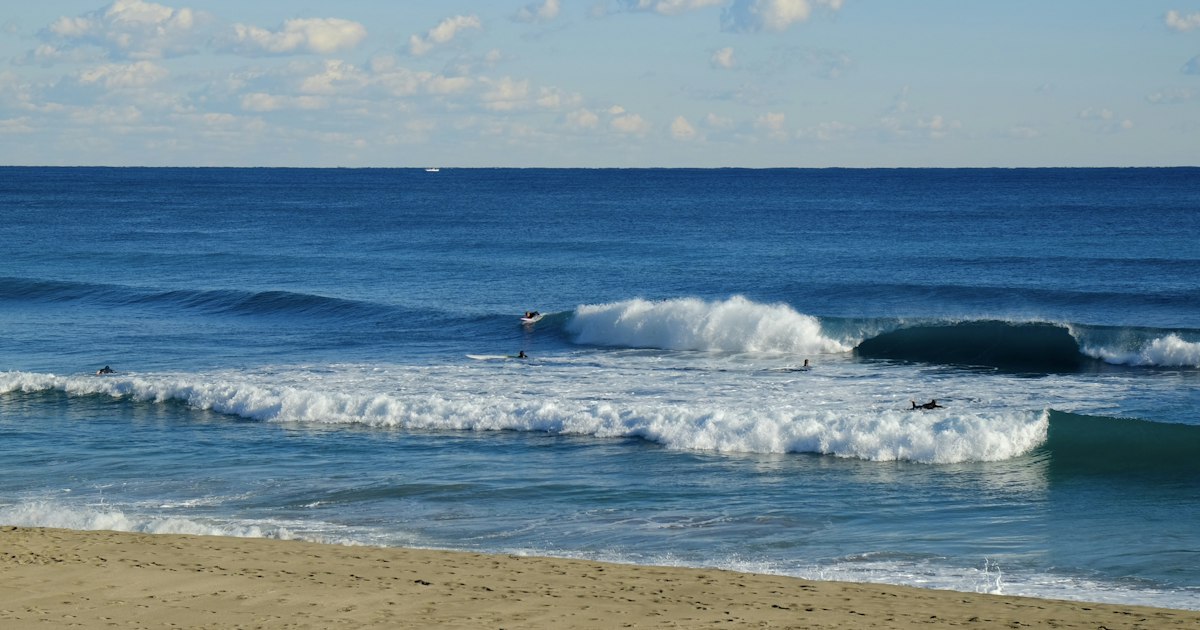
Japan isn’t the first place most people picture when they think “surf trip,” but it has one of the most developed surf cultures in Asia — complete with 24-hour surf shops, Olympic-grade waves, and a weekend exodus of Tokyoites hauling boards onto commuter trains. Whether you’ve got a free Saturday in Tokyo or you’re planning a dedicated surf-focused leg of your trip, here’s where to go, what it costs, and how not to embarrass yourself in the lineup.
Shonan: Tokyo’s Home Beach
Shonan is the stretch of Kanagawa coastline running from Kamakura through Enoshima to Chigasaki, and it’s the default answer to “where do Tokyo people surf.” It’s close, it’s social, and it’s where most Japanese surfers learned to stand up.
- Getting there: From Tokyo or Shinjuku, take the Odakyu Line or JR Shonan-Shinjuku Line to Fujisawa, then switch to the Enoden Line for Enoshima or Kamakura-area beaches. Total travel time is about 60–75 minutes, and a round trip costs roughly ¥1,500–2,000. If you’re using a Suica or Pasmo card for the whole trip, don’t forget you can get the deposit and remaining balance back before you fly home — see Getting Your Suica or Pasmo Deposit Refunded Before You Leave Japan for how.
- Best spots: Kugenuma Beach and Chigasaki (near the famous Southern Beach torii gate photo spot) are beginner-friendly beach breaks with gentle, consistent swell. Enoshima’s eastern side gets slightly more punch and is popular with the local shortboard crowd.
- Crowds: Heavy on weekends, especially summer mornings before work. Go on a weekday if you can, or get in the water by 6:30am.
Chiba’s Pacific Coast: Where the Olympic Waves Are
Cross Tokyo Bay east and you hit Chiba’s Pacific-facing coastline, which generally gets bigger, more consistent swell than Shonan because it faces open ocean rather than being tucked inside Sagami Bay.
- Tsurigasaki Beach (Shidashita), Ichinomiya: This was the official surfing venue for the Tokyo 2020 Olympics, and it remains one of Japan’s best-known breaks — a reliable beach break that handles both small and sizeable swell well. It’s about 90 minutes from Tokyo Station via the JR Wakashio limited express to Oamishirasato, then a short taxi or bus ride.
- Kamogawa and Isumi: Further south along the same coast, these towns have a laid-back, surf-town feel with a higher concentration of surf shops and cafes catering to boarders. Worth a stay if you want more than a day trip — and if you’re hunting beach-town souvenirs between sessions, this stretch of coast is also good territory for the kind of finds covered in Ukidama: Hunting Vintage Glass Fishing Floats at Japan’s Coastal Flea Markets.
Beyond Tokyo: Shikoku and Miyazaki for Serious Surf
If you’ve got more than a weekend and actually want quality waves rather than convenience, two regions stand out to Japanese surfers themselves:
- Kaifu and Ikumi, Tokushima (Shikoku): Often called Japan’s surfing capital, the Kaifu river-mouth break has hosted international competitions and produces long, shapely waves that outclass most of the Tokyo-area spots. It’s remote — plan on flying into Tokushima Airport and renting a car, since bus service to the coast is sparse.
- Miyazaki, Kyushu: Warmer water year-round and a lower-key vibe, Miyazaki’s beaches (especially around Kisakihama) draw surfers escaping Honshu’s cold winter swells. It’s a longer trip from Tokyo (flight plus local transport), but worth it if winter is your only window.
Rental Shops, Lessons and What It Costs
You don’t need to bring your own board. Surf shops cluster around every beach mentioned above, and most offer the same basic menu:
- Board + wetsuit rental only: typically ¥3,000–5,000 for a half or full day, depending on season and board type (soft-top beginner boards are cheaper than performance shortboards).
- Beginner lesson package: a 90–120 minute group lesson with board, wetsuit, and basic instruction usually runs ¥7,000–10,000 per person. This is the better deal if it’s your first time in the water, since Japanese surf etiquette (where to sit, how beach breaks are shared) is easier to pick up with someone translating the unwritten rules.
- Splurge option: private one-on-one lessons at the bigger Shonan and Chiba schools run ¥15,000–20,000 and usually include video review of your sessions.
Shops will also rent you a wetsuit separately if you’ve brought your own board — handy since checking a board as flight luggage within Japan isn’t always cheap. After a cold-water session, a hot meal is non-negotiable; most surf towns have a teishoku counter nearby, and knowing how to order one properly (see Teishoku 101: How to Order Japan’s Set-Meal Lunch Like a Regular) will get you fed fast between sessions.
Best Season and Timing
Japan’s surf calendar is shaped by typhoons, not just sun:
- August–October: Typhoon season brings the biggest and most consistent swell to the Pacific coast (Chiba, Shikoku). Water is warm (wetsuit optional in a rash guard for many), but check typhoon tracking before you commit — some systems make conditions dangerous rather than fun, and beaches will close with red flags when that happens.
- December–February: Consistent winter swell on Honshu’s Pacific coast, but water temperature drops to around 15°C, so you’ll want a 5/3mm wetsuit, which most rental shops stock seasonally.
- March–July: Smaller, gentler waves — the best window for first-timers and anyone taking a lesson.
Common Mistakes to Avoid
- Ignoring the flags: Japanese beaches with lifeguards mark a strict swimming zone and a separate surfing zone with colored flags. Paddling out in the wrong area will get you whistled back in fast.
- Skipping jellyfish season: Kurage (jellyfish) become a real problem on many Honshu beaches from mid-summer onward; some beaches post warnings or close swimming areas entirely, though surfing is often still fine further out — ask the rental shop.
- Missing the last train home: A day trip to Shonan or Chiba is easy, but post-surf fatigue plus a few vending-machine beers can make you lose track of time. Check shuden (last train) times before you even paddle out — the rules around what happens if you miss one are covered in Last Trains in Japan: How Shuden Times Work and What Happens If You Miss One.
- Not budgeting for the après-surf izakaya round: Post-session beers and small plates are a core part of Japanese surf culture. Knowing how otoshi charges and nomihodai deals work (detailed in Izakaya Ordering 101) will save you from an awkward bill surprise.
Surfing in Japan rewards a little planning — a train schedule here, a tide check there — but the payoff is real waves, genuinely good rental infrastructure, and a surf culture that’s been building for decades, not a tourist add-on bolted onto a beach town.