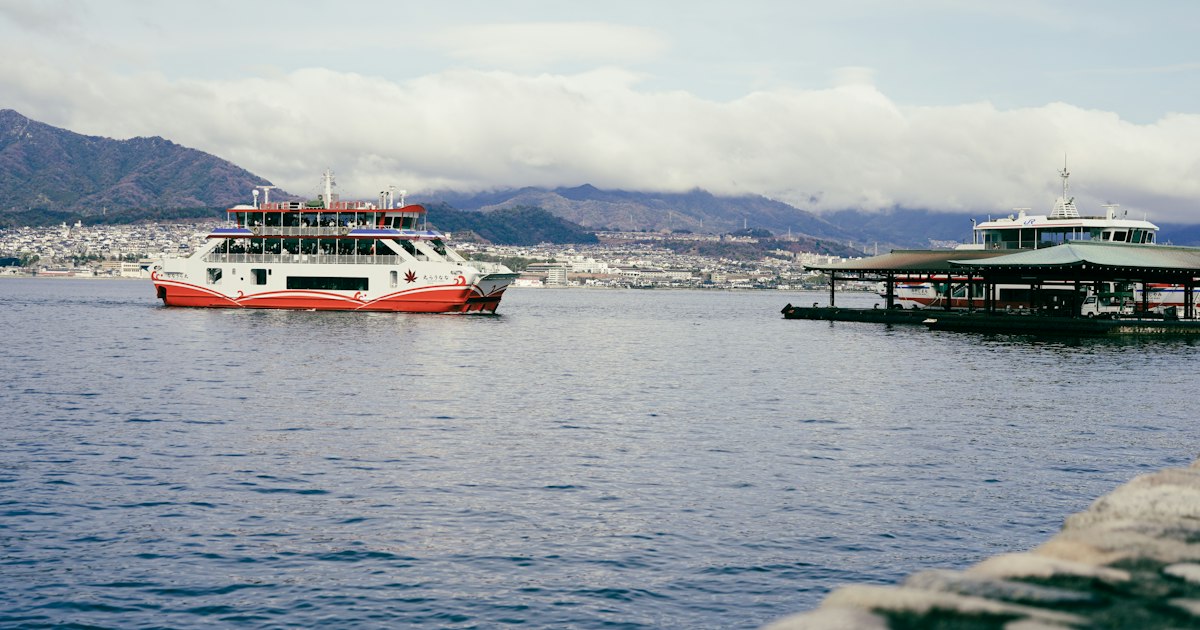
A twenty-minute boat ride from Takamatsu Port sits a pair of small islands that most first-time visitors to Shikoku never hear about — and that’s exactly their appeal. Megijima and Ogijima are quiet, walkable, and tied to one of Japan’s best-known folk tales: the story of Momotaro, the Peach Boy who sailed to “Onigashima” (Demon Island) to defeat a band of raiding oni. Megijima claims the title of the real-life Onigashima, complete with a cave built into its central mountain, while neighboring Ogijima has reinvented itself as a low-key open-air art village. Together they make an easy, inexpensive day trip from Takamatsu that pairs folklore with some genuinely good wandering.
The Momotaro Legend Behind the “Demon Islands”
In the traditional tale, Momotaro is born from a peach and grows up to lead a dog, a monkey, and a pheasant on a voyage to Onigashima to retrieve treasure stolen by oni. Takamatsu and the surrounding Kagawa region have long promoted Megijima as the geographic basis for the story, pointing to the large artificial cave carved into Mt. Washigamine as the oni’s lair. Whether or not the legend originated here specifically, the civic branding is thorough — oni statues greet you at the ferry pier, and the island’s tourism material leans fully into the theme. It’s worth knowing the story before you go; the cave and the statues make a lot more sense once you do.
Megijima: Onigashima and the Giant Oni Cave
Megijima (女木島) is the closer of the two islands and the one with the headline attraction: the Onigashima Great Cave (鬼ヶ島大洞窟), a sprawling man-made cavern near the island’s summit, decorated with oni figures and dim passageways that feel more theme-park than historic site — which is part of the fun. Entry runs around ¥500 for adults and roughly ¥300 for children, and the cave is typically open from about 8:30am to 5pm, with no fixed closed days, though it’s worth confirming hours haven’t shifted before you commit a whole afternoon to it.
The cave sits uphill from the port, about a 2km climb that takes 30–40 minutes on foot. Most visitors instead take the “Oni no Jidōsha,” a small community shuttle that times its departures to meet incoming ferries and charges around ¥500 for the round trip. It’s a tight, slightly rattly ride, but it saves your legs for exploring once you’re up top, and the summit viewpoint over the Seto Inland Sea is worth the trip on its own on a clear day.
Megijima also has a public beach a short walk from the port, popular with local families in July and August, plus a scattering of oni-themed murals and statues through the small port village. Outside of midsummer, plan for a quiet, low-facility island — bring water and snacks, since shops near the pier keep irregular hours.
Ogijima: Art-Filled Alleys and Island Cats
Ogijima (男木島) is the quieter, more atmospheric of the two. Its port is marked by “Ogijima’s Soul,” a striking white lattice structure designed by Spanish artist Jaume Plensa for the first Setouchi Triennale in 2010, its roof perforated with characters from dozens of world languages. It doubles as the ferry waiting room and a small public library, and it’s free to see and sit in at any time — a good spot to shelter if the weather turns while you wait for your boat back.
Behind the terminal, Ogijima’s village climbs a steep hillside in a genuine maze of narrow alleys and stairways, originally laid out to blunt typhoon winds. There’s no real way to get lost badly — the island is tiny — but it rewards slow wandering over any fixed route. Several of the Triennale-era art installations are permanent and tucked into the alleys and old houses, so even outside festival years there’s usually something to find. The island is also well known locally for its population of relaxed, well-fed cats that wander the lanes; it isn’t an official “cat island” like Aoshima or Tashirojima, but cat-spotting is a reliable part of the experience here.
Food options on Ogijima are limited to a handful of small cafés near the port that keep short, sometimes seasonal hours — don’t count on a sit-down lunch being available, especially outside weekends in peak season.
Getting There: Ferries from Takamatsu Port
Both islands are served by passenger ferries from Takamatsu Port, about a 10-minute walk from JR Takamatsu Station. The operator runs roughly five round trips a day in each direction, with the first boat usually leaving around 7–8am and the last return sailing from Ogijima in the late afternoon (expect it earlier, sometimes well before 5pm, especially outside summer). Fares are modest: expect somewhere around ¥400 one-way to Megijima, roughly ¥500 one-way to Ogijima, and a shorter inter-island hop between the two for a few hundred yen more. Pay at the terminal window before boarding; schedules and fares do get revised seasonally, so check the posted timetable at the port or the ferry company’s site the morning you travel rather than relying on an old printout.
A sensible itinerary is Takamatsu → Megijima in the morning, lunch or a snack break, then on to Ogijima in the afternoon, returning direct to Takamatsu before the last boat. Doing both islands properly in one day is tight but doable if you’re efficient with the Megijima cave visit.
Best Time to Visit and How to Pace the Day
Spring (April–May) and autumn (October–November) offer the most comfortable walking weather for Ogijima’s uphill alleys and Megijima’s climb to the cave. Summer brings swimmable water at Megi Beach but also heat that makes the cave walk or shuttle ride more appealing than the stairs. If a Setouchi Triennale edition is running — these take place in scattered sessions across spring, summer, and autumn in select years — both islands get noticeably busier and some additional temporary artworks appear, but the core attractions (the cave, Ogijima’s Soul, the permanent installations) are there year-round regardless.
If rain is a possibility, Takamatsu’s covered Marugame-machi shopping arcade near the station is a good place to shelter before your ferry; if you get caught without an umbrella, borrowing one through iKasa’s umbrella-sharing app is faster than hunting for a convenience store on the mainland side before you board.
Common Mistakes to Avoid
- Missing the last boat. There’s no late ferry and no hotel on either island to fall back on — build in a comfortable buffer before the final departure, especially from Ogijima.
- Skipping cash. Card acceptance is inconsistent at the cave ticket booth, the shuttle, and small island shops. Carry enough yen for tickets, shuttle fare, and snacks.
- Underestimating the Megijima climb. If you skip the shuttle and the heat catches you off guard, the walk up can be rough in summer. Bring water regardless of which option you choose.
- Expecting restaurants to be open. Both islands have very few eateries with irregular hours. Eat a proper meal in Takamatsu — famous for Sanuki udon — before or after the island leg of your day.
- Treating it as a quick stop. The ferry gaps are wide enough that a half-hearted visit to one island often means a long, awkward wait for the next boat. Commit to the full loop or just one island with time to spare.
Practical Tips by Budget
On a tight budget, a one-island trip (Megijima only, skipping the shuttle and walking up) can cost under ¥1,500 round trip including the cave entry. Mid-range visitors doing both islands with the shuttle ride should budget roughly ¥2,500–3,000 per person for transport and entry fees combined. There’s no real “splurge” tier on the islands themselves — no luxury dining or lodging — so the splurge move here is really about time: staying overnight in Takamatsu rather than rushing, so you can take an early boat and linger on Ogijima’s alleys without racing the clock. If you’re picking up any small ceramics or folk-craft souvenirs on the mainland before or after, note that honor-system roadside stands and small unmanned shops are common throughout rural Kagawa, much like the setup described in Japan’s unmanned roadside vegetable stands — handy to know if you pass one on the way back from the port.