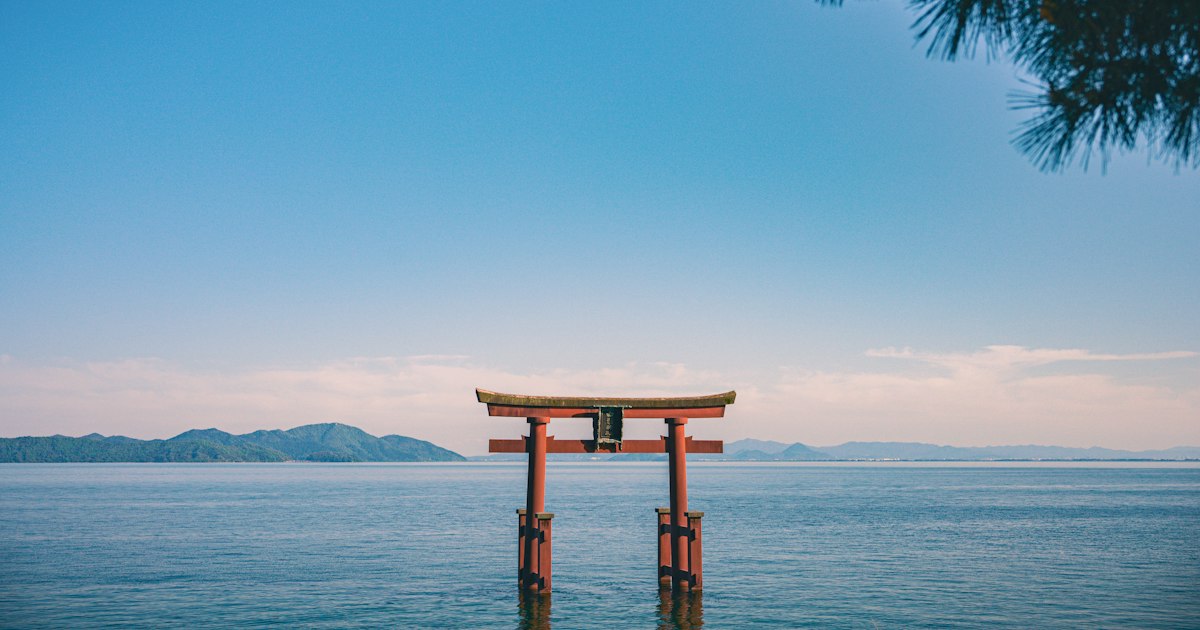
Off the coast of Fukuoka Prefecture sits an island that holds 80,000 registered national treasures, has been worshipped as a living goddess for over 1,600 years, and that you will almost certainly never be allowed to set foot on. Okinoshima isn’t hiding — it’s on UNESCO’s World Heritage list, clearly marked on maps, and visible from the mainland on a clear day. It’s just closed, deliberately and almost completely, to the outside world. For travelers who like Japan’s stranger corners, that’s exactly what makes it worth understanding.
What Okinoshima Actually Is
Okinoshima is a small, uninhabited island about 60km off the coast of Munakata City in Fukuoka Prefecture, roughly halfway between Kyushu and the Korean Peninsula. It belongs to Munakata Taisha, a Shinto shrine complex whose main deity on the island, Tagitsuhime-no-kami, is one of three sister goddesses believed to protect maritime travel and trade. Archaeologists have found ritual offerings on the island dating from the 4th to 9th centuries — gold rings, bronze mirrors, glass beads from the Silla kingdom and Tang China, gilt-bronze dragon ornaments — buried at open-air altars on bare rock. Every single item recovered has been designated a National Treasure, which is why the island’s nickname among Japanese archaeologists is “the Shosoin of the sea,” a comparison to Nara’s imperial treasure repository.
In 2017, Okinoshima and several related Munakata Taisha sites were inscribed as a UNESCO World Heritage Site under the name “Sacred Island of Okinoshima and Associated Sites in the Munakata Region.” It was one of the more unusual inscriptions in recent memory, because the thing being protected is partly defined by nobody being able to see it.
Why You Can’t Go — and Why Almost No One Ever Could
Even before UNESCO status, access was tightly restricted. Women have never been permitted on the island at all, a rule tied to Shinto belief rather than modern policy. Until 2017, a maximum of around 200 men per year could land, and only on a single day — May 27, the anniversary of the 1905 Battle of Tsushima — to take part in a religious rite called the Okitsumiya Gokaisai Taisai. Before stepping ashore, every visitor had to strip and purify himself by bathing naked in the sea, regardless of the weather. Nothing could be removed from the island, not a pebble, not a twig, and under a long-standing taboo known as o-sazarigoto, visitors were traditionally expected not to describe what they saw there to anyone afterward.
Following the UNESCO inscription, Munakata Taisha decided the island could no longer absorb even that limited human traffic without risking the archaeological site and the ecosystem. Since 2018, general access has been suspended entirely. Today only a small number of Shinto priests, who rotate in ten-day shifts to tend the shrine and keep a maritime weather log, are permitted to live there. Researchers occasionally gain special permission for survey work. Everyone else — Japanese citizens and foreign visitors alike — is turned away at the water’s edge.
How to Get as Close as the Law Allows
You can’t land on Okinoshima, but you can get within sight of it, and that’s a genuinely worthwhile half-day trip from Fukuoka City. The route runs through Oshima, a separate, inhabited island that is open to everyone and holds the Nakatsunomiya shrine, the “middle” of the three Munakata Taisha sites.
- Get to Munakata: From Fukuoka (Hakata), take the JR Kagoshima Main Line to Togo Station (about 25 minutes), then a bus or taxi (about 10 minutes) to Konominato Port. By car, it’s roughly 40–50 minutes from central Fukuoka via the Fukuoka Expressway.
- Ferry to Oshima: Boats depart from Konominato Port several times a day. The regular ferry “Oshima” takes about 20–25 minutes and costs roughly ¥1,230 round trip for an adult; a faster boat, the “Okinoshima,” cuts the crossing to around 15 minutes for a slightly higher fare. Sailings are limited — typically five or six a day — so check the timetable before you go and plan your return boat first, not last.
- Okinoshima Yohaisho: On Oshima’s northern tip is a small shrine and viewing platform built specifically so pilgrims can pray toward Okinoshima without ever landing there. On a clear day, the island is visible roughly 49km out to sea as a low, dark silhouette. This is, quite literally, as close as the rules allow anyone to get.
If open-sea island access by boat and remote viewpoints appeal to you, this trip pairs well thematically with the overland journey to Cape Sata, the southern tip of mainland Japan — both are about standing at the edge of accessible Japan and looking toward something further that you can’t quite reach.
See the Treasures Without the Island
The good news is that the artifacts never stayed on Okinoshima long-term — they were always removed to the mainland for conservation. Munakata Taisha’s Hetsunomiya (the main shrine) sits in Munakata City proper and houses the Shinpokan Museum, a dedicated hall built to display a rotating selection of the island’s National Treasures: gold rings, bronze mirrors, imported glassware, and the famous miniature gilt-bronze loom used in rituals tied to textile production.
- Access: A short taxi or bus ride from Togo Station; there’s also a direct bus link from Fukuoka on weekends and holidays in some seasons.
- Hours: Roughly 9:00–16:30 (last entry 16:00), closed year-end/New Year and for occasional maintenance days — confirm before visiting since days off vary by season.
- Admission: Around ¥800 for adults, with discounts for students; small children often enter free.
Munakata Taisha itself — the shrine grounds, not just the museum — is free to walk around and worth 30–45 minutes on its own.
Best Time to Visit
Spring (April–May) and autumn (October–November) give the most comfortable weather for the ferry crossing and the walk out to the Yohaisho viewpoint. For the best chance of actually seeing Okinoshima from Oshima, aim for a clear, dry, low-humidity day — winter months tend to have better visibility across the Genkai Sea than the hazier, more humid summer, though there’s no guarantee on any given day. Typhoon season (roughly August–September) can cancel ferries outright, so build flexibility into your schedule if you’re traveling then.
Common Mistakes to Avoid
- Confusing Oshima with Okinoshima. They sound similar and are often mentioned in the same breath, but Oshima is the accessible island with the ferry and viewpoint; Okinoshima is the sealed one 49km further out. Double-check which one your transport is actually taking you to.
- Assuming you can book a special landing permit. Since 2018 there is no commercial, religious, or paid path onto Okinoshima for ordinary visitors — not even premium tours. If anyone offers to get you onto the island itself, it isn’t legitimate.
- Missing the last ferry back. Oshima’s sailings are infrequent, and getting stranded overnight means limited lodging options. Check the return schedule before you leave the mainland.
- Expecting to see the treasures on the island. They’re all at the Shinpokan Museum on the mainland — visit that instead of hoping for island access.
Planning Around It: Budget to Splurge
This is an inexpensive detour by Japan standards. On a budget, the round-trip ferry (~¥1,230) plus museum admission (~¥800) comes to under ¥2,500 per person, doable as a day trip from Fukuoka with a rail pass or regular train ticket. For a mid-range visit, rent a car in Fukuoka for the day to skip the bus transfers and combine Munakata Taisha with other coastal stops nearby. There’s no real “splurge” tier here — the whole point of Okinoshima is that money can’t buy more access than anyone else gets. If you want a comparable sense of restricted, ritual-heavy sacred space that you actually can enter, the pilgrimage route up to Koyasan via the Nankai Koya Line and cable car is the closer experience, with temple lodging and guided rites built for visitors rather than against them.
Munakata City and nearby Fukuoka are also a good base for picking up regional crafts while you’re in the area — Fukuoka’s Hakata-ori obi weaving makes a far more practical souvenir than anything from Okinoshima ever could be. And if island-hopping along Japan’s inland sea is more your pace than praying toward a sealed one, Setoda on the Shimanami Kaido is an easy add-on elsewhere in Kyushu-bound itineraries.
Okinoshima won’t give you a dramatic photo from its shores or a stamp in your passport. What it offers instead is rarer: a reminder that not every remarkable place in Japan is meant to be visited, and that the closest legal vantage point — a windswept shrine on a neighboring island, staring at a silhouette on the horizon — can be its own kind of pilgrimage.