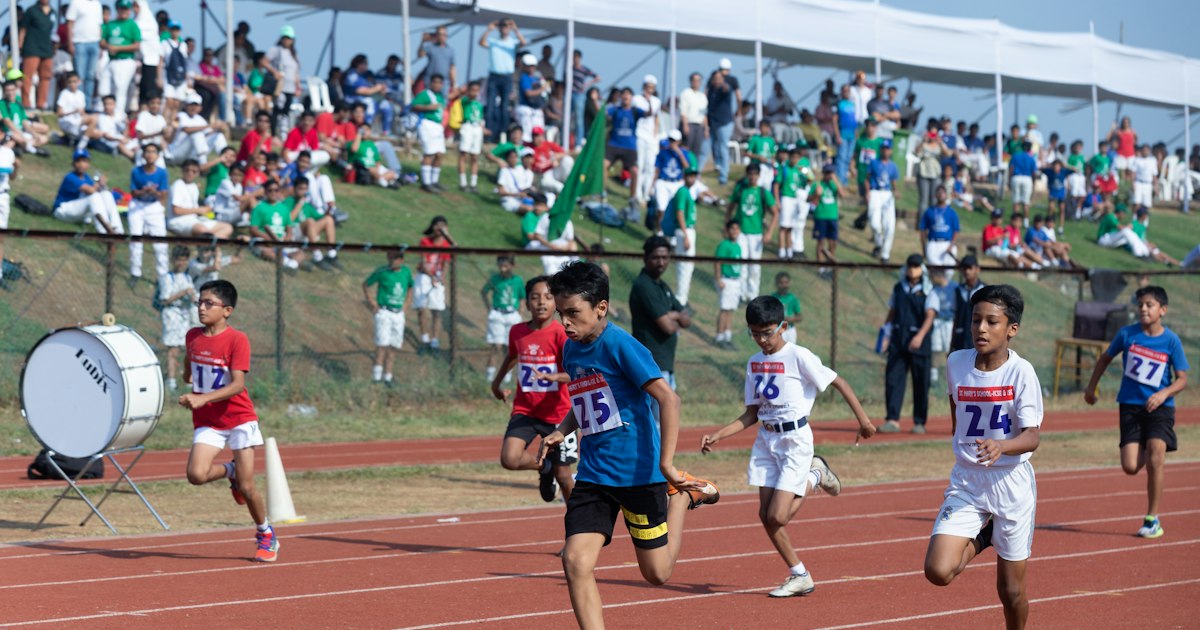
Photo by Rosario Fernandes on Unsplash
If you’re walking through a residential Japanese neighborhood on a Saturday morning in late September or early October and hear a brass-band version of a pop song blasting over a loudspeaker, followed by a wave of children’s cheering, you’ve probably stumbled onto an undokai (運動会) — the annual elementary school sports day. It’s one of the most distinctly Japanese public events a visitor can witness almost by accident, and understanding what’s happening makes it far more interesting than it looks from the sidewalk.
What Is Undokai, and Will You Actually See One?
Undokai is a whole-school field day held on the school grounds, usually on a Saturday so working parents can attend. Nearly every public elementary school in Japan holds one, and many kindergartens and junior high schools run similar events under different names (taiikusai, 体育祭, for secondary schools). Classes compete against each other in relay races, tug-of-war, a synchronized dance or flag routine, and a chaotic, beloved event called tama-ire — tossing small cloth balls into a raised basket.
You won’t find undokai listed on tourist calendars because it isn’t staged for visitors — it’s a normal part of the Japanese school year, which is exactly what makes it worth noticing if your trip happens to overlap with one. You’re most likely to see it in residential suburbs and smaller cities rather than central Tokyo or Kyoto’s tourist core, since school grounds there tend to be smaller and events are sometimes held off-site.
When Undokai Happens: Spring vs Autumn Schedules
Timing varies by region and even by individual school. The two main windows are:
- Autumn: mid-September to mid-October, historically tied to Sports Day (Taiiku no Hi), a national holiday on the second Monday of October. This remains the more common slot, especially in Kansai and western Japan.
- Spring: late May to early June, increasingly popular in Tokyo and Kanto-area schools, partly to avoid the worsening late-summer heat in September.
If your visit lines up with either window, check a local school’s perimeter fence or community bulletin board — event dates are often posted publicly weeks in advance. Events typically run from around 9:00am to 2:00pm, with a lunch break around noon.
Can Foreign Visitors Attend?
Undokai is a family event, not a public spectacle, so there’s an etiquette line to respect. If you have a personal connection — a homestay family, a friend whose child attends the school, or you’re staying with relatives — you’ll likely be welcomed warmly as a guest. Without a connection, the respectful approach is to observe briefly from outside the school fence or gate rather than walking onto the grounds, which are usually controlled by stationed parent volunteers and sometimes require a name badge or program to enter. Taking photos of other people’s children, even unintentionally, is a real sensitivity in Japan, so keep cameras pointed at the broader scene rather than individual kids if you’re watching from outside.
This is a case where “witnessing” rather than “attending” is the realistic and appropriate expectation for most visitors — think of it the way you’d treat glimpsing a local neighborhood festival, not something to plan an itinerary around.
What Happens on the Day: Events and Traditions
A typical undokai program includes:
- Kyori competition (relay races) — class-against-class sprints, usually the most fiercely cheered event of the day.
- Tama-ire — children toss small beanbag-like balls into a tall basket; whichever team gets more in within the time limit wins.
- Kibasen (cavalry battle, older grades only) — teams of four form a “horse” and try to grab headbands or hats off rival teams.
- Ondo or flag dance — a choreographed group dance, often to traditional music or a seasonal pop song, rehearsed for weeks beforehand.
- Tug-of-war and obstacle relays mixing in parents and siblings for a few lighthearted rounds.
Parents set up blue tarps and folding chairs along the field early — arriving by 7:30am for a 9:00am start is normal for families claiming shade. A compact folding chair (sold at Don Quijote or a home center for roughly ¥1,500–3,000) and a packed bento lunch are the standard gear; some schools sell drinks or shaved ice from a PTA stall for a few hundred yen, but there’s rarely a formal food vendor setup.
Getting There and What to Bring
Since undokai happens at individual neighborhood schools rather than central venues, there’s no single “how to get there” — you’ll be navigating to a specific address, often in a residential area with narrow streets and limited signage in English. A transit app that handles Japan’s local bus and walking routes well is more useful here than general mapping apps; see our rundown of Japanese transit apps locals actually use for getting to residential addresses that Google Maps sometimes handles clumsily.
If you’re bringing your own kids along to watch siblings of local friends, pack sun protection (undokai grounds are open-air with minimal shade), a water bottle, and entertainment for younger children who’ll tire of watching races faster than you expect. Families cycling over with toddlers in tow might find a rented child seat useful for the trip — see our guide to renting a child bike seat or trailer in Japan.
Common Mistakes Visitors Make
- Walking onto the grounds uninvited. Even if the gate looks open, school sports days are closed events for enrolled families and designated guests.
- Photographing children without asking. This is a bigger deal in Japan than in many countries — err on the side of wide shots of the field, not close-ups of kids.
- Assuming it’s cancelled if it’s cloudy. Japanese schools generally run undokai through light rain or overcast skies and only postpone for genuinely unsafe conditions, usually to the following Sunday.
- Underestimating the heat. Early-autumn undokai in places like Osaka or Nagoya can still hit 28–30°C with full sun exposure on an unshaded field — bring water even as a brief observer.
If It Rains: Backup Plans
Undokai is postponed, not cancelled, when weather turns genuinely bad, which can throw off a tightly planned visit. If you end up with an unexpected free day because an event you were hoping to catch got pushed, Japan’s indoor family options are a solid fallback — our guide to Tokyo Summerland and Japan’s indoor water parks covers exactly this kind of rainy-day pivot. And if you’re planning a lunch out with kids afterward, it’s worth knowing in advance what Japanese restaurants actually provide for young children versus what to bring yourself.
Undokai isn’t an attraction built for tourists, and that’s precisely its appeal — it’s a genuine slice of Japanese community life happening on an ordinary Saturday, visible to anyone who happens to be walking by at the right time of year.