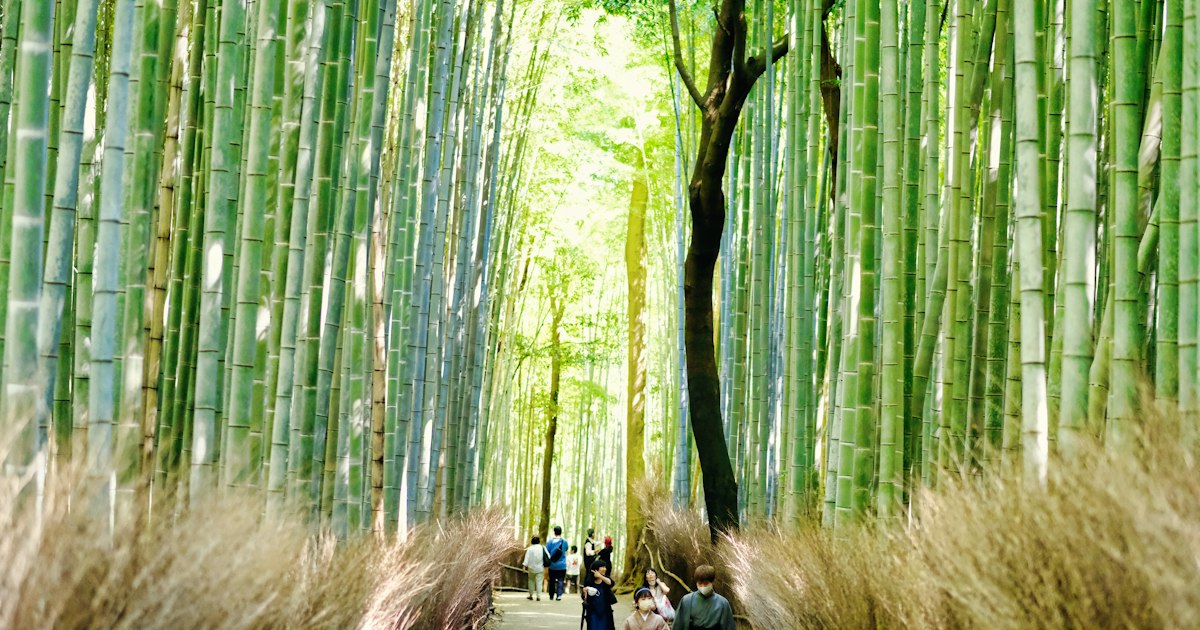
Photo by Duong Nguyen on Unsplash
Arashiyama sits at the western edge of Kyoto, where a swaying bamboo corridor, a mountainside full of wild monkeys, and a postcard-perfect river bridge all sit within a 20-minute walk of each other. It’s one of the few places in Kyoto where you can combine a forest walk, wildlife encounter, and temple visit without a car or a tour bus. Here’s how to do it efficiently, without wasting half your day standing in a crowd of selfie sticks.
Getting There: Trains to Arashiyama
Three train lines reach Arashiyama, and picking the right one saves you a transfer:
- JR Sagano/San-in Line to JR Saga-Arashiyama Station — the fastest option from Kyoto Station, about 15–20 minutes and roughly ¥240 one-way. Best if you’re staying near Kyoto Station.
- Keifuku Electric Railroad (Randen) to Arashiyama Station — a slower, scenic tram from Shijo-Omiya (near Shijo-Kawaramachi), about 25 minutes, ¥250 flat fare. This station drops you closest to the bamboo grove entrance.
- Hankyu Arashiyama Line to Arashiyama Station — convenient if you’re coming from Osaka via the Hankyu Kyoto Line, requiring one change at Katsura.
From any of the three stations, it’s a 5–15 minute walk to the bamboo grove entrance near Tenryu-ji Temple. There’s no need to book anything in advance for the walk itself — it’s an open, free path.
Walking the Bamboo Grove
The Arashiyama Bamboo Grove (also called the Sagano Bamboo Forest) is a roughly 500-meter path lined with towering bamboo stalks, running between Tenryu-ji Temple’s north gate and the Okochi Sanso Villa. It costs nothing to walk through and is open 24 hours, since it’s a public path rather than a ticketed attraction. The walk itself takes 10–15 minutes at a relaxed pace, though most visitors linger for photos.
Managed expectations help here: the grove is narrower and shorter than photos suggest, and by mid-morning in peak season it can feel more like a queue than a forest walk. Go early (see timing section below) and you’ll get long, empty stretches of path with just the sound of wind moving through the stalks — locals call this “the sound of bamboo,” and it was even selected by Japan’s Ministry of the Environment as one of the country’s 100 soundscapes worth preserving.
Iwatayama Monkey Park: Hours, Prices, and the Hike Up
On the south side of the Togetsukyo Bridge, Iwatayama Monkey Park is home to around 120 wild Japanese macaques living freely on the mountainside. Getting there requires a 20–30 minute uphill walk from the entrance gate — it’s a dirt and gravel trail, not a paved path, so wear real shoes rather than sandals.
- Admission: ¥550 for adults, ¥250 for children (elementary school age).
- Hours: generally 9:00–17:00 in warmer months and 9:00–16:30 in winter, with last entry about 30 minutes before closing. Hours shift seasonally, so check the day of your visit if possible.
- At the top: a viewing hut where you can buy small bags of food (apple slices, peanuts) to hand-feed the monkeys through wire mesh — this is the only sanctioned feeding method.
The reward for the climb is a genuinely good view over Kyoto city, plus close-up monkey encounters you won’t get at a zoo. Budget at least 90 minutes total for the round trip and time at the top.
Best Time to Visit
For the bamboo grove, arrive before 8:00 AM. Tour groups and day-trippers from central Kyoto typically start flowing in from 9:30 onward, and by midday in cherry blossom season (late March–early April) or autumn foliage season (mid-to-late November) the path can be genuinely packed shoulder-to-shoulper. Late afternoon, an hour or so before sunset, is the second-best window — quieter, with warmer light through the leaves, though you’ll lose the option of visiting Iwatayama Monkey Park afterward since it closes earlier.
For the monkey park, weekday mornings right after opening are calmest. Rain doesn’t close the park, but heavy rain makes the uphill trail slick and less pleasant, and the monkeys tend to retreat further into the trees, so a dry morning is ideal.
Seasonally, spring and autumn are the most beautiful but the most crowded; early summer (May–June, before the rainy season peaks) and winter weekdays are underrated — the bamboo looks the same year-round, and winter mornings can mean you have the path nearly to yourself.
Nearby: Tenryu-ji, Togetsukyo Bridge, and the Sagano Train
Tenryu-ji Temple, a UNESCO World Heritage Site right beside the bamboo grove’s entrance, has one of Kyoto’s best strolling gardens, built around a pond with the mountains as a backdrop. Garden-only entry runs around ¥500, with an additional fee if you want to enter the temple buildings.
Togetsukyo Bridge (“Moon Crossing Bridge”) spans the Katsura River just south of the grove and is worth walking across for the mountain view alone. From near the station you’ll also find food stalls selling grilled dango, roasted chestnuts, and seasonal treats — if you’re a fan of Japan’s fish-shaped sweets, this is a good area to pick up taiyaki or imagawayaki for the walk.
If you want to extend the visit, the Sagano Scenic Railway (“Romantic Train”) runs open-air trolley cars along the Hozu River gorge from Torokko Saga Station, a short walk from the bamboo grove; one-way tickets run about ¥880 and are worth reserving ahead in peak season since they sell out. It doesn’t operate on Wednesdays or during a winter maintenance closure, so check the schedule before planning around it.
Common Mistakes to Avoid
- Arriving mid-morning in peak season — you’ll spend more time dodging crowds than looking at bamboo.
- Making direct eye contact with the macaques — monkeys read prolonged staring as a threat. Keep your gaze soft and don’t smile with bared teeth close to them.
- Bringing food or plastic bags outside the feeding hut — the monkeys are wild and will grab visibly held food or dangling bags. Keep snacks zipped away until you’re inside the designated feeding area.
- Wearing sandals or slip-on shoes for the monkey park hike — the trail is uneven gravel and can be slippery after rain.
- Treating the bamboo grove as a half-day activity — the walk itself is short. Pair it with the monkey park, Tenryu-ji, or a riverside lunch to make the trip worthwhile.
Budget, Mid-Range, and Splurge Options
Budget (free–¥1,000): Walk the bamboo grove (free), cross Togetsukyo Bridge, and grab a street snack. Total cost can be close to zero beyond train fare.
Mid-range (¥2,000–¥4,000): Add Iwatayama Monkey Park (¥550) and Tenryu-ji’s garden (¥500), plus lunch at one of the tofu or yudofu restaurants near the temple, which typically run ¥1,500–¥3,000 per person.
Splurge (¥6,000+): Combine the Sagano Romantic Train (¥880 one-way) with a Hozugawa River boat ride back down the gorge — a roughly two-hour guided descent that costs around ¥5,000–¥6,000 per adult — for a full loop through the valley by rail and water.
If you pick up bamboo crafts, folding fans, or ceramics from the shops near the station, keep in mind that fragile items are easiest to send home rather than carry — our guide to shipping souvenirs from Japan compares post office and courier options.
Arashiyama pairs naturally with other slower-paced corners of Kyoto Prefecture if you have extra days — the boathouse village of Ine no Funaya and the sandbar views at Amanohashidate both make for a worthwhile detour north of the city, though they require a half-day or more of train travel each way.