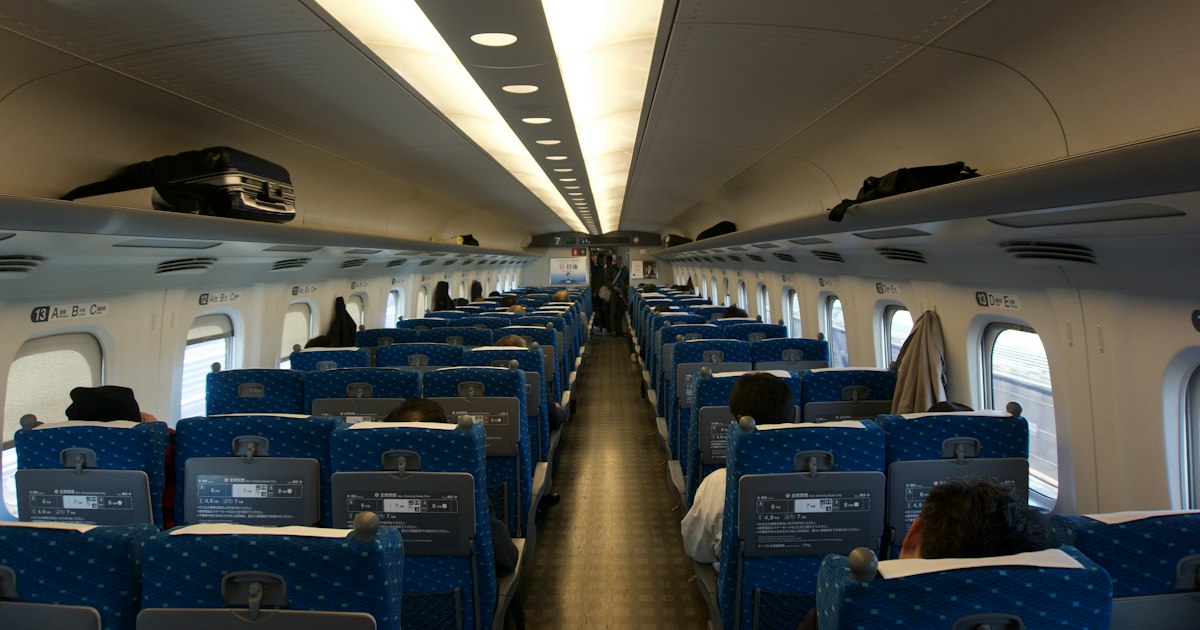
Photo by Marek Lumi on Unsplash
Japan’s trains are already famous for being clean, punctual, and comfortable in standard class — so why would anyone pay extra? Because on long Shinkansen rides, overnight-adjacent journeys, or trips with heavy luggage, the difference between “fine” and “genuinely relaxing” is real. Green Car and Gran Class are Japan Railways’ two tiers of premium seating, and they’re far less complicated (and often less expensive) than international business or first class. Here’s exactly what you’re paying for and when it’s worth it.
What Exactly Is “Green Car”?
Green Car (グリーン車, guriin-sha) is JR’s long-standing first-class car, found on most Shinkansen trains, many limited express services, and some Tokyo-area commuter lines. It’s marked with a green four-leaf-clover logo on the platform and the carriage exterior. On Shinkansen, Green Car typically means 2+2 seating (instead of 2+3 in standard class), meaning every seat is a window or aisle seat with noticeably more legroom, a footrest, individual reading lights, and a quieter car since it’s usually less crowded. There’s no meal service or lounge access — it’s an upgraded seat, not a first-class cabin experience.
You pay for Green Car as an add-on: a “Green fee” (グリーン料金) stacked on top of your normal base fare and any limited express/Shinkansen surcharge. You can’t buy a Green Car ticket alone — it always sits on top of a regular ticket.
Gran Class: The Actual First Class
Gran Class is a step above Green Car and only exists on specific Shinkansen routes: the Tohoku/Hokkaido Shinkansen (Hayabusa and some Komachi services running E5/E6 series trains between Tokyo and Aomori/Hakodate) and the Hokuriku Shinkansen (Kagayaki services on E7/W7 series trains between Tokyo and Kanazawa/Tsuruga). It is not available on the Tokaido/Sanyo Shinkansen between Tokyo, Osaka, and points west — a common point of confusion for first-time visitors planning a Kansai trip.
Gran Class seats are wide, leather, 1+2 across the aisle, and recline further than any other seat on a Japanese train. A dedicated attendant serves a light meal or snack, plus tea, coffee, wine, or Japanese sake, all included in the fare. It’s the closest thing Japan has to a domestic first-class cabin, and on a three-to-four-hour ride to Hokkaido or Kanazawa, it genuinely feels like a mini flight experience rather than a train ride.
How Much Extra Does It Cost
Prices scale with distance, so think in terms of the surcharge rather than a flat fee. As a rough guide:
- Green Car surcharge on Tokaido Shinkansen (e.g., Tokyo–Osaka on Nozomi/Hikari): roughly ¥4,000–5,500 on top of the standard reserved-seat fare, bringing a one-way Tokyo–Osaka Green Car ticket to somewhere around ¥18,000–20,000.
- Green Car on shorter Shinkansen hops (e.g., Tokyo–Nagano, Tokyo–Sendai): typically an extra ¥2,000–3,500.
- Gran Class: generally an additional ¥10,000–15,000 over the standard fare for longer routes like Tokyo–Hakodate or Tokyo–Kanazawa — meaning a full Gran Class fare often lands between ¥27,000 and ¥33,000 one way, meal and drinks included.
These figures move with JR’s periodic fare revisions, so treat them as planning estimates and confirm the exact price at booking — JR’s ticket machines and the official booking apps always show the current fare before you pay.
Commuter Green Car: Tokyo’s Everyday Upgrade
Separate from the Shinkansen version, JR East runs Green Car double-decker carriages on the Shonan-Shinjuku Line, Ueno-Tokyo Line, Yokosuka Line, and Chuo Line rapid services around Tokyo. These don’t require reservations — you just tap a Green Car IC ticket (bought from the small green ticket machines on the platform or added directly through a Suica/PASMO-linked app) and sit in any open seat. Fares are flat-ish by distance band, roughly ¥800–1,000 for most trips, and it’s a nice way to guarantee a seat with luggage during rush hour, say if you’re heading out to Nakameguro or beyond during a crowded commute window.
How to Book Green Car and Gran Class Seats
You can reserve both at any JR ticket counter (midori-no-madoguchi), at the green ticket vending machines found in every major station, or online through JR’s official reservation platforms (JR East’s train reservation site, or the Tokaido/Sanyo Shinkansen’s EX app for routes through Osaka). Gran Class in particular sells out on holidays and during peak season, so book as early as possible — JR opens reservations one month ahead to the day. If you’re heading to snow country, this matters most right before ski season opens; travelers booking a Shinkansen-plus-bus route up to Hakuba Valley around New Year or February weekends should lock in Green Car seats well ahead for the heavy-luggage leg to Nagano.
Note that the standard 7-day/14-day/21-day Japan Rail Pass no longer includes Green Car access as of the October 2023 price revision unless you specifically buy the Green Car version of the pass, which costs meaningfully more than the ordinary pass. Gran Class is never covered by any JR Pass, at any tier — you always pay the difference or the full fare out of pocket.
Is It Worth It? Budget, Mid-Range, and Splurge Picks
Budget: Stick with standard reserved seats for rides under 90 minutes — the difference in comfort is minor and not worth the surcharge. This covers most day trips, including regional hops toward Setouchi Triennale islands via Okayama or Takamatsu.
Mid-range: Green Car earns its keep on trips over two hours, especially with luggage, kids, or a laptop you want to work on. It’s also worth it on limited express trains with only single-digit Green Car seats, like the Shiokaze service to Matsuyama for a visit to Dogo Onsen, where the extra space and quiet make a real difference on a three-hour ride.
Splurge: If your route includes Hayabusa to Hakodate or Kagayaki to Kanazawa, Gran Class is a genuine treat and, per-hour, is often cheaper than premium airline seating for a comparable distance.
Common Mistakes to Avoid
The biggest mistake is assuming Gran Class exists everywhere — it doesn’t run on the busiest tourist route, Tokyo–Kyoto–Osaka, so don’t build an itinerary around it without checking the specific train series first. The second is boarding a Green Car without a valid Green ticket or Green Car IC charge; conductors do check, and you’ll be asked to pay the fare on the spot, sometimes at a higher on-board rate. Third, don’t confuse “Green Car” with “first class” in the Western sense — there’s no separate check-in, lounge, or boarding priority, so arrive with the same timing buffer you would for any Shinkansen departure. Finally, remember seat reservations are per-train: a Green Car reservation ties you to that specific departure, so if you need flexibility, ask the ticket agent about open-ticket options before committing.