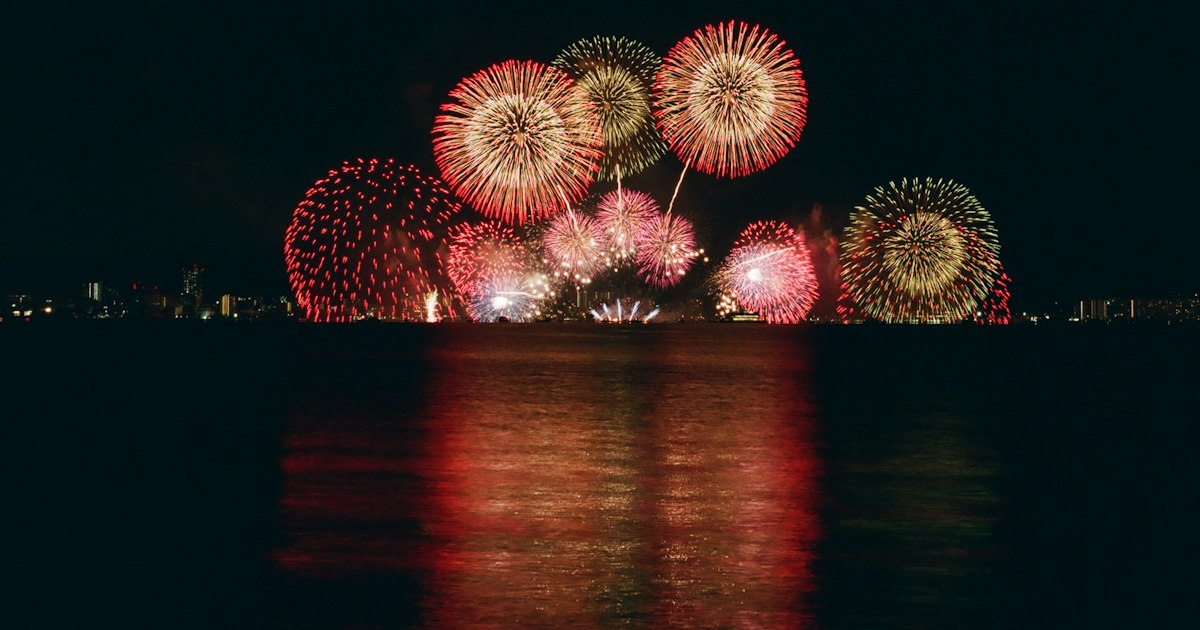
From late July through August, Japan turns its rivers, lakes, and harbors into stages for hanabi taikai — fireworks festivals that can run for over an hour and launch tens of thousands of shells in a single night. These aren’t municipal Fourth-of-July shows; some are judged competitions between master pyrotechnicians, complete with named shell types, synchronized music, and reserved seating that sells out months in advance. If you’re planning a summer trip to Japan, timing it around one of these festivals is one of the best ways to see the country at its most festive. Here’s how to pick one, get there, and actually enjoy it instead of standing in a crowd for three hours.
Why Hanabi Taikai Are a Different Kind of Fireworks Show
Hanabi (花火, “fire flowers”) has been a summer tradition in Japan since the Edo period, when the Ryogoku Kawabiraki festival in Tokyo doubled as a memorial for plague and famine victims. That layered meaning — celebration plus remembrance — still shapes the biggest festivals today. Many are also competitive: companies called hanabi-shi compete for prizes judged on shell symmetry, color transitions, and how cleanly a shell forms a perfect sphere (“warimono”) as it opens. Announcers call out the name of each shell and its maker, and crowds actually watch quietly for the technical rounds before erupting for the finale.
Because these are outdoor, free-to-attend (mostly) events with no ticket gate, the challenge isn’t getting in — it’s getting a spot with a clear sightline and a way home afterward.
The Big Three Competition Festivals
Japan’s three most prestigious fireworks competitions are Omagari, Tsuchiura, and Nagaoka. All three sell paid reserved seating, and all three genuinely sell out.
- Omagari National Fireworks Competition (Daisen City, Akita) — held the last Saturday of August. Considered the most technically judged event in the country; around 28 top companies compete. Reserved seat tickets (roughly ¥3,000–¥15,000) go on sale in spring and disappear fast. Reached via the Akita Shinkansen to Omagari Station, about 3.5–4 hours from Tokyo.
- Tsuchiura All Japan Fireworks Competition (Ibaraki) — held the first Saturday of October, later than most, making it a good option if your trip falls outside the July–August peak. About an hour from Tokyo via the Joban Line to Tsuchiura Station.
- Nagaoka Fireworks Festival (Niigata) — held August 2–3 every year without fail. Famous for its “Phoenix” (Fenix) shells, launched as a tribute to the city’s recovery from WWII air raids and the 2004 Chuetsu earthquake. Around 1.3 million people attend over the two nights. Reserved seats along the Shinano River run roughly ¥4,000–¥12,000 and are sold via lottery months ahead. Nagaoka Station sits on the Joetsu Shinkansen, about 1 hour 20 minutes from Tokyo — if you’re making a long day trip, it’s worth reading about Green Car and Gran Class seating for the ride home, since trains out of Nagaoka after the finale get packed fast.
The Easiest Option for First-Timers: Sumida River, Tokyo
If you don’t want to plan around a lottery or a long train ride, the Sumida River Fireworks Festival (Sumida-gawa Hanabi Taikai) is the most accessible major hanabi in the country. Held on the last Saturday of July, it launches around 20,000 fireworks from two competing sites along the river between Asakusa and the Tokyo Skytree, and it’s completely free to view from public riverbank space.
Practical details:
- Where to stand: Sumida Park (both banks, near Asakusa Station) offers the classic view with the Skytree in frame. Arrive by early afternoon — spots fill up 4–5 hours before the 7pm start.
- Paid alternative: Riverside restaurants, rooftop bars, and hotel rooms with river views sell fireworks-viewing packages, typically ¥8,000–¥30,000+ per person including a meal — a good splurge option if you’d rather not sit on a tarp for hours.
- Getting home: This is the real challenge. Asakusa Station and nearby lines get severely congested right after the finale. Budget an extra hour, or walk a few stations away before boarding.
Beyond Tokyo: Lake Suwa and Tenjin Matsuri
Two other festivals are worth building a trip around if your dates align:
- Lake Suwa Fireworks Festival (Nagano, mid-August) — one of Japan’s longest-running hanabi events, launching upward of 40,000 shells over the lake. The mountain backdrop and water reflections make it one of the most photogenic shows in the country. Suwa Station is on the JR Chuo Line, roughly 2.5 hours from Tokyo.
- Tenjin Matsuri (Osaka, July 24–25) — technically a shrine festival, not a dedicated hanabi taikai, but its second night combines a river boat procession with around 5,000 fireworks over the Okawa River. It’s one of Japan’s three great traditional festivals, so expect it to double as a cultural event, not just a fireworks show.
How to Actually Get a Good Seat
Free viewing is genuinely free, but “good” is relative. A few rules apply almost everywhere:
- Paid seats sell out first, and early. For Nagaoka and Omagari, tickets typically go on sale online in spring (April–May) for a summer festival. If you’re planning around one of these, check the official festival site as soon as your travel dates firm up.
- Free spots require patience, not luck. Locals routinely stake out riverside ground 3–6 hours ahead with a plastic or vinyl sheet. A traditional woven mat (goza) made from igusa rush grass is still what many families bring to sit on — it’s cooler and more comfortable than plastic on a hot pavement, and it’s the same material used in tatami flooring goods you can buy as a souvenir afterward.
- Pack food rather than rely on festival stalls. Yatai (food stalls) exist but the queues are long and prices are inflated. A compact bento box picked up at the station beforehand is the easiest way to eat comfortably while waiting for the show to start.
- Bring cash and something to drink. Many festivals, especially in regional cities like Nagaoka, are held in areas famous for sake — pouring a little into a proper set of sake cups and a tokkuri while waiting for the fireworks is a very normal way to spend the evening if you’re not driving.
Common Mistakes to Avoid
- Underestimating the crowds on the way home. Trains and buses near major festivals can be full for well over an hour after the finale. If you have an early Shinkansen or flight the next morning, don’t cut it close.
- Assuming you can walk in and find riverside space at 6pm. For Sumida River and the Big Three competitions, that spot is long gone. Arrive early or budget for a paid seat.
- Booking accommodation too late. Hotels in Nagaoka, Omagari, and similarly sized festival towns sell out for these dates a year in advance in some cases. If a specific festival is the centerpiece of your trip, book lodging before flights.
- Skipping rain-date awareness. Most hanabi taikai proceed in light rain but postpone for typhoons or heavy storms, usually to the following day. Check the official festival account (X/Twitter is commonly used for real-time updates) on the day of.
Budget, Mid-Range, and Splurge Planning
- Budget: Free riverside viewing at Sumida River or Lake Suwa, station bento for dinner, standard local transport. Total cost beyond your existing trip: essentially ¥0–¥2,000.
- Mid-range: A reserved seat ticket at Nagaoka or Omagari (¥4,000–¥12,000), Shinkansen fare from Tokyo, and a casual dinner nearby.
- Splurge: A riverside restaurant or rooftop viewing package in Tokyo (¥8,000–¥30,000+ per person) or a ryokan stay in Nagaoka/Suwa with a private or semi-private view, avoiding the crowd crush entirely.
Whichever festival you choose, the format is the same everywhere: get there early, bring your own comfort (seat, food, drink), and expect the walk home to take longer than the show itself. That trade-off is exactly why hanabi taikai still pack riverbanks a century after they started.