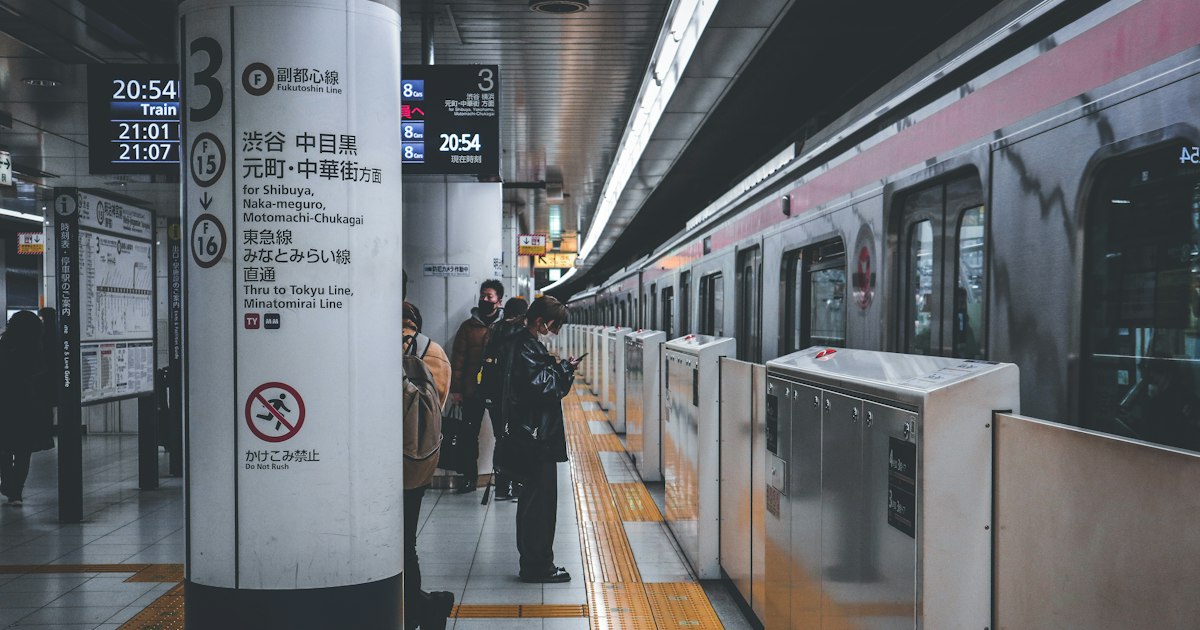
If you only learn one train line in Tokyo, make it the Yamanote. This green-liveried loop connects nearly every neighborhood a visitor actually wants to see — Shinjuku, Shibuya, Harajuku, Ueno, Akihabara, Tokyo Station — on a single 34.5-kilometer circle that takes about an hour to ride end to end. You will use it almost every day of your trip, often without realizing it’s the same line each time.
What the Yamanote Line Actually Is
The Yamanote (山手線) is a JR East commuter line that runs in a continuous loop around central Tokyo, with no official “first” or “last” stop — trains simply run clockwise (the sotomawari, or outer loop) and counterclockwise (uchimawari, inner loop) all day. There are 30 stations in total, the newest being Takanawa Gateway, which opened in March 2020 between Tamachi and Shinagawa. Trains run roughly from 4:30am to around 1am, with departures every 2–4 minutes during rush hour (7:30–9:00am) and every 4–6 minutes for most of the rest of the day. You rarely wait long, which is part of why it’s so easy to use badly — more on that below.
Fares, Passes, and a Fun Quirk
Fares are distance-based and cheap for short hops. Tap an IC card (Suica or Pasmo) and the minimum adult fare is 150 yen; a longer ride, say Tokyo Station to Shinjuku, runs about 210 yen. There’s no flat-rate day pass specific to the Yamanote, but a few things matter for planning:
- JR Pass holders (national or JR East regional passes) ride free on the Yamanote, since it’s wholly JR-operated.
- Tokyo subway passes (the 24/48/72-hour Tokyo Subway Ticket, or Tokyo Metro/Toei passes) do not cover the Yamanote — this is the single most common mix-up visitors make, tapping a subway pass at a JR gate and getting an error.
- The full-loop quirk: because JR fares are calculated by the shortest path between your entry and exit gates, if you board and ride the entire loop back to the same station without leaving the paid area, you’re charged the minimum fare — currently 150 yen — for a full hour-long trip around the city. It’s a well-known novelty among train enthusiasts and a surprisingly good way to window-shop Tokyo’s skyline from a seat on a rainy day.
Stop by Stop: The Stations That Matter
Going clockwise from Tokyo Station, here’s the rundown of stops worth knowing:
- Tokyo Station — the hub for Shinkansen connections and a sprawling underground shopping arcade (Character Street, Ramen Street) worth an hour on its own.
- Kanda / Akihabara — Akihabara is electronics and anime/manga central; if you’re buying gadgets to take home, check Japan’s duty-free allowance rules before you load up on tax-free electronics.
- Ueno — gateway to Ueno Park, the national museums, and Ameyoko market for cheap souvenirs and snacks.
- Ikebukuro — a second Shinjuku-scale hub, good for department store food halls stocking regional sweets and snack brands, including hard-to-find limited Pocky and Pretz flavors.
- Shinjuku — the busiest station in the world by passenger count, with roughly 200 exits. Budget extra time just to find the right one.
- Harajuku — Takeshita Street and Meiji Jingu shrine, a five-minute walk apart but worlds apart in vibe.
- Shibuya — the scramble crossing, Shibuya Sky, and endless shopping; the Hachiko exit is the one everyone means when they say “meet at Shibuya.”
- Shinagawa — mostly a transit and business hub, but also the Shinkansen stop closest to central Tokyo if you’re heading toward Kyoto or Osaka.
- Shimbashi / Yurakucho — back toward Tokyo Station, with an older, more salaryman-bar atmosphere worth a wander in the evening.
Best Times to Ride
Avoid the Yamanote during the morning crush (roughly 7:30–9:00am) and the evening rush (5:30–7:30pm) if you’re carrying luggage or traveling with kids — platforms at Shinjuku, Shibuya, and Ikebukuro get genuinely packed, with staff sometimes pushing doors shut at the busiest stations. Midday (10am–4pm) and after about 8pm are far more comfortable. If you’re changing hotels with suitcases, aim for an off-peak window — there’s limited luggage space on these commuter-style trains, and you’ll be standing for most of a crowded ride otherwise. Season-wise, the line itself runs year-round with no weather disruptions worth planning around, though late December and early January see noticeably lighter crowds as Tokyo empties out for the New Year holiday.
Common Mistakes First-Timers Make
- Confusing JR with the subway. The Yamanote is JR East; Tokyo Metro and Toei are separate operators with separate gates and separate passes. A Suica or Pasmo card works across all of them, but paper tickets and multi-day passes usually don’t.
- Not knowing which exit to use. At megastations like Shinjuku or Shibuya, the wrong exit can put you 15 minutes’ walk from where you meant to go. This is partly a side effect of how Japanese addressing works around big stations — if you want the full explanation of why Tokyo addresses and exit numbers feel so disorienting, see how Japanese addresses work.
- Boarding the wrong direction. Because it’s a loop, it’s easy to hop on the inner or outer loop going the opposite way from what you intended. Platform signage lists the next few station names in order — check that your destination appears before you board, not after.
- Treating it as the only way to get everywhere. The Yamanote is excellent for its 30 stops, but destinations between them — like Tokyo Dome City, a short walk or one transfer from Suidobashi near the Akihabara–Ueno stretch — need a connecting line. It’s worth checking a transit app rather than assuming the loop goes everywhere.
Budget, Mid-Range, and Splurge Ways to Use It
Budget: Buy a Suica or Pasmo (physical cards require a 500-yen deposit, refundable; both also work as mobile wallet cards on recent iPhones and some Android phones with no deposit) and pay as you go — most individual rides cost 150–200 yen. Mid-range: If you’re also riding Tokyo Metro and Toei subway lines heavily, a 72-hour Tokyo Subway Ticket (1,500 yen) saves money on those specific lines, just remember it won’t cover your Yamanote rides, which you’ll still pay for separately on your IC card. Splurge: none really needed — the Yamanote has no green car or reserved seating, so there’s no premium ticket to buy. The “splurge” here is really about where you get off: step off at Shinagawa for a Shinkansen ticket toward Kyoto or Osaka, and the line has done its real job of connecting you to the rest of Japan.