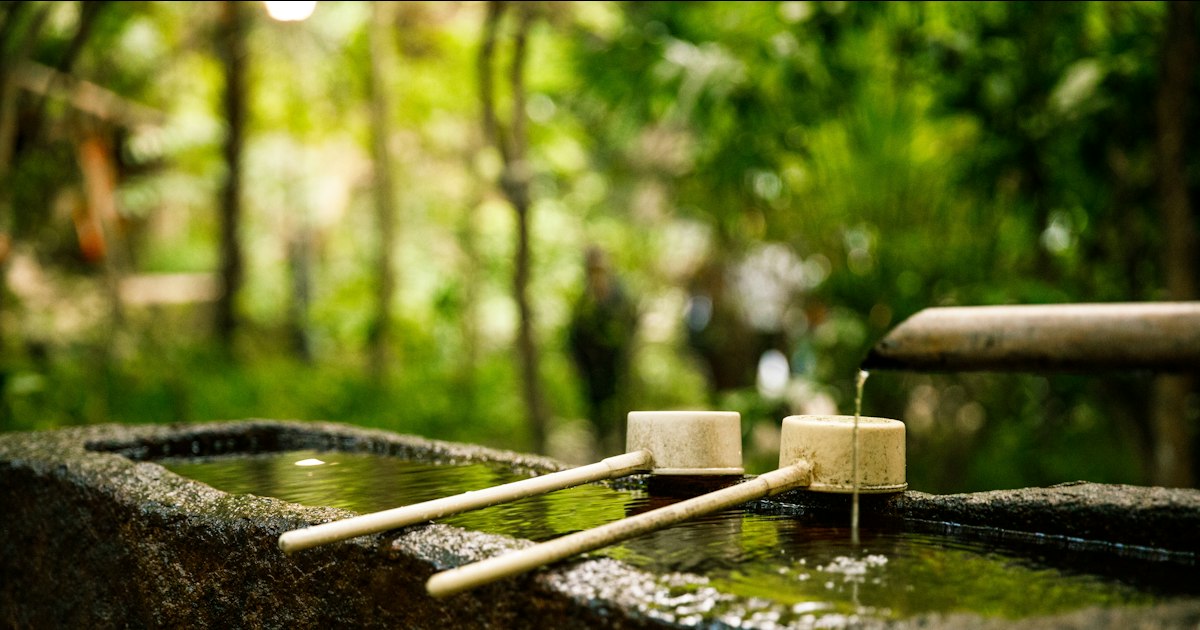
Photo by Lyndon Li on Unsplash
Walk through almost any Japanese neighborhood in the last days of December and you’ll hear it before you see it: a heavy, rhythmic thud, thud, thud, followed by cheering. That’s mochitsuki — the communal pounding of steamed rice into mochi — and it’s one of the few Japanese traditions that actively wants spectators to grab a mallet and join in. Here’s what the ritual actually involves, when it happens, and the real ways a foreign visitor can take part instead of just watching from the sidewalk.
What Mochitsuki Actually Is
Mochitsuki (餅つき) means “mochi pounding.” Steamed glutinous rice called mochigome is dumped into a stone or wooden mortar (usu) and pounded with a large wooden mallet (kine) until the grains break down into one smooth, stretchy mass. It’s physically hard work — one person swings the mallet while a second kneels beside the mortar, flipping and wetting the rice between strikes with a quick hand motion, calling out a rhythm like “yoisho!” to keep the timing safe. Done well, it’s less about brute force and more about the two people working in sync.
Historically this was how every household or village prepared mochi for kagami mochi (the stacked New Year altar decoration) and ozoni (New Year mochi soup), since mochi was considered too labor-intensive and too symbolically important to buy ready-made. Today most households buy machine-pounded mochi from supermarkets, which is exactly why the hand-pounded, community version has survived mainly as a festive public event rather than a kitchen chore.
When It Happens: Timing Matters More Than You’d Think
Mochitsuki is overwhelmingly a late-December event, and the dates are not random. Most households and communities pound mochi on December 28 or 30. December 29 is widely avoided because “nine” (ku) sounds like the word for suffering or hardship, making 29th-day mochi “futsu mochi” or “pain mochi” in folk superstition. December 31 is also skipped by traditionalists, since mochi made on New Year’s Eve is dismissively called “ichiya mochi” (one-night mochi) — thrown together too last-minute to be proper. If you’re trying to catch a public event, the 28th and 30th are your best bets; some shrines and shopping streets also run smaller pounding demonstrations around January 2–3 as part of hatsumode (the first shrine visit of the year).
Where Tourists Can Actually Join In
You don’t need a local connection to participate — you just need to know where to look.
- Shopping streets (shotengai) and markets: Neighborhood shopping arcades in Tokyo and other cities commonly hold free, open-to-the-public mochitsuki events in the final days of December, often with a tourist-friendly setup where visitors can take a few swings under supervision and get a small piece of warm mochi (usually rolled in kinako soybean powder or sweet red bean paste) to eat on the spot. These are typically donation-based or free, run for an hour or two, and are announced on local ward or station tourist-information boards rather than major booking sites, so your best move is asking at a tourist information center once you’re in the city for that week’s schedule.
- Ryokan and onsen hotels: A number of traditional inns run mochitsuki as a complimentary New Year’s activity for overnight guests, especially around December 30–January 1. Smaller, more rural onsen towns tend to lean into this more than big-city hotels — the kind of secluded, community-feeling ryokan area you’d find around a place like Nyuto Onsen in Akita is exactly the setting where this still happens informally in the inn’s courtyard. If a New Year’s stay is part of your trip, ask the ryokan directly when booking whether they’re holding one.
- Old post towns and craft villages: Preserved townscapes with strong community identity — the kind of place like Hida Furukawa in Gifu — sometimes stage mochitsuki in the street as part of year-end or New Year events, with locals pounding in turns and visitors welcome to try a swing. These aren’t guaranteed every year, so check with the local tourism association before you plan a special trip around it.
- Paid cultural experiences: In Tokyo and Kyoto, short bookable mochi-pounding experiences run through cultural-experience operators, usually 45–60 minutes, priced around ¥2,000–¥4,000 per person, including the pounding itself, a tasting, and sometimes a short explanation of New Year customs. Search “mochi pounding experience” on any major tour-activity platform for current listings — these run year-round, not just in December, which is useful if your trip doesn’t line up with the holiday window.
What to Expect and Common Mistakes
First-timers usually overestimate how long they’ll get to pound and underestimate how heavy the kine is. Expect only a few swings each in a group setting — it’s a shared activity, not a solo workout — and let the person kneeling by the mortar set your rhythm; swinging on your own timing is the easiest way to cause an injury. Wear closed-toe shoes, roll up long sleeves, and don’t wear anything you’d mind getting a little sticky.
The biggest mistake visitors make is assuming they can just show up at a random shrine or market on any December day and find mochi pounding happening — it’s seasonal, often single-day, and sometimes requires advance sign-up for the hands-on portion even if watching is free. Confirm the date and whether reservations are needed before building your schedule around it.
One more thing worth knowing before you eat: mochi is a genuine choking hazard, dense and extremely sticky, and Japanese news outlets report mochi-related choking incidents every New Year, mostly among the elderly but tourists aren’t immune either. Cut or bite pieces small and chew thoroughly. If something ever goes seriously wrong, Japan’s emergency number for ambulance and fire is 119 — see our guide to calling emergency services as a tourist for exactly how that call works.
Bringing the Tradition Home
If you’d rather taste your way through Japan’s rice-cake culture than swing a mallet, mochi has plenty of cousins worth seeking out. Uiro, the steamed rice cake sweet from Nagoya and Yamaguchi, uses a different technique but shares the same reverence for rice as a festive ingredient. And since mochi is traditionally served with rice-based New Year sake, it’s worth trying doburoku, the cloudy, unfiltered sake still made at small rural breweries, many of which have their own harvest and New Year celebrations tied to the same agricultural calendar as mochitsuki.
For a lighthearted souvenir that nods to the same rice culture, a novelty shamoji rice paddle packs flat in a suitcase and makes a genuinely funny, genuinely useful gift for anyone back home who loves to cook.
Quick Planning Checklist
- Best window: December 28 or 30 for the main tradition; early January for shrine-adjacent events.
- Budget option: Free community shotengai events (ask at a local tourist information center for that week’s schedule).
- Mid-range: Bookable 45–60 minute cultural experiences, roughly ¥2,000–¥4,000 per person, available year-round.
- Splurge/most memorable: A New Year’s stay at a rural ryokan that runs mochitsuki for guests as part of the holiday program — book well ahead, as New Year’s is peak season nationwide.