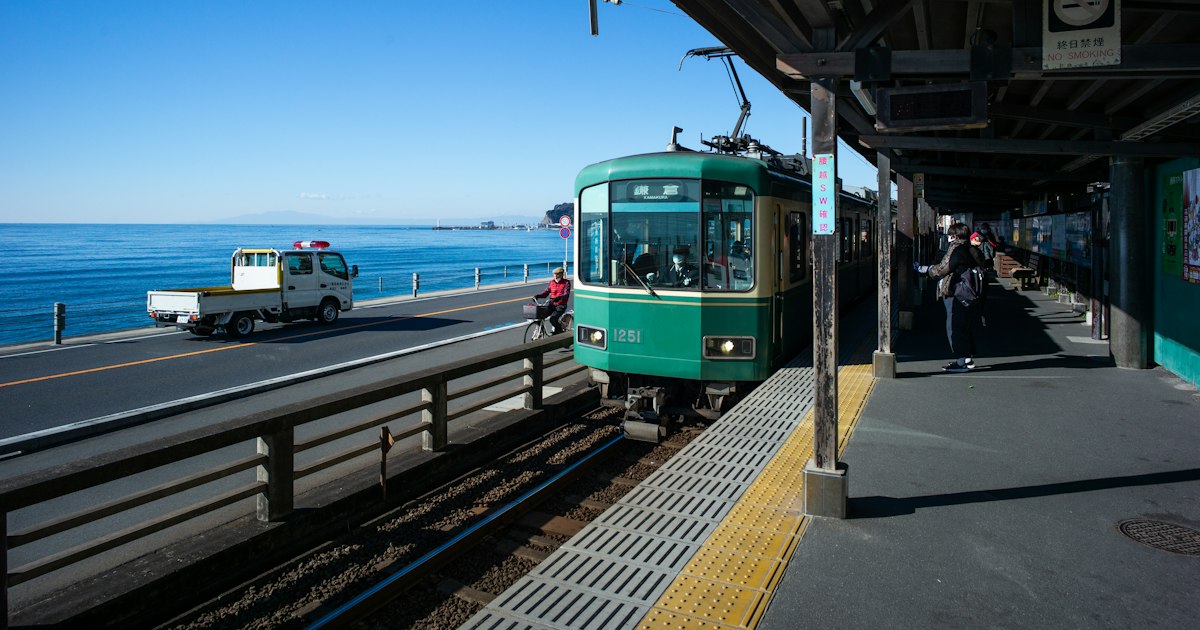
Most visitors to Tohoku stop at Matsushima and call it a day. But an hour or two further north, along Iwate Prefecture’s jagged rias coastline, runs a small local railway that tells a bigger story: the Sanriku Railway, rebuilt and reopened in the years after the 2011 tsunami, now carries passengers past fishing ports, cliffside tunnels, and quiet memorial parks that mark where entire towns once stood. It isn’t a famous bullet train, and that’s the point — this is slow, local, unpolished Japan, and one of the most moving short rail trips in the country.
What the Sanriku Railway Is
The Sanriku Railway (三陸鉄道, Sanriku Tetsudo) is a “third-sector” line — jointly owned by local municipalities rather than JR — running 163 km along the Pacific coast of Iwate Prefecture between Kuji in the north and Sakari in the south. It’s the longest third-sector railway in Japan. The current through-route, called the Rias Line (リアス線), was completed in March 2019, when the original Sanriku Railway’s two separate lines were joined with a middle section that used to belong to JR’s Yamada Line. That JR section was devastated by the 2011 tsunami and handed over to Sanriku Railway for reconstruction, since the smaller company could rebuild and operate it more nimbly than JR East was willing to.
The railway became a quiet symbol of Tohoku’s recovery because parts of it were running again within days of the March 2011 disaster, even while roads nearby were impassable. Locals still talk about it as proof that the region was rebuilding, not just surviving.
The Route and the Scenery
“Rias coast” refers to the deeply indented, drowned-river-valley coastline that defines this stretch of Iwate — a series of narrow inlets, fishing harbors, and headlands rather than a straight shoreline. The train threads through short tunnels and over bridges with regular ocean views, passing working ports where you’ll see oyster and scallop buoys bobbing offshore. Key stops include Kuji (gateway to the Ama diver culture made famous by the 2013 NHK drama “Amachan”), Miyako (a good lunch stop, known for sea urchin and seafood donburi), Kamaishi (steel town turned rugby-stadium host city), Rikuzentakata, and Sakari in Ofunato. Riding the full line one-way takes roughly 5.5–6 hours with stops, so most visitors ride a single scenic segment — the Kuji–Miyako stretch (around 1.5 hours) is the most popular for first-timers, with some of the best sea views concentrated there.
Tsunami Memory Along the Line
This isn’t a theme-park ride through disaster — it’s a working railway through towns that are still visibly rebuilding. Near several stations you’ll find memorial parks, rebuilt seawalls, and disaster-memorial facilities (denshokan), including ones in Rikuzentakata and Kamaishi that explain what happened in 2011 and how reconstruction proceeded. Some conductors narrate brief, respectful explanations as the train passes former disaster sites — ask at the station if an English pamphlet is available, as not all do. If you want to walk rather than just ride, sections of the Michinoku Coastal Trail, a long-distance hiking path linking memorial sites and fishing villages along this coast, intersect with several Sanriku Railway stations, so you can combine a short hike with a train leg.
How to Get There and Fares
From Tokyo, take the Tohoku Shinkansen to Morioka (around 2 hours 10 minutes to 2 hours 40 minutes depending on the train), then transfer to a JR bus or the JR Yamada Line to Miyako (roughly 2 hours), where you can pick up the Sanriku Railway. Alternatively, buses run directly from Morioka Station to Miyako and Kamaishi. There’s no shinkansen station directly on the coast, so budget a half-day of travel each way from Tokyo — this is a two- or three-night Tohoku add-on, not a quick side trip.
Fares are paid per section, similar to any local railway — expect roughly ¥200–¥400 for short hops between neighboring towns, climbing to around ¥3,000–¥3,800 for the full Kuji–Sakari run. Sanriku Railway also sells one-day unlimited-ride passes covering the whole line or just the northern/southern half, which are worth it if you plan to hop on and off at multiple stations; check current prices at a Sanriku Railway station window or the official website before you go, as fares are periodically revised. Most trains are unstaffed one-car diesel railcars with no IC card tap-in/out at smaller stations, so take a numbered ticket when boarding and pay the driver in cash when you get off.
Budget tip: a short Kuji–Miyako or Kamaishi–Sakari segment makes a satisfying taste of the line for under ¥1,000. Mid-range: a full-line one-day pass lets you break the journey with stops for lunch and a memorial visit. Splurge: book a seat on one of the seasonal sightseeing trains (reservations required, small surcharge), which slow down at scenic points for photos.
Best Time to Ride
Late spring through autumn (May–October) gives the clearest sea views and the most comfortable walking weather if you’re combining the train with a coastal trail section. Winter (roughly December through March) brings the railway’s best-known seasonal attraction: the Kotatsu Train, a heated railcar with traditional low kotatsu tables built into the seating, running on the northern Kuji–Miyako section with a small reservation surcharge on top of the regular fare. It’s a cozy way to watch a snowy, wind-whipped coastline go by. If you’re heading further inland into Iwate’s mountains in winter, pair the trip with our guide to renting snowshoes for backcountry walks in Japan’s snow country, since this part of Tohoku gets serious snowfall away from the coast.
Common Mistakes to Avoid
- Assuming it’s a day trip from Tokyo. Door-to-door travel time from central Tokyo to the coast is 5+ hours each way; plan at least one overnight in Morioka, Miyako, or Kamaishi.
- Expecting frequent service. Trains on rural sections can run just once every 1–2 hours — check the timetable before you plan a multi-stop itinerary, and don’t assume you can casually hop off and catch “the next one” quickly.
- Forgetting cash. Many stations are unstaffed and IC cards (Suica/Pasmo) are not accepted on most of the line — carry coins and small bills for fares.
- Treating the memorial sites like generic sightseeing stops. These are places where people died and communities are still rebuilding; keep photography and demeanor respectful, especially near memorial parks and denshokan.
- Skipping the shinkansen leg research. If you’re connecting via Morioka or Ichinoseki, double-check which shinkansen trains actually stop there, since not all Hayabusa services do.
Combine this trip with Sendai’s famous bay views at Matsushima Bay for a fuller Tohoku coastal itinerary — the two are about 2–3 hours apart by train and bus and make a natural north-south pairing. The rias coast’s cliffs and offshore rocks are also worth a look for anyone into seabirds; see our guide to birdwatching in Japan for gear and hotspot tips that apply well to this stretch of coastline. And if you’re juggling bags across a multi-leg Tohoku trip by shinkansen and local train, it’s worth knowing the procedure in our shinkansen lost item recovery guide before something gets left behind on a connecting train.
The Sanriku Railway won’t give you Insta-famous temple shots or crowds to fight through. What it gives you is a genuine window into how a region rebuilds itself — one short, slow, salt-air train ride at a time.