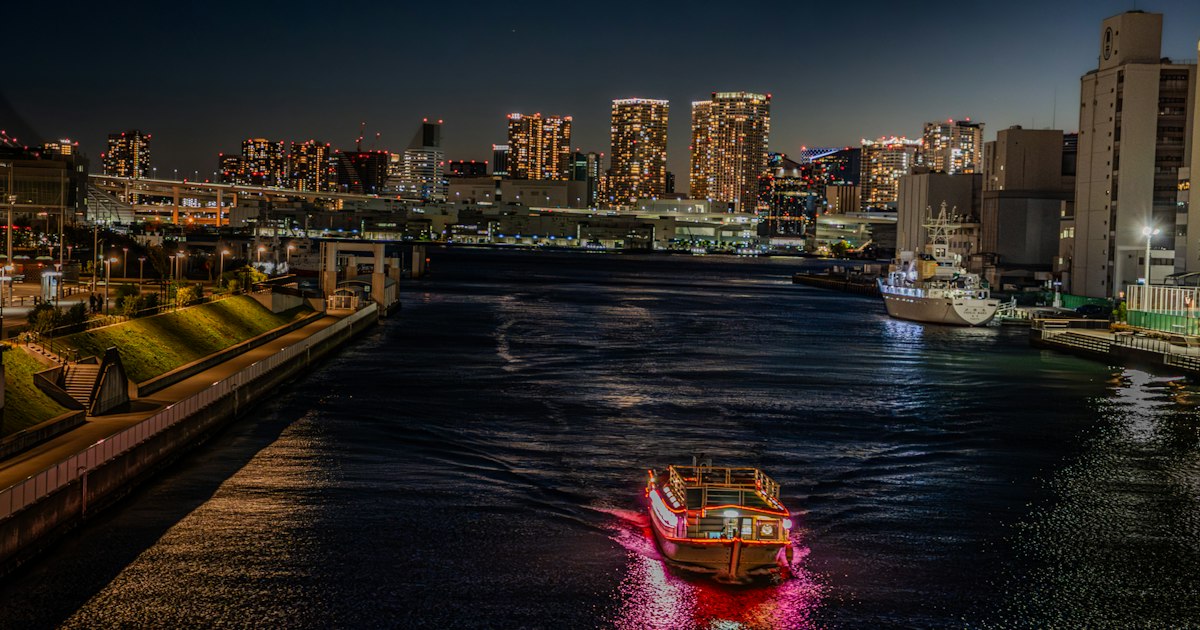
Photo by Bhanu Singh on Unsplash
Every July and August, Tokyo’s summer fireworks season turns the Sumida River and Tokyo Bay into the city’s best open-air theater. The problem is that everyone else wants a seat too — riverbanks fill up six hours before the first shell goes up, and the famous viewing spots around Asakusa and Odaiba become a wall of selfie sticks. Booking a private boat solves that problem outright: you get a moving, air-conditioned (or breezy, depending on the boat) grandstand with your own food, your own pace, and no one standing in front of you. Here’s how the booking process actually works, what it costs, and where the pitfalls are.
When to Go: Tokyo’s Summer Fireworks Season
The season runs roughly from mid-July through late August, with one fixed anchor date every year: the Sumida River Fireworks Festival (Sumidagawa Hanabi Taikai), held on the last Saturday of July. It launches around 20,000 shells from two points along the river near Asakusa, and while the festival itself is a river event rather than a bay event, boat operators based near Asakusa and Hinode Pier run special charter trips that time a bay or river route around it. Beyond that one date, Tokyo Bay itself hosts a rotating set of municipal and corporate fireworks displays through August — schedules shift year to year and are sometimes announced only a few months ahead, so if you have a specific date in mind, confirm it with the boat operator directly rather than booking first and checking later. Weekday evenings in early-to-mid August tend to have more availability and lower prices than the Sumida River weekend, which sells out boats months in advance.
Types of Boats and What They Cost
There are three practical tiers for a fireworks cruise, and the right one depends on group size and how much you want the “experience” part versus the “clear sightline” part.
- Budget — shared cruise ship ticket: Large cruise operators like Symphony and Vantean, departing from Hinode Pier near Hamamatsucho, sell individual seats on scheduled fireworks-viewing cruises for roughly ¥6,000–12,000 per adult, often including a buffet dinner. You share the boat with other passengers, but it’s the easiest way to get bay views without organizing a group.
- Mid-range — small private charter (yakatabune): Traditional low-roofed yakatabune houseboats, run by long-established operators such as Funasei, Amisei, and Harumiya, can be chartered privately for a group. Expect roughly ¥150,000–300,000 for a 2–3 hour evening charter seating 20–30 people, usually including a set tempura and sashimi dinner with all-you-can-drink beer and sake. Split across a group of 20, that’s about ¥8,000–15,000 per person — comparable to the shared cruise, but with a boat to yourselves and a tatami-floor dinner that feels distinctly Japanese.
- Splurge — full private cruiser or yacht: Smaller private motor yachts or custom charter boats for 6–12 people run from around ¥200,000–500,000 for a few hours, often bookable through concierge services, luxury travel agents, or boutique Tokyo boat-charter companies. This is the option if you want a quiet deck, no strangers, and full control over departure time and route.
How to Book: Platforms and Operators
Yakatabune operators like Funasei and Amisei take direct bookings by phone or through their own Japanese-language websites, though several now offer English booking forms or work with English-speaking travel agents during fireworks season specifically because of tourist demand. Cruise-ship operators (Symphony, Vantean) list individual fireworks-cruise dates on their own sites a few months ahead, and these can usually be booked in English directly or through hotel concierges. For a fully private charter, it’s often easier to go through a local concierge or boat-charter agency than to cold-call an operator, especially if you don’t read Japanese — the booking process is similar in spirit to arranging something like a home cooking class through a booking platform, where going through an intermediary that’s used to foreign guests smooths out language and payment friction. Whichever route you take, book 2–4 months ahead for the Sumida River weekend and at least 3–4 weeks ahead for other August dates.
Boarding Points and Getting There
Most yakatabune depart from piers along the Sumida River in Asakusa, Tsukuda, or near Kachidoki, and from Yokohama’s piers for Yokohama Bay fireworks. Cruise ships for Tokyo Bay typically leave from Hinode Pier, a five-minute walk from Hinode Station on the Tokyo Monorail or a short walk from Takeshiba Station on the Yurikamome. Arrive at least 30 minutes before departure — boats leave on schedule to secure a good viewing position before the show starts, and late arrivals are usually turned away rather than chased down. If you’re coming straight from sightseeing elsewhere in the city and don’t want to haul a suitcase onto a boat deck, it’s worth planning your day around a station locker; see this guide to stashing bags at the station for options near major hubs like Tokyo and Shinagawa.
Common Mistakes to Avoid
- Booking the boat before confirming the fireworks date. Festival schedules are sometimes finalized late, and a boat charter booked around a rumored date can end up on the water with nothing to see. Confirm the official date with the festival organizer or your boat operator before paying a deposit.
- Assuming every “Tokyo Bay cruise” has a clear sightline. Some scheduled routes prioritize the dinner service and skyline views over an unobstructed fireworks angle. Ask specifically whether the route is designed around that night’s fireworks location, especially for shared cruises.
- Underestimating the heat. Yakatabune decks are open-air and Tokyo’s July–August humidity is brutal even at night. Bring water and consider a neck fan or handheld fan — the deck seating area won’t always have strong air flow.
- Paying in cash only when a deposit by card or bank transfer was expected. Smaller yakatabune operators sometimes require a bank transfer deposit to confirm a private charter; clarify payment method and cancellation policy (many are non-refundable within a week or two of the event due to weather risk) before committing.
- Forgetting the rain contingency. Fireworks festivals are postponed, not cancelled outright, if rain is heavy — usually to the following day or weekend. Ask your operator what happens to your booking if the display is postponed, since it may not automatically roll over.
A Few Extra Touches
If you want to lean into the festival atmosphere rather than just watch from a distance, pick up a paper lantern before you go — the kind used at matsuri stalls and temple approaches across Japan. It’s a small, portable souvenir that also makes a nice photo prop on deck; see our guide to chochin paper lanterns from Gifu and Odawara for where to buy one before the trip. Between the dinner, the lantern light on the water, and 90 minutes of shells bursting over Tokyo Bay, a private boat turns a crowded summer festival into one of the more memorable nights of a Japan trip.