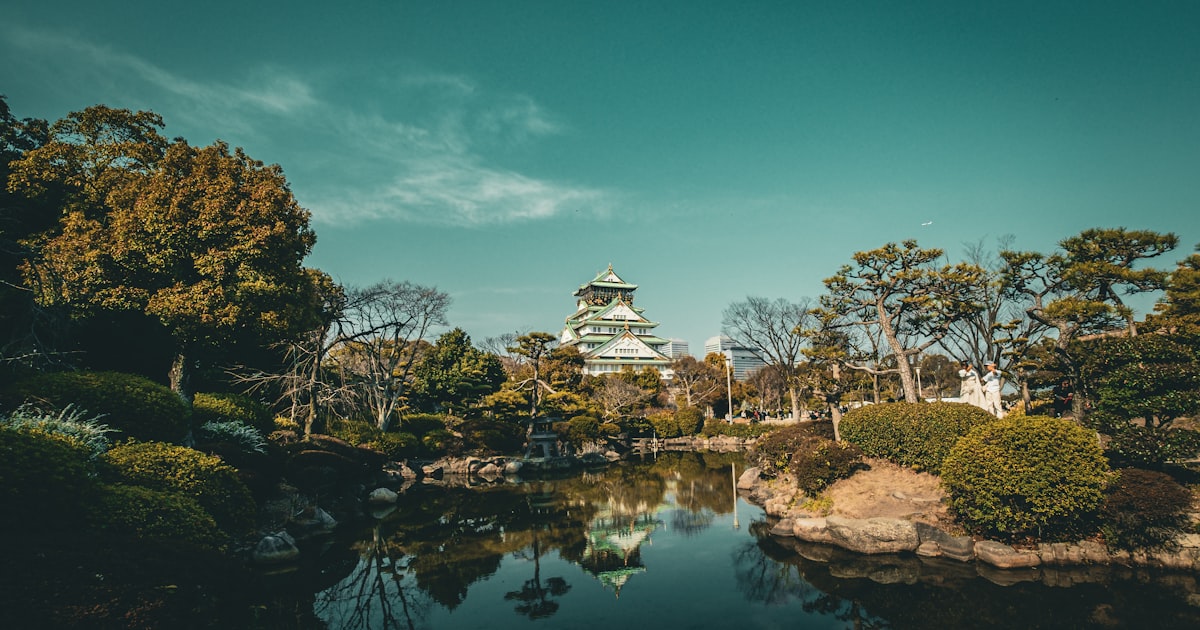
Photo by Dana Andreea Gheorghe on Unsplash
San’in — the quiet coastal region on Honshu’s Sea of Japan side — rarely makes a first-time Japan itinerary, and that’s exactly its appeal. Matsue and Izumo Taisha sit about 40 minutes apart in Shimane Prefecture, pairing one of Japan’s twelve surviving original castles with one of its two most important Shinto shrines. Neither location is crowded even in peak season, both are manageable as a long day trip or an easy overnight, and together they show a side of Japan that feels unhurried and lived-in rather than staged for tourists.
Getting to Matsue and Izumo
The honest answer is that San’in is remote, and that’s part of the planning. From Tokyo, the fastest route is flying into Izumo Airport (about 90 minutes from Haneda) or Yonago Airport near Matsue, then a bus or taxi into town. From Osaka or Kyoto, the Super Yakumo limited express runs from Okayama through Yonago to Matsue in roughly 2.5 hours; you’d reach Okayama first via Shinkansen. There’s no dedicated regional rail pass that makes this route free — the JR West passes cover parts of it, so it’s worth checking the coverage maps in our regional JR rail passes guide and the Kansai/Hokuriku pass breakdown before booking, since the Yakumo isn’t always included and a one-way reserved seat runs around 6,000-7,000 yen from Okayama. Once in Matsue, the Lakeline Bus loops past the main sights for 220 yen a ride or 550 yen for a one-day pass. Between Matsue Station and Izumo Taisha, the Ichibata Railway (locals call it the “Bataden”) takes about an hour with a transfer at Kawato, or a direct bus from Matsue takes roughly an hour for around 1,000 yen.
Matsue Castle: the real thing
Matsue Castle, completed in 1611, is one of only twelve Japanese castles with an original wooden keep — no concrete reconstruction, no elevator, just steep dark-wood staircases and centuries-old joinery. It was designated a National Treasure in 2015. Admission is 680 yen for adults, and the keep is open 8:30am to 6:30pm from April through September, and 8:30am to 5pm the rest of the year (last entry 30 minutes before close). Budget about an hour, more if you want to linger on the top floor, which gives a full view over Lake Shinji and the castle town. The surrounding Shiroyama Park is free to walk and especially worth it in early April, when roughly 190 cherry trees bloom around the moat — locals rate it among the best castle-and-sakura combinations in western Japan, without the Himeji-level crowds.
Right below the castle, the Shiomi Nawate samurai district has preserved earthen walls and pine trees along a canal, plus the former residence of writer Lafcadio Hearn, who lived in Matsue in the 1890s and wrote some of the first English-language accounts of Japanese ghost stories and folk customs — a small museum next door covers his life for 400 yen.
Lake Shinji and the canal boats
Matsue calls itself the “Water City,” and the easiest way to understand why is a ride on the Horikawa Sugoi sightseeing boats, which circle the castle moat for about 50 minutes. Tickets are 1,600 yen for adults, boats run roughly every 15-20 minutes from 9am to sunset, and in winter the boats have kotatsu-style heated floors since the roof lowers to pass under bridges. Separately, Lake Shinji itself is famous for sunset — the western shore near Shirakata Tenmangu Shrine fills with people watching the sun drop into the water most clear evenings, and it costs nothing. If you’re a coffee person, note that Matsue and greater Shimane have an unusually strong kissaten culture tied to the region’s tea traditions; if you want to know what to order, our kissaten guide covers the etiquette and classic menu items you’ll find in the town’s old coffee shops.
Izumo Taisha: one of Japan’s oldest shrines
Izumo Taisha’s exact founding date isn’t recorded, but it’s mentioned in Japan’s oldest chronicles from the 8th century and is considered, alongside Ise Jingu, one of the two most important shrines in Shinto. The shrine is dedicated to Okuninushi, the god of marriage and relationships, which makes it a popular pilgrimage for people praying for good matches — you’ll see this reflected in the ema (prayer plaques) left at the site. The shrine grounds are open 24 hours and free to enter; the main hall (honden), a National Treasure rebuilt in 1744, is the tallest shrine building in Japan though the interior is closed to the public except during rare special openings.
The most distinctive feature is the shimenawa — massive twisted straw ropes, the largest around 13 meters long and weighing several tons — hanging over the Kaguraden hall entrance. Tradition holds that all of Japan’s Shinto gods gather at Izumo Taisha every October (the old lunar tenth month), which is why that month is called Kannazuki, “month without gods,” everywhere else in Japan but Kamiarizuki, “month with gods,” here. If your trip lines up with it, the Kamiari Festival period draws bigger crowds and extra ceremonies. Otherwise, plan for 1.5-2 hours at the shrine, and go in early morning if you want photos of the shimenawa and torii gates without other visitors in frame.
Common mistakes to avoid
- Underestimating the distances. San’in isn’t compact like Kyoto — factor in real transit time between Matsue Station, the castle area, and Izumo Taisha rather than assuming everything is walkable.
- Praying the wrong way. Izumo Taisha uses a distinctive “two bows, four claps, one bow” ritual at the main hall, unlike the standard two-clap sequence used almost everywhere else in Japan. Watch what other visitors do before you approach.
- Skipping the castle’s last admission window. The keep’s last entry is 30 minutes before closing, and staff do enforce it — don’t arrive at 6pm expecting to climb to the top floor.
- Traveling in high summer without a plan for heat. Both sites involve outdoor walking with limited shade; spring (cherry blossoms) and autumn are far more comfortable and scenic.
Where to eat and what to buy
Matsue’s signature dish is shijimi clam miso soup, sourced from Lake Shinji — nearly every local restaurant serves it, typically 500-800 yen as a side. For a sit-down meal, Warabi-tei near the castle serves set lunches with shijimi soup and local fish from around 1,500 yen. Izumo soba, made with unhulled buckwheat and served cold in stacked lacquered bowls (warigo soba), is the other regional specialty — expect 900-1,300 yen near Izumo Taisha’s approach street, Shinmon-dori, which is also lined with shops selling local sake, magatama bead jewelry (Izumo has an ancient jade-carving tradition), and sweets. If you pick up ceramics, sake, or other breakables here, our guide to shipping souvenirs home covers packing and comparing post office versus courier rates so you’re not carrying fragile items the rest of your trip.
Budget, mid-range, and splurge notes
On a budget, a day trip from Matsue costs little beyond transit: castle admission (680 yen), a bus pass (550 yen), and cheap soba or convenience-store food keeps you well under 5,000 yen excluding lodging. Mid-range travelers should consider staying one night in Matsue rather than day-tripping from Okayama or Hiroshima — business hotels near the station run 8,000-12,000 yen and free up a full second day for Izumo Taisha without a rushed transit schedule. For a splurge, Tamatsukuri Onsen, a hot spring town about 15 minutes from Matsue Station, has been used for bathing since the 8th century and is said to make skin beautiful; ryokan there with kaiseki dinner and private onsen access range from 25,000-45,000 yen per person, and it pairs naturally with a castle-and-shrine itinerary as an overnight base.