If you’ve wandered through a hot spring town in Japan and smelled sulfur mixed with the scent of boiling water, you’ve probably also seen little stalls selling eggs with an oddly silky texture — white barely set, yolk warm and custardy. That’s onsen tamago, literally “hot spring egg,” and it’s one of the most satisfying 100-yen snacks in the country. Here’s what it actually is, the science behind the texture, and where to eat the best versions from Hakone to Kyushu.
What Is Onsen Tamago, Exactly?
Onsen tamago is not the same as the soft-boiled egg (hanjuku tamago) you get marinated in soy sauce atop a bowl of ramen. It’s cooked whole, in the shell, at a low and steady temperature — traditionally in natural hot spring water, now often replicated with sous-vide-style equipment. Egg whites and yolks set at different temperatures: yolk protein firms up around 65–70°C, while white needs closer to 80°C to fully solidify. Onsen tamago is held at roughly 65–68°C for 30–40 minutes, so the yolk turns gently custardy while the white stays translucent and barely-set, almost like a thin pudding. You eat it straight from the shell with a splash of soy sauce or a dashi-based sauce, or crack it over rice.
Hakone’s Black Eggs at Owakudani
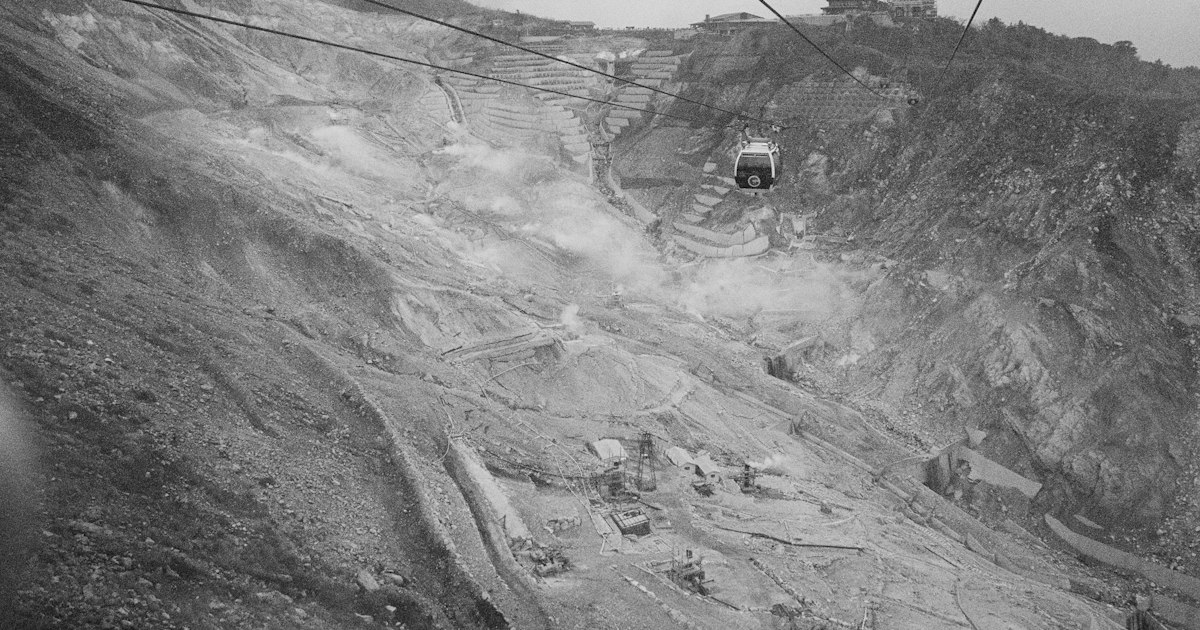
The most famous onsen egg in Japan isn’t even beige — it’s black. At Owakudani, the volcanic valley above Hakone, eggs are boiled in the naturally sulfuric hot spring water and steam vents, which coats the shells with iron sulfide and turns them jet black. Local legend says eating one adds seven years to your life. You’ll find them sold in bags of five for about ¥500 at the Kuro-tamago-kan shop right by the ropeway station, open daily roughly 9:00–16:00 (hours shift seasonally and Owakudani occasionally closes for volcanic gas monitoring, so check current status before you go).
To get there, take the Hakone Tozan Cable Car from Gora to Sounzan, then the Hakone Ropeway to Owakudani Station. The views over Mt. Fuji on a clear day are as much the draw as the eggs. Best timing is a morning visit before the ropeway gets crowded with tour groups, and autumn (October–November) or clear winter mornings give the best Fuji visibility. If you’re doing Hakone as a day trip from Tokyo with luggage in tow, it’s worth reading up on coin lockers in Japan so you can stash bags at Odawara or Hakone-Yumoto Station rather than hauling them up the ropeway.
Kusatsu and Nozawa Onsen: Cook Your Own
Several classic onsen towns let you boil your own eggs in designated cooking pools — never in the actual bathing water, which is both rude and unsanitary. In Kusatsu Onsen (Gunma Prefecture), shops around the iconic Yubatake hot spring field sell raw eggs in mesh bags for about ¥100–150; you lower them into a public tamago-yu (egg-boiling pool) for around 12–13 minutes and they come out perfectly done. In Nozawa Onsen (Nagano), the historic Ogama boiling spring near the village center serves the same purpose — it’s one of the town’s 13 free public bathhouses, and locals have used the adjacent boiling pool for cooking vegetables and eggs for generations. Both towns are best visited in winter, when steam rising off the springs against snowbanks is genuinely beautiful, though they’re pleasant year-round.
Beppu’s Hell-Cooked Eggs
Beppu, in Oita Prefecture on Kyushu, produces more hot spring water than anywhere else in Japan and channels the theatrics into its “Jigoku Meguri” (Hell Tour) — eight dramatically colored, boiling hot spring sites you visit sightseeing-style rather than bathing in. At Umi Jigoku (“Sea Hell”), a cobalt-blue pond that reaches around 98°C, eggs are steamed in cages over the vents and sold on-site for roughly ¥200–300 for a set of two or three. The Hell Tour circuit costs about ¥2,000 for a combined ticket covering all seven paid hells and takes half a day; individual hells run ¥400–500 each. Beppu Station connects to central Kyushu by JR, and local buses loop between the hells.
Onsen Tamago Near Nagano’s Snow Monkeys
If you’re heading to the Yudanaka-Shibu Onsen area to see the famous bathing macaques, budget time for the eggs too — this stretch of Nagano is dense with old-school onsen towns and several sell tamago cooked in spring water right along the main streets, typically ¥100–200 each from small vending stalls or ryokan gift shops. The monkeys themselves are the headline act here; see our guide to Jigokudani Monkey Park for access and timing, since the park is a 30-minute walk from the nearest bus stop and gets busiest between 11:00 and 14:00. Nearby Karuizawa, a longtime mountain retreat covered in our Karuizawa guide, also has onsen facilities if you want to combine a soak with the shopping and hiking the town is known for. And if you enjoy hands-on food experiences like cooking your own onsen egg, Nagano’s neighboring regions also offer nagashi somen, another interactive dish worth seeking out in summer.
Budget, Mid-Range, and Splurge Options
- Budget: Convenience store onsen tamago (Lawson and 7-Eleven both stock them in the refrigerated section) costs about ¥98–128 and is genuinely decent — a fine way to try the texture before committing to a trip.
- Mid-range: Eating them fresh at an onsen town — Hakone’s black eggs, Kusatsu’s self-boiled eggs, Beppu’s hell-steamed eggs — runs ¥100–500 depending on location and quantity, plus whatever sightseeing fees apply (ropeway, hell tour tickets).
- Splurge: Many ryokan serve onsen tamago as part of a kaiseki breakfast, sometimes dressed up with uni, wagyu, or truffle soy sauce. A ryokan stay with two meals included typically runs ¥25,000–60,000+ per person per night, but the tamago course itself is usually just one small, memorable bite within it.
Common Mistakes to Avoid
- Cooking eggs in bathing water: Only use designated tamago-yu (egg-boiling) pools, never the pools people are soaking in — staff will stop you, and it’s a real etiquette breach.
- Confusing it with ramen eggs: Hanjuku tamago (the soy-marinated ramen topping) is fully separate — it’s cooked hotter and longer, then marinated, giving a firmer white and a jammier, browner yolk.
- Assuming every “black egg” is onsen tamago: Hakone’s kuro-tamago is cooked the same low-temperature way, but the black shell comes from sulfur and iron in the water, not from the cooking method itself — regular onsen tamago elsewhere still has a plain, pale shell.
- Skipping the timing check at Owakudani: The valley periodically closes ropeway access during elevated volcanic gas readings; check current operating status before building a Hakone day around it.
Onsen tamago is a small thing, but it’s a good lens for understanding Japan’s hot spring culture more broadly — practical, communal, and built around genuinely using the geothermal water rather than just looking at it. Whether you grab one from a convenience store fridge or boil your own at a mountain onsen, it’s worth the five minutes.