Japan Trove

Author: JapanTrove Editorial

  • Seijin no Hi: Inside Japan’s Coming-of-Age Day and the Furisode Kimono Tradition

    Seijin no Hi: Inside Japan’s Coming-of-Age Day and the Furisode Kimono Tradition

    Photo by Elist Nguyen on Unsplash

    Every January, Japanese city halls fill with young women in dazzlingly long-sleeved kimono and young men in dark haori jackets, all there to mark a single rite of passage: Seijin no Hi, or Coming-of-Age Day. If you happen to be in Japan on the second Monday of January, you’ll stumble across groups of twenty-somethings posing for photos outside shrines and ward offices, hair pinned with silk flowers, fur stoles wrapped over kimono that can cost more than a used car. Here’s what the holiday actually means, why the furisode kimono is at the center of it, and how a visitor can experience the tradition without needing an invitation.

    What Seijin no Hi Is and When It Falls

    Seijin no Hi has been a national holiday since 1948, always falling on the second Monday of January — in 2026, that’s January 12. Traditionally it celebrated everyone turning 20 that year, since 20 was the legal age of adulthood in Japan: the age you could vote, drink, smoke, and sign contracts without a guardian’s consent.

    In 2022, Japan lowered the legal adult age to 18, but most municipalities kept the ceremonies anchored to 20-year-olds rather than 18-year-olds. The reasoning was practical — 18 is prime exam and job-hunting season, a terrible time to plan a citywide party — so for the vast majority of cities, “coming of age” is still celebrated at 20, even though it’s no longer the legal threshold. A handful of towns have shifted to 18 or hold joint ceremonies for both ages, so the exact cutoff varies slightly by municipality.

    How the Ceremonies Actually Unfold

    There’s no single national event — each city or ward runs its own. The typical format: honorees receive a postcard invitation from their hometown’s city hall months in advance, then return (often traveling home from university or their first job) to attend a formal ceremony, usually held late morning at a civic hall, gymnasium, or concert venue. Local officials give speeches, there are occasional performances, and attendees get a small commemorative gift. The real event, socially speaking, happens outside: group photos with old middle-school friends, trips to the family shrine to pray for good fortune, and a long afternoon of photographing each other in furisode and hakama before everyone changes into normal clothes for an evening of drinking — newly legal, at least for the 20-year-olds.

    Shrines tend to be the most visually striking place to catch it. Tokyo’s Meiji Jingu and Kyoto’s Heian Jingu both see a steady stream of furisode-clad visitors on the holiday weekend, arriving by mid-morning before the crowds and the cold set in.

    The Furisode: Japan’s Longest-Sleeved Kimono

    The furisode (“swinging sleeves”) is distinguished by sleeves that hang nearly to the ankle — roughly 100-115 cm long, compared to the 50 cm sleeve of a standard adult kimono. It’s traditionally worn only by unmarried women, which is why it’s historically been reserved for coming-of-age ceremonies, graduation days, and weddings (worn by the bride or close unmarried female relatives). The fabric is almost always vividly patterned silk, with motifs like cranes, cherry blossoms, or chrysanthemums dyed or embroidered across the whole garment rather than just the hem.

    Underneath the obvious drama of the sleeves, a full furisode outfit is a layered construction: the kimono itself, a stiff obi sash tied in an elaborate bow at the back, an obi-age and obi-jime for finishing touches, a fur or feather stole against the January cold, zori sandals, and a small handbag. Hair is styled and set with silk flower ornaments, and most young women book professional hair and makeup for the morning. None of it is something you put on alone — dressing takes a trained assistant 20-30 minutes.

    Renting vs. Buying: What It Actually Costs

    Because a full furisode is worn maybe three or four times in a lifetime, the overwhelming majority of families rent rather than buy.

    • Budget rental: around ¥150,000-¥200,000 for a full package — kimono, obi, accessories, hair, and makeup — booked through a local kimono shop, often arranged a full year in advance since popular patterns get reserved early.
    • Mid-range rental: ¥250,000-¥350,000 gets a wider choice of designer or brand-name patterns (labels like Tomiya or Fuku Kyoto) and usually includes a studio photo session.
    • Splurge / purchase: buying a new furisode outright runs ¥700,000 to well over ¥1,000,000 for high-end silk, and is generally only done by families who plan to pass it down to a daughter, niece, or granddaughter.

    On top of the kimono itself, most families budget separately for a photo studio session (¥30,000-¥100,000 depending on the number of prints and albums) — many book this weeks or months before the actual ceremony, specifically to avoid fighting January’s cold weather and crowded salons on the day itself.

    Can Visitors Try On a Furisode?

    You don’t need to be turning 20 in Japan to wear one. Kimono rental shops aimed at tourists — concentrated around Kyoto’s Gion and Arashiyama districts, Tokyo’s Asakusa near Senso-ji, and increasingly around shopping streets like Omotesando — offer simplified furisode-style rentals for roughly ¥6,000-¥15,000 for a half-day, including basic hair styling. These are a lighter, easier-to-move-in version of the real thing (fewer layers, simpler obi knots), but they capture the same visual effect for photos. Shops typically open around 9:00-10:00 and want you back by 17:00-18:00, so plan your shrine or temple visit for mid-morning when the light and the crowds are both manageable. Kyoto in particular pairs well with this: Gion’s Hanamikoji-dori and the approach to Heian Jingu are classic backdrops.

    Common Mistakes to Avoid

    • Visiting shrines on the holiday Monday itself expecting a quiet experience — Meiji Jingu and Heian Jingu are genuinely crowded with ceremony groups and their families that day; go the weekend before or after if you want to photograph furisode without the crush.
    • Assuming rental shops are walk-in friendly during January — tourist kimono shops near Gion and Asakusa get booked solid around New Year and Seijin no Hi weekend by both tourists and actual honorees; reserve at least a few days ahead.
    • Underestimating the cold — January ceremonies happen in genuinely cold weather, and the stole covers the shoulders but not much else; if you’re trying on a rental furisode, ask the shop for a heated hand warmer, which most keep on hand for exactly this reason.
    • Confusing furisode with other kimono types — a furisode’s long swinging sleeve is specific to unmarried women’s formal wear; married women and more casual occasions call for a tomesode or komon, which rental shops will usually clarify if you ask.

    Seijin no Hi sits in the same family of life-stage celebrations as Shichi-Go-San and Kodomo no Hi — all of them shrine-centered milestones that mark a Japanese life from childhood into adulthood. If your trip lands in mid-January, pairing a quiet shrine visit with a bowl of toshikoshi soba the week before makes for a neat seasonal through-line, from the last night of the old year to the first formal milestone of the new one.
  • Shichi-Go-San: Japan’s Shrine Festival for Children Ages 3, 5 & 7

    Shichi-Go-San: Japan’s Shrine Festival for Children Ages 3, 5 & 7

    Photo by Buddy AN on Unsplash

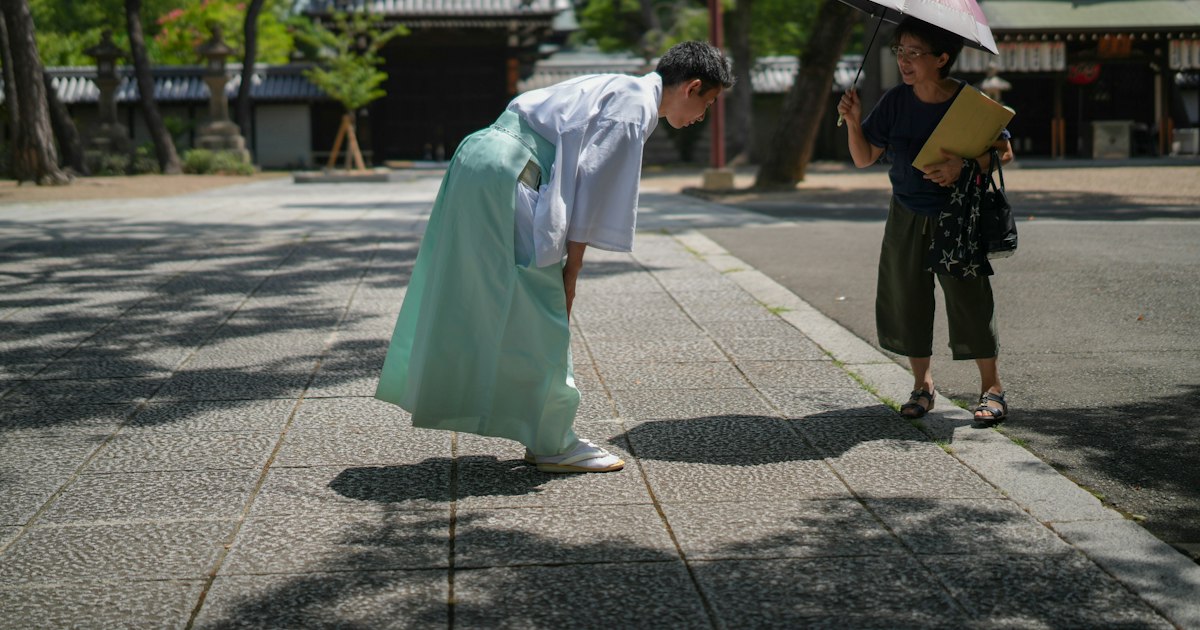
    Every autumn, Japanese shrines fill with small children in kimono and hakama, clutching bags of candy almost as big as they are, while grandparents trail behind with cameras. This is Shichi-Go-San (“Seven-Five-Three”), a rite-of-passage festival that marks milestone ages for children. If you’re traveling in Japan between mid-October and late November, you’ll likely stumble across it at any major shrine—and understanding what you’re seeing (and how to photograph it respectfully, or even join in if you have kids) makes the experience much richer.

    What Is Shichi-Go-San?

    Shichi-Go-San celebrates children turning 3 (boys and girls), 5 (traditionally boys), and 7 (traditionally girls), based on ages that trace back to Edo-period customs around infant survival and childhood milestones—3 for when children were first allowed to grow their hair, 5 for a boy’s first time wearing hakama, and 7 for a girl’s first time wearing a proper obi sash instead of a child’s cord. Families visit a Shinto shrine to give thanks for the child’s health and pray for continued growth. The ritual itself is simple: a shrine blessing (called oharai or gokigan), a stroll around the grounds in formal dress, and a bag of chitose-ame—”thousand-year candy,” a long red-and-white striped stick of hard candy packed in a paper bag printed with cranes, turtles, and pine, all symbols of longevity.

    It’s a family affair rather than a public spectacle, so there’s no parade or ticketed event—just a steady stream of dressed-up kids and relatives at shrines nationwide, especially on weekends.

    When to Go: Timing and Crowds

    The traditional date is November 15, but almost nobody actually goes that day anymore. Modern families book whichever weekend in October or November suits everyone’s schedule, which means the celebration effectively spans early October through early December, peaking on the Saturdays and Sundays surrounding November 15 (which falls on a Sunday in 2026, so expect that weekend and the one before it to be especially busy). Shrines are typically open to visitors from sunrise to sunset for general grounds access, but the kigansho (blessing office) where families register for a formal blessing usually operates around 9:00 to 16:00, with specific time slots assigned on busy weekends.

    If you want to photograph the festival without a crowd, go on a weekday in October—many families celebrate early to avoid the November rush and to get better rates from photo studios. If you’re more interested in seeing the festival at full scale, a Sunday in mid-November at a major shrine is unbeatable, but arrive before 11:00, as that’s when things peak.

    Best Shrines to Visit

    Any neighborhood shrine will have some Shichi-Go-San activity, but a few are known for drawing crowds and putting on a good show:

    • Meiji Jingu (Tokyo) — Harajuku’s grand forest shrine sees a steady flow of families all autumn. Nearest station is Harajuku (JR Yamanote Line) or Meiji-jingumae (Chiyoda/Fukutoshin lines), both about a 1-minute walk to the entrance. Grounds are free and open roughly 5:00–18:00 depending on the season.
    • Tokyo Daijingu (Chiyoda) — A smaller, quieter shrine near Iidabashi Station popular for formal family rites; good if you want to watch without the Meiji Jingu-scale crowds.
    • Kasama Inari Shrine (Ibaraki) — One of Japan’s three major Inari shrines, with a lively Shichi-Go-San season and easy access by local train from Tokyo.
    • Dazaifu Tenmangu (Fukuoka) — A major regional draw in Kyushu; reachable via Nishitetsu Dazaifu Line from Fukuoka.
    • Fushimi Inari Taisha (Kyoto) — Famous for its torii tunnels, it also hosts plenty of Shichi-Go-San visits on weekends, though the main draw of tourists there is year-round, not festival-specific.

    If your own trip itinerary includes Kyushu or Fukuoka, families sometimes buy a traditional Hakata ningyo clay doll as a keepsake gift for the celebrated child—you can read more about where to find them in our guide to Hakata Ningyo dolls.

    Kimono, Chitose-Ame, and Photos: What It Costs

    For visiting families or anyone curious about the economics of the day, here’s roughly what Japanese parents budget for:

    • Shrine blessing fee (hatsuho-ryo): typically ¥5,000–¥10,000 per child, paid in an envelope at the shrine office when you register for the ceremony.
    • Kimono rental for the child: ¥8,000–¥20,000 for a half-day rental including obi, zori sandals, and accessories; many photo studios bundle this into their package.
    • Chitose-ame: often included free with the shrine blessing, or purchased separately for a few hundred yen at the shrine’s souvenir counter.
    • Professional photography: studios like Studio Alice run Shichi-Go-San packages from around ¥20,000 for a basic print set up to ¥60,000–¥100,000+ for premium packages with multiple outfit changes, hair styling, and framed prints.

    If you’re a visiting family wanting to do this for your own child while in Japan, some shrine-adjacent rental shops and studios do accept walk-ins or English-language bookings, but reserving a few weeks ahead for a November weekend is strongly advised.

    Common Mistakes to Avoid

    A few things trip up visitors—and occasionally Japanese families too:

    • Assuming it must happen on November 15. It doesn’t; the actual date is flexible, and most families pick a convenient weekend within a two-month window.
    • Not booking the kimono rental and photo studio together in advance. Walk-in availability on peak weekends is thin, and prices are usually higher without a package deal.
    • Treating it as a public performance. It’s a private family ritual happening in a public space—feel free to admire from a respectful distance, but avoid stepping into family photos or blocking the shrine’s blessing queue to take your own shots.
    • Underestimating how tired small children get. Formal kimono and hakama are hot and restrictive; most families keep the shrine visit short and save the sit-down meal or studio session for when the child can change into comfortable clothes.
    • Confusing it with Kodomo no Hi. Shichi-Go-San (autumn, shrine-based, age milestones) is a different holiday from Kodomo no Hi, Japan’s Children’s Day in May, which involves koinobori carp streamers rather than shrine blessings.

    Budget, Mid-Range, and Splurge Options

    For travelers who want to experience Shichi-Go-San customs themselves rather than just observe:

    • Budget (~¥3,000–¥8,000): Visit a neighborhood shrine, buy chitose-ame from the souvenir stand, and simply observe the ritual respectfully from the shrine courtyard—free aside from any omiyage you pick up.
    • Mid-range (~¥20,000–¥40,000): Rent a child’s kimono from a shrine-adjacent rental shop, pay the blessing fee, and take your own photos around the shrine grounds.
    • Splurge (¥60,000+): Book a full-service photo studio package near a major shrine like Meiji Jingu, including professional hair and makeup, multiple costume changes, and framed prints—then combine the outing with formalwear shopping along nearby Omotesando, a short walk from the shrine.

    Whether you’re watching from the sidelines or celebrating your own child’s milestone, Shichi-Go-San is one of the more intimate, unscripted cultural moments you can witness in Japan—no ticket required, just good timing and a quiet camera.

  • Resort Shirakami, SL Hitoyoshi & Japan’s Best Scenic Sightseeing Trains

    Resort Shirakami, SL Hitoyoshi & Japan’s Best Scenic Sightseeing Trains

    Photo by PJH on Unsplash

    Most visitors ride Japan’s trains purely to get from A to B, but a small fleet of “joyful trains” (JR’s own term, Joyful Train) turn the journey itself into the destination. These are limited-run sightseeing trains with panoramic windows, local sake bars, retro steam engines, or glass domes, running through coastline, gorges, and rice fields that the Shinkansen blasts past in a tunnel. Booking one takes a bit more planning than a normal JR ride, but the payoff — a slow, scenic afternoon instead of another transfer — is usually worth it. Here’s how to actually plan around the best ones.

    Resort Shirakami: Tohoku’s coastal classic

    Resort Shirakami runs along the Gono Line between Akita and Aomori prefectures, tracing the Sea of Japan coastline for much of the route. There are three different train sets in rotation — Aoike, Buna, and Kumagera — each with slightly different interior themes, but all share the same big draw: wide panoramic windows and, on some runs, a carriage with tatami-style seating or live local shamisen performances.

    The classic routing is between Akita Station and Hirosaki (or Aomori), about 3 hours each way, hugging cliffs and fishing villages with the sea on one side. Reservations are required for the seat you want (around 自由席/non-reserved seats exist but reserved seating, ¥840 on top of the base fare, guarantees a window view), and the train only runs a handful of times per day, so check current timetables on JR East’s site before building your itinerary — schedules shift by season and some runs are suspended in winter storms. Best season is actually winter for dramatic stormy-sea views, but late spring through autumn is more comfortable and reliable. If you hold a JR East rail pass covering Tohoku, the base fare is typically covered; you just add the reserved seat fee.

    Common mistake: assuming you can simply hop on. Reserved seats sell out days ahead during Golden Week and autumn foliage season (mid-October to early November), so book as soon as your dates are fixed.

    SL Hitoyoshi and Kyushu’s steam-train revival

    Kyushu has leaned hard into steam nostalgia. The SL Hitoyoshi, a genuine coal-fired steam locomotive, has historically run on the Hisatsu Line between Kumamoto and Hitoyoshi through the Kuma River gorge — though JR Kyushu suspends and reroutes steam services periodically due to typhoon damage on the line, so always verify current operating status directly with JR Kyushu before counting on it. When running, tickets require both a base fare and a seat reservation (a few hundred to around ¥1,000 extra depending on class), and the cars include a small observation deck and retro wood-paneled interiors.

    Kyushu’s SL network has shifted over the years — the SL Yufuin no Mori steam service and the diesel-powered Yufuin no Mori express (not actually steam, despite the name) running between Hakata/Fukuoka and Yufuin are more consistently operational and just as scenic, winding through mountains toward the hot-spring town. If steam specifically matters to you, treat it as a bonus rather than the plan, and build in a backup day.

    Other joyful trains worth the detour

    A few others reliably deliver:

    • Odoriko / Saphir Odoriko — runs from Tokyo to the Izu Peninsula’s hot-spring coast. The Saphir Odoriko is the premium version with all-reserved, roomier seating and a small private suite; book via JR East’s reservation system or at any JR ticket counter.
    • Umi Kaze / Setouchi trains — several short scenic runs hug the Seto Inland Sea, useful if you’re already island-hopping toward spots like Shodoshima.
    • SL Gunma / SL Takasaki — a more accessible steam option from Tokyo, running on weekends in warmer months through Gunma’s countryside, good for a day trip without the Kyushu-level uncertainty.
    • Belles Montagnes et Mer / Umikaze trains in Shikoku — smaller, charming local runs with wood interiors and ocean or mountain views depending on the line.

    How to book and what it actually costs

    Joyful trains run on standard JR tracks, so you pay the normal base fare plus a reserved-seat surcharge (usually ¥500–¥1,500) — there’s no separate “tourist train ticket” system. Reservations open about one month before travel and can be made at any JR ticket counter (midori no madoguchi), via JR’s online reservation systems where available, or through travel agents in Japan. English-language phone booking is limited, so if you’re not comfortable navigating a Japanese reservation screen, it’s easier to reserve in person once you’ve landed, or ask your hotel concierge to call ahead.

    Budget approach: ride the non-reserved cars where available and accept you might stand or miss a window seat. Mid-range: book reserved seating 2–4 weeks out. Splurge: Saphir Odoriko’s suite-class seating or a private green-car compartment on Resort Shirakami, both of which need to be booked as early as the reservation window allows.

    Timing your trip around these trains

    Most joyful trains don’t run daily — many operate only on weekends, holidays, or a few fixed departures per day, and schedules are published roughly 3–6 months in advance with revisions closer to departure. Build your scenic-train day around the train’s timetable, not the other way around: pick the date first, then slot sightseeing in nearby towns around the departure and arrival times. Autumn foliage (late October–November) and spring (April) are the most popular windows and the first to sell out; summer and winter are quieter and often cheaper to combine with onward hot-spring or coastal stays.

    Practical tips before you go

    • Bring food and drink — some trains have small local-product bars (Resort Shirakami’s is a highlight), but service is limited and cash-only on older trains.
    • Toilets exist but are basic; don’t expect Shinkansen-level facilities on older rolling stock.
    • Photography through moving windows works best on the shaded side of the car — check which side faces the coast or gorge before choosing a seat.
    • If a route is suspended (weather, track damage, maintenance), JR usually substitutes a regular limited express on the same line — you’ll still get where you’re going, just without the theming.

    None of these trains require advanced Japanese or elaborate planning — just a bit of lead time on reservations and a flexible attitude if a steam service gets rerouted. Treat the ride itself as a sightseeing stop on your itinerary, not a transfer, and you’ll end up with some of the most memorable hours of the whole trip.

  • Kiyosumi-Shirakawa: Tokyo’s Third-Wave Coffee and Garden Neighborhood

    Kiyosumi-Shirakawa: Tokyo’s Third-Wave Coffee and Garden Neighborhood

    Photo by Jezael Melgoza on Unsplash

    Ten years ago, Kiyosumi-Shirakawa was a quiet, canal-laced corner of Koto Ward known mostly for its lumberyards and one classical Edo-period garden. Then, in February 2015, Blue Bottle Coffee chose it for its first café outside the United States, and the neighborhood quietly became the epicenter of Tokyo’s specialty coffee scene. Today it’s one of the few areas in the city where you can spend a morning wandering between serious roasters, sit in a 17th-century strolling garden, and barely see another tourist. Here’s how to do it properly.

    Getting There

    Kiyosumi-Shirakawa Station is served by the Tokyo Metro Hanzomon Line and the Toei Oedo Line. From Otemachi it’s a direct ride of about 10–12 minutes on the Hanzomon Line; from Shinjuku, the Oedo Line takes roughly 25–30 minutes. If you’re coming from Asakusa or the Tokyo Skytree area, it’s also an easy one-transfer trip via Monzen-nakacho on the Tozai Line, and you can walk the 15–20 minutes between the two stations past Tomioka Hachimangu Shrine if the weather’s good. The neighborhood itself is flat and compact — almost everything worth seeing sits within a 10-minute walk of the station, so you don’t need taxis or buses once you arrive.

    Why Coffee Roasters Picked This Neighborhood

    Kiyosumi-Shirakawa’s appeal to roasters was practical before it was aesthetic: cheap warehouse space, wide streets for delivery trucks, and proximity to central Tokyo without central Tokyo rents. Blue Bottle’s arrival (its Japan roastery and café sit a few minutes from Kiyosumi Teien) drew international attention, and New Zealand’s Allpress Espresso opened its Tokyo roastery here the year before, in a converted garage with roasting equipment visible from the communal seating. A cluster of independent roasters followed, and the area is now informally known among Tokyo coffee people as a pilgrimage site — low-key, unpretentious, and still mostly residential in character.

    The Best Cafés to Visit

    • Blue Bottle Coffee Kiyosumi-Shirakawa — The original Japan location, in a converted warehouse with high ceilings and minimalist seating. Pour-over coffee runs roughly ¥600–700; expect a line on weekend mornings. Generally open 8:00–19:00.
    • Allpress Espresso Tokyo Roastery — Espresso drinks around ¥450–550, plus toast and pastries. The roastery itself is the draw: you can watch green beans being roasted a few meters from your table.
    • ARiSE Coffee Roasters — A tiny storefront near the station with rotating single-origin beans and takeaway cups, popular with locals rather than tourists.
    • Cream of the Crop Coffee — A compact space known for carefully sourced beans and friendly, English-capable staff.

    None of these are large; most seat well under 30 people, and several close as early as 18:00 or take an irregular weekday off, so don’t plan a late-afternoon café crawl without checking hours that day. If you’d rather compare this hand-poured scene against Japan’s other everyday coffee culture, it’s worth reading about convenience store coffee in Japan — the ¥100 machine brew at Lawson or 7-Eleven is the exact opposite experience, and both are worth having in the same trip.

    Kiyosumi Teien: The Garden That Gives the Area Its Name

    Kiyosumi Teien is a strolling garden built around a large pond, originally developed in the late 17th century and later expanded by the Iwasaki family (founders of Mitsubishi) in the Meiji era. Admission is ¥150 for adults, ¥70 for seniors 65 and over, and free for elementary-school-age children and younger. It’s open 9:00–17:00 (last entry 16:30) and closed December 29–January 1. The garden’s rock collection — stones gathered from famous quarries across Japan and arranged along the pond’s edge — is its most distinctive feature, and the view across the water toward the central island is especially good in the early morning before tour groups arrive. Autumn foliage (mid-November to early December) and spring are the best seasons; summer is quieter but hot and humid, with fewer visitors.

    If you want a more formal, ceremonial introduction to Japanese tea culture rather than just a nice garden to sit in, see our guide to tea ceremony experiences in Kyoto and Tokyo — several bookable sessions run in central Tokyo and pair naturally with a coffee-and-garden day like this one.

    Beyond Coffee and Garden

    The Fukagawa Edo Museum, a short walk from the garden, recreates a 19th-century Fukagawa streetscape indoors — tatami rooms, a reconstructed well, and shopfronts you can walk through. Admission is around ¥400 for adults, and it’s closed on the second and fourth Monday of the month (check the current schedule before going, since closures shift around holidays). Tomioka Hachimangu Shrine, about 15 minutes away toward Monzen-nakacho, hosts one of Tokyo’s largest annual festivals (Fukagawa Hachiman Matsuri) in mid-August and is worth combining with a Monzen-nakacho lunch stop if you’re walking between the two stations.

    Common Mistakes to Avoid

    • Treating it as an Asakusa/Skytree add-on. It’s connected by train but not genuinely walkable in a “quick detour” sense — budget it as its own half-day, not a 20-minute stop.
    • Going on a Monday. Some cafés and the Edo Museum take irregular or fixed Monday closures; always check the specific day you’re planning before you go.
    • Expecting big-city café hours. Several of the best roasters close by 18:00 or 19:00 and have limited seating — this is not a late-night neighborhood.
    • Skipping the garden because “it’s just coffee shops now.” Kiyosumi Teien is a genuinely good garden independent of the coffee scene, and the ¥150 entry fee is one of the cheapest worthwhile sights in Tokyo.

    Budget, Mid-Range, and Splurge

    On a budget, a garden ticket (¥150) plus a drip coffee at ARiSE or Cream of the Crop (around ¥450) covers a satisfying morning for well under ¥1,000. For a mid-range visit, add the Fukagawa Edo Museum (¥400) and a pour-over plus pastry at Blue Bottle or Allpress (¥1,000–1,500 total). To splurge, look for seasonal cupping or brewing workshops that the roasters occasionally run (announced on their own social media rather than listed permanently), or combine the trip with a formal tea ceremony booking elsewhere in the city for a fuller contrast between Japan’s oldest and newest approaches to a hot drink. Either way, this is one of the few Tokyo neighborhoods where ¥2,000–3,000 buys a genuinely complete, uncrowded day. For a different flavor of local Tokyo neighborhood — heavier on izakaya and nightlife than coffee and gardens — see our guide to Sangenjaya, and for upscale shopping and architecture, Omotesando makes a good contrast on the other end of the city.

  • Hoshigaki: Japan’s Hand-Massaged Dried Persimmons and Where to Buy

    Hoshigaki: Japan’s Hand-Massaged Dried Persimmons and Where to Buy

    Photo by Madeline Liu on Unsplash

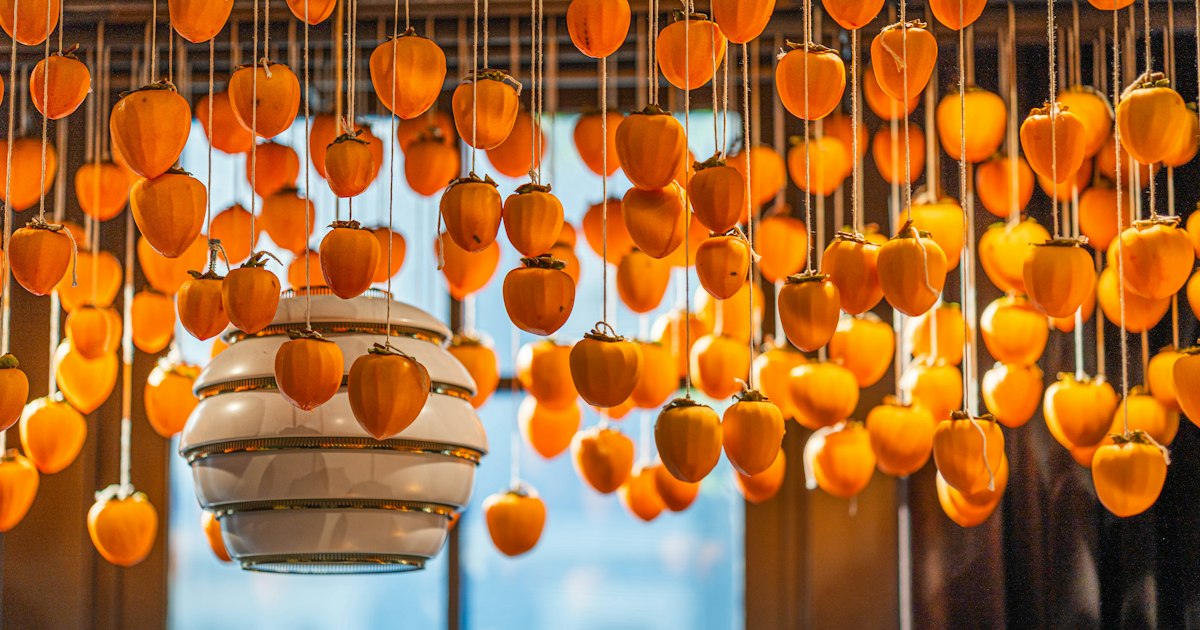
    Walk through a department store food hall in Japan in December and you’ll likely spot rows of wrinkled, amber-colored fruit dusted in what looks like frost, priced like jewelry. That’s hoshigaki — dried persimmons that are massaged by hand, day after day, until their tannins mellow and their natural sugars rise to the surface as a delicate white bloom. It’s one of Japan’s oldest preserved foods, it photographs beautifully hanging in curtains outside old farmhouses, and it makes one of the more unusual edible souvenirs you can bring home. Here’s what makes it special, when to look for it, and where to actually buy some.

    What Exactly Is Hoshigaki?

    Hoshigaki is made from astringent persimmon varieties (shibugaki) — not the sweet, crunchy persimmons you can eat fresh off the tree. Astringent types like Hiratanenashi are inedible raw because of high tannin content, but once peeled and air-dried for three to five weeks, that same tannin breaks down and the fruit turns into something closer to a natural toffee: deeply sweet, chewy at the edges, soft and almost jam-like in the center.

    The fruit is peeled, tied with string in pairs or skewered on sticks, and hung outdoors under eaves or on racks where cold, dry winter air does the work. You’ll see this done at an industrial scale in some regions and on a handful of strings outside a single farmhouse in others.

    The Hand-Massage Process That Makes It Special

    What separates proper hoshigaki from simply “dried persimmon” is the massage. Every two to three days during drying, each piece is gently kneaded by hand to break down the internal fibers, redistribute sugars evenly, and prevent the skin from hardening into a tough shell before the inside has finished drying. Skip this step and you get a fruit that’s leathery outside and unevenly sweet inside — skilled producers massage each piece upward of ten times over the drying period. It’s genuinely labor-intensive, which is a big part of why good hoshigaki isn’t cheap.

    Near the end of drying, glucose migrates to the surface and crystallizes into a white, powdery bloom. This “kobuko” or frosted coating is considered the sign of a well-made, properly aged hoshigaki — producers will tell you it should look almost sugar-coated, not just shriveled.

    Best Season to Buy

    Persimmons are harvested from October into November, and drying takes three to five weeks depending on the region, weather, and variety. That means hoshigaki starts appearing in shops from late November, peaks in December, and is at its best — fully sweetened, properly frosted — through late December into January. It’s closely tied to New Year’s: a skewer of dried persimmons (kushigaki), typically strung in a pattern of two, six, and two, is placed atop kagami mochi as a decoration, since the arrangement puns on a phrase for marital harmony. If you want the full experience, aim for a December or early January trip — by February, remaining stock is often older and drier, and by spring it’s largely gone until the next autumn harvest.

    Where to Buy It

    Budget (¥500–1,500): Supermarkets and roadside farm stands (michi-no-eki) near persimmon-growing regions sell loose, imperfect-looking hoshigaki for a fraction of gift-box prices — perfectly good eating, just not pretty enough for presentation boxes.

    Mid-range (¥1,500–4,000): Department store food halls (depachika) in Tokyo, Osaka, and Kyoto stock seasonal hoshigaki from known production areas from late November through January, usually in boxes of six to ten pieces. Isetan Shinjuku, Takashimaya, and Daimaru Kyoto are reliable bets; most depachika floors open around 10:00 and close by 20:00. If you’re already shopping in a high-end district, the gourmet food floors near Omotesando are worth a detour for winter fruit gifts generally.

    Splurge (¥5,000–10,000+): Named regional brands sold as formal gift boxes — the kind given for New Year’s greetings or as a prestige souvenir — command the highest prices, especially the largest, most evenly frosted specimens individually wrapped in paper. These are sized and priced closer to premium melons than to everyday dried fruit.

    Regional Varieties Worth Seeking Out

    A few production areas have built strong reputations:

    • Ichida, Nagano (Iida City): Probably the most famous name in hoshigaki, known for consistent size and a thick, even sugar frost. Iida is reachable by highway bus from Tokyo (around 4–5 hours from Shinjuku) or a shorter run from Nagoya, making it a feasible day-trip base in persimmon season.
    • Date, Fukushima: Famous for anpo-gaki, a softer, less fully dried cousin of hoshigaki — more like a moist dried fruit than a chewy sweet, and a good option if you find standard hoshigaki too dense.
    • Gifu and the Kansai region (Nara, Wakayama): Smaller-scale producers whose fruit shows up seasonally in Kyoto and Osaka depachika and at local farm markets.

    If you’re traveling specifically to see the drying process, late November into December is when strings of fruit are actually hanging outside farmhouses and drying sheds — worth asking at a local tourist information center for which farms allow visitors, since many are working households, not tourist attractions.

    Common Mistakes to Avoid

    • Buying it outside winter. Hoshigaki is genuinely seasonal; what you find in summer is either imported, old stock, or a different product entirely.
    • Judging it by looks alone. The wrinkled, dusty appearance that looks unappealing to first-timers is exactly what you want — smooth, glossy skin usually means it hasn’t dried or frosted properly.
    • Expecting it to taste like fresh persimmon. It’s concentrated, intensely sweet, and chewy — closer to a fig or date in texture than to fresh fruit. Start with one piece; a whole box in one sitting is a lot of sugar.
    • Packing it carelessly for the flight home. It’s sticky and can soften in heat, so keep boxes upright and out of direct sun in your luggage, and check your destination country’s fresh-produce import rules before bringing dried fruit across borders — some countries restrict it even when dried.

    A Gift With Built-In Meaning

    Because of its New Year associations, hoshigaki makes a thoughtful gift for a Japan-based friend or colleague in December, alongside other seasonal traditions like toshikoshi soba on New Year’s Eve. If you’re building out a broader gift list of Japanese craftsmanship while you’re at it, hand-finished goods like Suwada nail clippers pair well with a box of hoshigaki — one edible, one built to last decades, both representing the same patient, hands-on approach that runs through so much of Japanese craft.

  • Iwako Erasers: Japan’s Collectible Novelty Eraser Craze

    Iwako Erasers: Japan’s Collectible Novelty Eraser Craze

    Photo by Kelsy Gagnebin on Unsplash

    Tucked into the stationery aisle of almost any Japanese department store is a wall of tiny rubber animals, sushi pieces, and vehicles that come apart like jigsaw puzzles. These are Iwako erasers, and for a certain kind of traveler — the one who leaves Japan with a suitcase of 100-yen shop treasures and no regrets — they’re one of the most addictive, inexpensive souvenirs you can bring home. Here’s what they are, where to actually find good ones, and how to shop for them without wasting money on fakes or loose pieces.

    What Makes Iwako Erasers Different

    Iwako Co., Ltd. is a Tokyo-based maker that’s been producing novelty erasers since the late 1970s. Its signature trick is the “tsunagi” or puzzle-piece construction: a single eraser — say, a sushi set, a shark, or a fire truck — is molded as several interlocking pieces that pull apart and snap back together. A piece of nigiri separates into rice and fish. A dinosaur splits into head, body, and tail. It’s a simple idea, but the catalog runs into the hundreds of designs across animals, insects, food, vehicles, sports gear, and Japanese cultural motifs like Mt. Fuji or maneki-neko cats.

    One honest caveat: these are collector’s items first, erasers second. The soft, colored rubber compound is optimized for shape and color separation, not for rubbing out pencil marks — most Iwako pieces smear graphite more than they lift it. Buy them to display, trade, or stuff into a pencil case for fun, not to replace your actual eraser.

    Where to Buy Genuine Iwako in Japan

    Iwako erasers are sold individually in small blister packs, in multi-piece boxed sets, and as capsule-toy (gashapon) prizes. The most reliable places to find a wide selection:

    • Tokyu Hands and Loft — both chains have large stationery floors in almost every major city, with Iwako displayed near the kids’ stationery or novelty sections. Most branches are open daily roughly 10:00–21:00.
    • Sekaido in Shinjuku — one of Tokyo’s biggest stationery stores, with several floors dedicated to pens, paper, and novelty items including a deep Iwako selection.
    • Itoya in Ginza — more upscale, but its lower floors stock novelty erasers alongside premium stationery.
    • Department store toy and stationery floors (Isetan, Takashimaya, Seibu) — smaller selection but reliably genuine stock.
    • Kiddy Land near Omotesando — worth combining with a walk down that boulevard, since the toy floors there often carry seasonal or collaboration eraser sets you won’t see in suburban stores.

    Avoid assuming every 100-yen shop (Daiso, Seria) carries the real brand. They sell similar puzzle-style erasers that look the part but are made by different, cheaper manufacturers — fine for a quick, disposable souvenir, but not the same engineering or color quality as genuine Iwako, and they won’t have the “IWAKO” or “JAPAN” stamp on the packaging.

    What They Actually Cost

    Prices are refreshingly low, which is part of the appeal:

    • Budget (¥100–¥150): A single small eraser — one animal, one food item, one vehicle — in a basic blister pack. This is the standard unit price at most stationery stores.
    • Mid-range (¥300–¥600): Multi-piece sets, like a sushi platter with five or six pieces, a zoo animal set, or a boxed series of insects.
    • Splurge (¥800–¥2,000+): Large boxed collector sets, limited-edition series, or complete thematic collections (a full dinosaur set, a full sushi-bar counter scene) sold in gift-style packaging.
    • Gashapon capsules: If you spot Iwako-branded capsule machines, expect ¥200–¥400 per pull, with the design inside randomized — a fun but luck-based way to collect.

    Compare this to the gacha-driven randomness of ichiban kuji lottery draws, and Iwako feels downright generous: you know exactly what you’re buying, every time, for less than the price of a coffee.

    Best Series to Look For

    With hundreds of designs in rotation, a little targeting helps:

    • Food sets — sushi, bento, ramen bowls, and dessert sets are the most visually satisfying and the easiest to find year-round.
    • Insects and seasonal nature sets — beetles, cicadas, and dragonflies tend to appear more heavily in spring and summer stock, tied to the same seasonal rhythm as kids’ bug-collecting hobbies around Kodomo no Hi (Children’s Day) in early May — a good window to look for koi, samurai helmet, or carp-streamer themed pieces.
    • Region- or store-exclusive collaborations — occasionally a shop or region will carry a limited run (a Tokyo landmark set, a specific animal exclusive to one chain). These don’t repeat reliably, so buy on sight rather than planning to “come back later.”

    Best Time to Shop and How to Pack Your Haul

    There’s no strict “eraser season,” but two windows are worth knowing. New-term stationery stock refreshes heavily in March and April, when Japanese stores restock school supplies ahead of the academic year — new Iwako series often appear alongside pencils and notebooks at this time. Summer (June–August) is the second sweet spot, when insect- and beach-themed sets show up most reliably.

    Because the whole appeal is the puzzle-piece construction, loose or already-opened sets scatter easily. Keep boxed sets in their original packaging until you’re home, and if you buy loose pieces from an open display, bag them separately so small parts don’t vanish into the bottom of your backpack. They’re light and not fragile in the breakable sense, so they travel well in a carry-on — just don’t toss them unpacked into a bag with coins or keys, since pieces can snap apart under pressure.

    Common Mistakes to Avoid

    • Expecting them to erase well. Buy for display and collecting, not for your pencil case’s actual job.
    • Buying 100-yen shop lookalikes thinking they’re the real brand. They’re a different product line entirely — cheaper rubber, simpler molds, no Iwako stamp.
    • Assuming one store has “everything.” Stock rotates by season and by chain; if you find a design you love, buy it then — it may not be there on a return visit.
    • Not checking piece counts before leaving the store. Multi-piece sets are sometimes displayed open for sampling; make sure the sealed pack you’re buying has all its parts.

    If you enjoy Japan’s other small-scale collecting cultures — the precision-engineered claw grabs at UFO catcher arcades or the surprise-box thrill of ichiban kuji — Iwako erasers are the low-stakes, low-cost entry point: no skill required, no luck involved, just a shelf full of tiny rubber sushi waiting to be picked apart and put back together.

  • Kodomo no Hi: Japan’s Children’s Day, Koinobori Streamers & Kashiwa Mochi

    Kodomo no Hi: Japan’s Children’s Day, Koinobori Streamers & Kashiwa Mochi

    Photo by Ilia on Unsplash

    Every year on May 5, rivers of colorful carp-shaped streamers ripple over Japanese towns, wagashi shops sell out of oak-leaf-wrapped mochi, and department stores roll out miniature samurai helmets for sale. This is Kodomo no Hi (こどもの日), Japan’s Children’s Day — the final holiday of Golden Week and one of the most visually striking seasonal traditions you can catch as a visitor. Here’s what it actually celebrates, where to see it at its biggest, and what to eat while you’re there.

    What Is Kodomo no Hi?

    Kodomo no Hi falls on May 5 and has been a national holiday since 1948, closing out Golden Week (roughly April 29–May 5, though exact dates shift with weekends). Before 1948, May 5 was Tango no Sekku, a boys’ festival mirroring Hinamatsuri, the girls’ doll festival held on March 3. Officially the holiday is now for all children, but in practice most of the decorations and foods you’ll encounter — koinobori, kabuto helmets, iris leaves — still carry the old boys’-festival symbolism of strength and healthy growth. Families with young sons tend to mark it most visibly, but the public displays (rivers of carp streamers, festival stalls) are for everyone to enjoy.

    If you’re traveling with kids, this is also a genuinely fun week to be in Japan — museums and parks often run free or discounted admission for children around May 5, and local tourism boards post schedules a few weeks ahead on their sites.

    Koinobori: The Carp Streamers You’ll See Everywhere

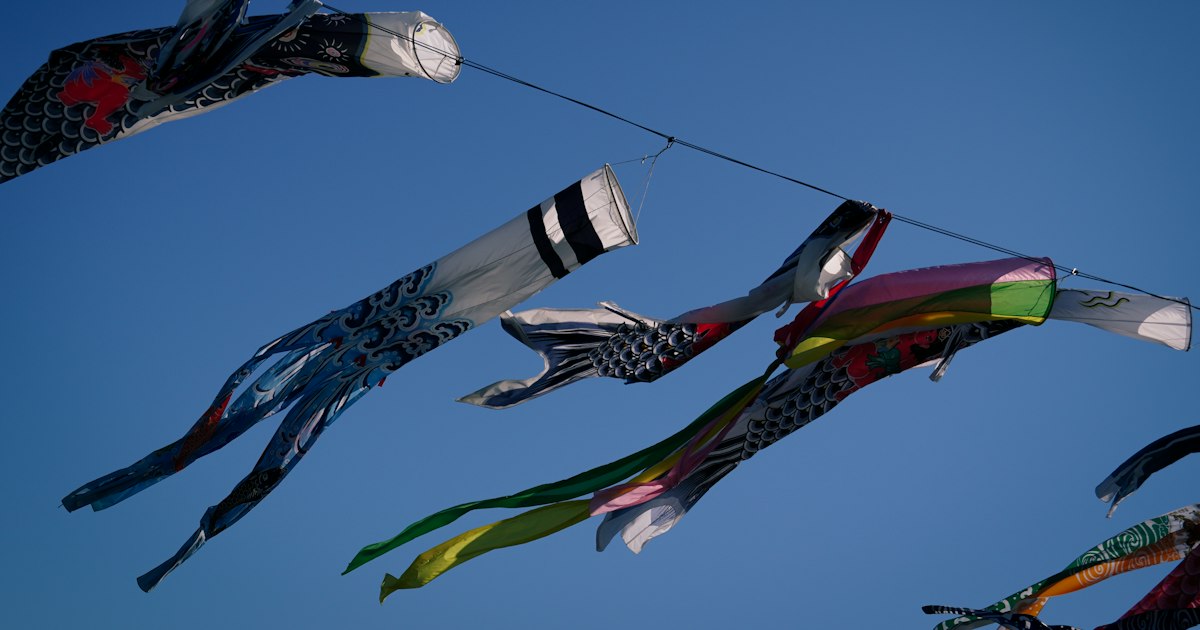
    Koinobori are windsock-style carp streamers flown on poles outside homes, apartment balconies, and rivers throughout April and early May. The imagery comes from a Chinese legend in which a carp swims upstream against a waterfall and becomes a dragon — a symbol of perseverance that Japanese families adopted for wishing children strength and resilience.

    A traditional set has a black carp (magoi, representing the father), a red carp (himoi, the mother), and one smaller, colorful carp for each child in the family, strung beneath spinning arrow-shaped wheels (yaguruma) and a cylindrical windsock. You’ll see small household sets on balconies from mid-April, and much larger community displays strung across rivers, which is where the real spectacle is.

    Best Places to See Giant Koinobori Displays

    If you want to see koinobori at scale rather than a single streamer on someone’s balcony, a few towns turn this into a proper festival:

    • Kazo, Saitama – The Kazo Giant Koinobori Festival flies a single enormous carp streamer (around 100m long, one of the largest in Japan) over the Tonegawa riverbed, alongside hundreds of smaller ones. Held in early May; free to attend. Kazo Station is about 40 minutes from Tokyo on the Tobu Isesaki Line, then a short bus or taxi ride to the riverbank site.
    • Sagamihara, Kanagawa – The Sagami River festival strings thousands of koinobori across the river, one of the largest such displays in the country, usually held the weekend closest to May 5. Reachable from Tokyo via the Odakyu or JR lines in roughly an hour.
    • Tatebayashi, Gunma – Koinobori no Sato runs for about a month (early April to early May), with thousands of streamers over the Tsuruuda River; one of the longer-running displays if your trip doesn’t land exactly on May 5.
    • Tokyo Tower – A smaller but convenient display goes up near the tower’s base in late April, good if you don’t have time to leave central Tokyo.

    Timing matters: most river displays go up in mid-to-late April and come down within a few days of May 5, so check the specific town’s tourism site for exact dates before building a day trip around it — unlike cherry blossoms, these dates are fixed by the organizers rather than the weather, so once you find them they’re reliable.

    Kashiwa Mochi and Chimaki: The Seasonal Sweets to Try

    The signature food of the holiday is kashiwa mochi — a soft mochi rice cake filled with sweet red bean (anko) or a miso-flavored bean paste, wrapped in a kashiwa (oak) leaf. The leaf isn’t eaten; it’s there for fragrance and symbolism, since oak leaves famously don’t fall until new buds appear, making them a stand-in for family lineage continuing unbroken.

    In the Kansai region (Osaka, Kyoto), you’re more likely to see chimaki instead — a different, slightly chewy mochi wrapped in bamboo leaf, without filling. Both appear in shops only seasonally, roughly from mid-April through May 5, so this isn’t a year-round souvenir.

    Where to buy it:

    • Budget: Supermarkets and convenience stores stock individually wrapped kashiwa mochi for about ¥150–250 per piece during the season — an easy, low-commitment way to try it.
    • Mid-range: Neighborhood wagashi (Japanese sweets) shops sell fresher versions, often ¥200–350 each, sometimes in small boxed sets of 3–5 for gifting.
    • Splurge: Department store food halls (depachika) carry premium versions from famous wagashi makers, individually boxed, which make a nicer souvenir if you’re bringing sweets home to share — though note mochi doesn’t travel or keep well, so this is a same-day treat, not a packable souvenir.

    If you like tracking down seasonal Japanese food traditions tied to specific calendar dates, this sits alongside things like Toshikoshi Soba on New Year’s Eve — another food whose symbolism matters as much as its taste.

    Shopping for Kabuto Helmets and Satsuki Dolls

    Families with young children often display a kabuto (samurai helmet) or a full Satsuki ningyo doll set in the weeks before May 5, parallel to how Hinamatsuri families display dolls in March. These range enormously in price and size:

    • Budget: Small decorative kabuto ornaments, a few centimeters tall, from around ¥3,000–8,000 — sold as general Japanese crafts, closer to a souvenir than a serious collectible.
    • Mid-range: Tabletop kabuto or armor display sets, roughly ¥20,000–60,000, sold at department stores like Takashimaya or Isetan from February through April.
    • Splurge: Full lacquered samurai armor replicas with helmet, stand, and folding screen can run ¥150,000–300,000+, the kind of purchase local grandparents traditionally make for a new grandson.

    If elaborate traditional dollcraft interests you beyond the holiday itself, it’s worth comparing to other regional doll traditions like Hakata Ningyo clay dolls from Fukuoka, which follow a completely different craft tradition but show the same cultural weight placed on figural dolls in Japan.

    For a lighter, cheaper way to bring home something kid-themed, Lawson convenience stores run Ichiban Kuji lottery draws that frequently feature children’s and anime characters — a fun five-minute stop rather than a planned purchase. And if you’re shopping with kids who recognize Japanese characters, note the overlap with Anpanman, the bread-headed superhero whose anpan origins make him one of the most recognizable characters on Kodomo no Hi merchandise aimed at toddlers.

    Common Mistakes and Timing Tips

    A few things trip up visitors planning around this holiday:

    • Confusing it with Hinamatsuri — March 3 is the girls’ doll festival; May 5 is Kodomo no Hi. Different displays, different sweets.
    • Underestimating Golden Week crowds and prices — because Kodomo no Hi falls inside Golden Week, trains, hotels, and popular sites nationwide are at their most expensive and crowded all year. If you’re coming specifically for koinobori displays, book transport and accommodation well in advance, or consider visiting Tatebayashi’s month-long display outside the absolute peak dates.
    • Assuming kashiwa mochi is available year-round — it’s strictly seasonal (mid-April to early May); don’t save it for later in your trip.
    • Missing the iris bath — many onsen and public baths add shobu (iris) leaves to the water on May 5 (shobu-yu), believed to ward off illness. It’s a small, easy-to-miss seasonal detail worth asking your ryokan or sento about if you’re visiting on the day itself.

    Kodomo no Hi rewards travelers who build in a little flexibility — the best koinobori displays are at their fullest for only about two weeks, and they’re far more impressive flying over a wide river than they are in photos, so it’s worth routing a day trip around one if your Golden Week itinerary allows it.

  • Yonaguni: Japan’s Westernmost Island and Its Underwater Ruins

    Yonaguni: Japan’s Westernmost Island and Its Underwater Ruins

    Photo by KaLisa Veer on Unsplash

    Closer to Taiwan than to mainland Okinawa, Yonaguni is the kind of place that rewards travelers willing to add an extra flight and an extra day to their Japan itinerary. It’s a windswept, sparsely populated island famous for two things: the mysterious rock formations known as the Yonaguni Monument, lying underwater just off its southern coast, and some of the best hammerhead shark diving in the world. There are no konbini on every corner here, no trains, and barely any crowds — which is exactly the point.

    Where Is Yonaguni, and Why Go

    Yonaguni sits at the far western edge of Japan’s territory, about 111 km from Taiwan’s coast and roughly 509 km from Okinawa’s main island. It belongs administratively to Okinawa Prefecture but feels like its own world — a small, hilly island around 28 square km with a population of under 1,700 people. If you’ve already visited Okinawa’s more developed islands like Miyakojima, Yonaguni is the opposite experience: fewer beaches for sunbathing, far more rugged coastline, wild horses, and a strong sense of being at the literal edge of the country.

    Most visitors come for one of two reasons — diving (especially the Monument and hammerhead sharks) or simply to stand at Japan’s westernmost point. Both are doable in a long weekend, though divers often stay three to four nights to get in enough dive days around weather.

    The Yonaguni Monument: Ruins or Rock?

    Discovered in 1986 by local diver Kihachiro Aratake while scouting for hammerhead sharks, the Yonaguni Monument is a series of stepped, rectangular rock formations sitting 5 to 25 meters underwater off the island’s southern coast near Arakawa-bana (Iseki Point). The formations have sharp right angles, flat terraces, and what look like carved steps and a possible stone face, which has fueled decades of debate over whether this is a natural sandstone formation shaped by fault lines and erosion, or the remains of a submerged ancient structure.

    Mainstream geologists, including most researchers from the University of the Ryukyus, lean toward a natural origin — the rock is sandstone that fractures along straight lines, and similar above-water formations exist elsewhere on Yonaguni. A smaller group of researchers, most prominently Masaaki Kimura, argue for human modification. Nobody has settled it definitively, which is honestly part of the appeal — you get to see the evidence yourself and form an opinion.

    You don’t need to be a certified diver to see it: glass-bottom boat tours run from Kubura Port on calm days for around 3,000–4,000 JPY per person, though visibility from the surface is limited. For a proper look, you’ll want to dive or snorkel it directly.

    Hammerhead Sharks and Diving Yonaguni

    Yonaguni’s other major draw is diving with schooling hammerhead sharks, which gather in deeper channel waters mainly from November through February, with December and January generally considered peak season. Sightings aren’t guaranteed — they depend on current, visibility, and luck — but local dive shops track conditions daily and will tell you honestly if the odds are low on a given day.

    A typical two-dive day trip costs around 18,000–23,000 JPY including boat and guide, with gear rental (wetsuit, BCD, regulator) often an extra 3,000–5,000 JPY if you’re not bringing your own. Currents around the Monument and the shark-viewing points can be strong, and several shops ask for Advanced Open Water certification or at minimum solid experience in current diving — this isn’t the easiest place to learn. Dive shops cluster around Kubura and Sonai; most are small, family-run operations, so book a few weeks ahead if you’re traveling in peak shark season, when boats fill up fast.

    Getting to Yonaguni

    There’s no bullet train shortcut here — flying is the realistic option for most travelers. Ryukyu Air Commuter (RAC) operates small turboprop flights to Yonaguni Airport (OGN) from Naha (about 1 hour) and from Ishigaki (about 30 minutes). These planes seat only a few dozen passengers, so flights sell out, especially around long weekends and shark season — book as early as you can, ideally a month or more ahead for winter travel.

    There’s also a passenger ferry from Ishigaki run by Fukuyama Kaiun, taking around 4 hours one way for roughly 3,500 JPY, but it only operates a few days a week and is frequently cancelled for rough seas — don’t rely on it as your only way out if you have a flight to catch elsewhere. If you want a sense of just how remote “remote island Japan” can get, it’s worth comparing notes with the Ogasawara Islands, which are even more isolated — Yonaguni is remote by Okinawan standards, but Ogasawara takes that to another level entirely.

    Once on the island, there’s no train or city bus network to speak of. Renting a car is close to essential — there are only one or two rental agencies on the island, with small cars running around 5,000–7,000 JPY per day, and they can sell out in peak season too. A few minshuku (guesthouses) offer airport pickup and bicycle rental as a cheaper alternative if you’re not planning to range far.

    Best Time to Visit

    For hammerhead sharks, aim for December through February, with peak odds in December and January. For calmer seas, better general visibility, and milder weather for non-diving sightseeing, April through June and October into November tend to be pleasant, with less typhoon risk than mid-summer. July through September brings the highest typhoon risk in the region — flights and ferries get cancelled with little notice, so build in a buffer day if you’re traveling then, especially since missing your return flight on a small prop-plane route can mean a multi-day wait for the next available seat.

    Beyond Diving: Horses, Dr. Coto, and Cape Irizaki

    Cape Irizaki (Nishihama), marked with a stone monument, is the westernmost point in Japan accessible by land — a simple, free, slightly wind-battered spot that’s become a pilgrimage site for completionist travelers. On clear days, locals say you can glimpse the mountains of Taiwan from here, though this is weather-dependent and not something to count on.

    Yonaguni horses (Yonaguni uma) are a small native breed that roams semi-wild across parts of the island — one of Japan’s few remaining native horse breeds, and noticeably smaller than typical riding horses. You’ll likely spot them grazing by the road while driving around.

    The island also has a minor pop-culture claim to fame: a set from the TV drama “Dr. Coto’s Clinic” (Dr. Koto Shinryojo) was built on Yonaguni and is preserved as a small, free-to-visit attraction near Hiyari Beach, drawing fans of the show even years after it aired.

    Practical Tips and Common Mistakes

    • Book flights and dive boats early. Seats on the prop planes and boat spots in shark season both fill up weeks in advance.
    • Bring cash. Card acceptance is limited outside a few shops and the airport; there are only a couple of ATMs on the island, and they don’t always accept foreign cards reliably.
    • Build in a buffer day before any onward international or domestic flight — weather cancellations are common, particularly in typhoon season (July–September).
    • Rent a car if you can. Without one, you’re limited to what taxis (few) and your guesthouse can arrange.
    • Don’t expect a swim-up view of the Monument. Unless you dive or snorkel it directly, you’re mostly looking at a glass-bottom boat’s view from above — manage expectations if you’re not a diver.
    • Accommodation is simple. Budget minshuku run around 5,000–8,000 JPY per night including breakfast; there’s no large resort-style hotel on the island, so don’t expect Naha-level amenities.

    Yonaguni isn’t a place you stumble into on a loosely planned Okinawa trip — it takes deliberate effort to reach. But for divers chasing hammerheads, or anyone curious enough about a 12,000-year-old debate over rocks under the sea, it’s one of the more memorable detours in Japan.

  • Miyakojima: Okinawa’s Bridge-Hopping Island Chain and Turquoise Beaches

    Miyakojima: Okinawa’s Bridge-Hopping Island Chain and Turquoise Beaches

    Photo by Samuel Berner on Unsplash

    Miyakojima isn’t on most first-time Japan itineraries, and that’s exactly its appeal. This small coral island roughly 300km southwest of Okinawa’s main island has no train, no big-city bustle, and some of the clearest water in the country — the kind of pale turquoise usually reserved for travel brochures about the South Pacific. What makes it unusually easy to explore is a set of free bridges that link Miyakojima to four smaller satellite islands, so a single rental car can take you island-hopping without a single ferry ticket.

    Getting There

    Miyako Airport (MMY) is the main gateway. ANA, JAL, Skymark, and Peach all fly direct from Naha (about 45 minutes, one-way fares roughly ¥8,000–¥20,000 depending on carrier and how far in advance you book). There are also direct flights from Tokyo Haneda and Narita (around 3 hours), Osaka Kansai (about 2.5 hours), and Fukuoka on ANA and JAL, which can save you a layover in Naha if you’re not otherwise visiting the Okinawa mainland. A second, smaller airport, Shimojishima Airport (SHI), sits on the western side of the island chain and handles limited seasonal and charter service — worth checking if you’re coming from Kobe, but MMY is the reliable option for most itineraries.

    There’s no train or monorail on Miyakojima, and public buses run infrequently and mostly for commuters, not sightseers. A rental car is effectively mandatory. Book ahead for Golden Week (late April–early May), summer school holidays, and Obon (mid-August), when cars sell out and daily rates climb from a typical ¥6,000 off-season to ¥10,000–¥15,000 for a compact.

    The Bridges That Make This Island Chain Special

    Miyakojima’s signature experience is driving across its bridges, each one framed by water so clear you can see the reef shadows from the car. The Irabu Bridge, opened in 2015, is 3,540 meters long and is Japan’s longest toll-free bridge, connecting Miyako Island to Irabu Island in a straight shot over the open sea — it’s free to cross and takes about five minutes to drive. From Irabu, the shorter Kugani Bridge continues on to Shimoji Island. On the northern side, the Ikema Bridge (1,425 meters) links to Ikema Island, home to some of the best snorkeling spots on the chain, and the Kurima Bridge (1,690 meters) connects to Kurima Island to the south. Pull over at the designated lookout points on either end of the Irabu Bridge at sunrise or sunset — it’s one of the few places in Japan where you can watch the color of the water genuinely change by the minute.

    The Beaches

    Yonaha Maehama Beach, on the island’s west coast, is a roughly 7km stretch of pale sand that regularly ranks among Japan’s best beaches, with gently sloping, swimmable water and enough length that it never feels crowded even in August. Sunayama Beach, closer to Hirara town, is smaller but famous for a natural stone arch at its edge and some of the easiest sunset access on the island. Painagama Beach sits within walking distance of central Hirara, making it a convenient spot for an evening swim without a car. For snorkeling, the protected coves on Ikema Island and the water around Shimoji Island tend to have the best visibility, often 20–30 meters on calm days. Yabiji, a massive reef system off the northern coast, is only accessible by boat tour and is worth it if you want to see coral structures most visitors never reach.

    When to Go

    April through June is the sweet spot: warm, relatively dry, and before the worst of typhoon season. October and November are also good, with calmer seas and fewer crowds than summer. July through September bring the warmest water and liveliest atmosphere but also peak typhoon risk — Miyakojima sits directly in the typhoon corridor, and flights can be delayed or cancelled with little notice, so build a buffer day into your itinerary if you’re traveling then. Winter (December–February) stays mild, around 18–20°C, and divers still come for the water temperature, but it’s windier and less reliable for beach lounging.

    Common Mistakes to Avoid

    • Skipping the rental car booking. Walk-up availability disappears fast in peak season, and without a car you’re cut off from most of the island’s beaches and bridges.
    • Swimming outside flagged areas. Box jellyfish (habu kurage) are a real hazard roughly June through October; stick to beaches with jellyfish nets and posted flags, and consider a stinger suit if you’re snorkeling off-season beaches.
    • Forgetting reef shoes. Several of the best snorkeling spots have rocky or coral entry points — flip-flops aren’t enough.
    • Underestimating the sun. There’s little shade on the bridges or the long beaches; bring reef-safe sunscreen and refill water, since convenience stores thin out once you’re outside Hirara.

    What to Eat and Bring Home

    Miyako soba is the local specialty and differs from Okinawa soba elsewhere in the prefecture — no fish cake, and the pork is typically served underneath the noodles rather than on top. A bowl at a casual shop in Hirara runs around ¥700–¥900. For souvenirs, look for Yukishio (“snow salt”), a mineral-rich sea salt made on Miyakojima using a patented freeze-drying process, sold in small tins and gift boxes at the airport and most souvenir shops — it’s a genuinely distinctive, packable gift that you won’t find made the same way anywhere else in Japan. Miyako-jofu, a traditional hand-woven ramie textile recognized as a UNESCO Intangible Cultural Heritage craft, is sold locally but at a serious price point; smaller accessory pieces are a more realistic buy than full bolts of cloth. If you’re packing snorkeling or beach gear from home rather than buying locally, it’s worth checking Japan’s own outdoor brands — see our guide to Snow Peak and Japan’s outdoor gear brands for well-made, packable options.

    Where to Stay

    Budget travelers can find guesthouse dorm beds or simple private rooms in Hirara from around ¥3,000–¥6,000 a night. Mid-range beach hotels, many clustered near Yonaha Maehama, typically run ¥15,000–¥25,000 for a double with sea-facing rooms. For a splurge, resorts like Shigira Bayside Suites or the Miyakojima Tokyu Hotel & Resorts offer private beach access and villa-style suites from roughly ¥30,000 a night and up, especially in peak summer months.

    If Miyakojima has you thinking about other quieter island escapes in Japan, the Ogasawara Islands offer an even more remote, UNESCO-listed experience reachable only by a 24-hour ferry from Tokyo — read our guide to the Ogasawara Islands before you plan. Closer to the mainland, Shodoshima in the Seto Inland Sea pairs easily with an art-island trip to Naoshima if you want a milder, more accessible island day trip on the same visit.

  • Love Hotels in Japan: What They Are and How Tourists Can (and Can’t) Stay

    Love Hotels in Japan: What They Are and How Tourists Can (and Can’t) Stay

    Photo by Koukichi Takahashi on Unsplash

    Love hotels are one of the most misunderstood fixtures of Japanese city life. They’re not seedy back-alley operations — they’re a regulated, decades-old industry with over 20,000 properties nationwide, used by couples of all ages who want privacy, a theme room, or simply a few quiet hours away from thin apartment walls and multi-generational households. For visitors, they’re also a genuinely useful (and often cheap) accommodation option, as long as you understand the rules before you walk up to the check-in panel.

    What Exactly Is a Love Hotel?

    A love hotel is a short-stay hotel designed around privacy rather than service. Rooms are rented by couples for a few hours (“rest”) or overnight (“stay”), and the entire experience is built to avoid face-to-face interaction — no lobby chit-chat, no shared elevators with other guests, often no visible staff at all. The category took off in the 1960s–70s as Japanese cities grew denser and privacy at home became scarce, and it has since evolved into a legitimate, licensed segment of the hospitality industry governed by the Entertainment Business Control Law (Fūzoku Eigyō Law).

    Rooms range from plain and modern to elaborately themed — space capsules, karaoke suites, rooms with private pools or saunas — and almost always include a large bathtub, a big TV, and a stocked drink/snack machine. Think of it as a boutique hotel room rented in blocks of time rather than by the night.

    Rest vs. Stay: Understanding the Pricing System

    Pricing is split into two modes, displayed on a lit panel at the entrance or on a screen inside:

    • Rest (休憩, kyūkei): Typically 1.5–3 hours, priced around ¥2,900–¥6,000 depending on the room grade and city. Usually available from late morning until early evening.
    • Stay (宿泊, shukuhaku): An overnight block, usually check-in after 22:00–23:00 with check-out by 10:00–11:00 the next morning. Expect ¥6,000–¥15,000, with nicer theme rooms and Friday/Saturday nights pushing toward the top of that range.

    Some hotels also offer a “rest + stay” combo if you arrive in the evening and want to linger, which is usually cheaper than booking a stay from scratch. Prices are almost always posted outside or on the room-selection panel — there’s rarely any negotiation or hidden fee, though a handful of older places are cash-only, so carry yen just in case.

    How to Actually Check In (No Front Desk Awkwardness)

    The process is designed to be fast and anonymous:

    • Walk into the entrance lobby, where a backlit panel shows available rooms with photos and prices. Press the button for the room you want.
    • A key or electronic tag is dispensed from a small window or automatic gate — in most properties you’ll barely glimpse staff, if at all.
    • Take the private elevator or stairwell directly to your floor.
    • Payment happens either at a machine in the room (slide cash or a card into a slot by the door) or at a screened checkout window when you leave — you’re rarely asked for ID, and there’s no paperwork to fill out.

    If a hotel has no vacancies, the panel lights go dark or show “満室” (full) — just walk to the next one, since most love hotel districts cluster several properties within a block of each other.

    Where to Find Them: Best Neighborhoods

    Love hotels cluster in entertainment districts, usually within walking distance of nightlife and arcades:

    • Tokyo: Shibuya’s Dogenzaka slope (nicknamed “Love Hotel Hill”), a steep street of dozens of properties a 5-minute walk from Shibuya Station; also Ikebukuro and parts of Gotanda.
    • Osaka: Namba and Dotonbori have a dense concentration, easy to reach on foot after a night out.
    • Fukuoka: The Nakasu entertainment district.

    These same neighborhoods tend to be where you’ll find Japan’s arcade and gaming culture too — if you’re staying near Shibuya or Namba, it’s worth pairing the night with a stop at a crane game arcade or a pachinko parlor, both of which cluster in the same streets. For a quieter, more local-feeling night out before heading back, Tokyo’s Sangenjaya izakaya district is a good alternative base, though it has fewer love hotels than Shibuya or Ikebukuro.

    Can Tourists Stay? What’s Allowed and What’s Not

    Yes — tourists are generally welcome, and plenty of foreign couples use love hotels as a cheap, convenient, and surprisingly fun alternative to a standard hotel room. A few rules to know:

    • You need to be a couple (or at least present as a pair). Most love hotels won’t rent to solo travelers, and many historically wouldn’t rent to same-sex couples either — this is changing, especially in Tokyo and Osaka, but policy still varies property by property, so it can help to call ahead or use a booking app if you want certainty.
    • Walk-ins are the norm, not reservations. The vast majority of love hotels don’t take advance bookings — you simply show up and pick an available room from the panel. A few tourist-friendly properties now accept reservations through apps like Kaveli, which has English listings and photos, useful if you want to guarantee a themed room on a weekend.
    • Minors are not permitted, and some properties post signage limiting entry to adults only, in line with the entertainment business licensing law.
    • Groups larger than two are usually turned away — rooms and pricing are built around couples, not friend groups or families.

    Common Mistakes to Avoid

    • Assuming you can pay by card everywhere. Many older love hotels are cash-only or have unreliable card readers; always carry enough yen to cover the room.
    • Missing the check-out window. Overstaying a “stay” booking past 10–11am usually triggers an automatic extra “rest” or “stay” charge billed through the in-room payment machine — there’s no front desk to negotiate with.
    • Arriving with large suitcases. There’s no luggage storage or bellhop service, and rooms are compact; love hotels work best as a one- or two-night novelty, not your main base with all your luggage for a multi-city trip.
    • Confusing “rest” pricing for an overnight rate. Booking a rest block late in the evening can leave you scrambling at 1am when the clock runs out and the hotel wants you to re-pay for a stay.
    • Expecting hotel amenities like breakfast or concierge service. This is a private-room product, not a full-service stay — there’s a vending machine, not a restaurant.

    Budget, Mid-Range, and Splurge Picks

    Since individual love hotels change names and ownership often and rarely have English websites, think in terms of tiers rather than specific properties:

    • Budget (¥6,000–¥8,000/night): Simple, clean rooms on Dogenzaka or in Namba — plain decor, a double bed, bathtub, and TV. Fine for a one-off stay to save money versus a standard hotel.
    • Mid-range (¥9,000–¥13,000/night): Theme rooms with better bathrooms (sometimes a jet bath or small sauna), karaoke machines, and more spacious layouts — the sweet spot for most tourists wanting the “experience” without going all-in.
    • Splurge (¥14,000+/night): Flagship theme rooms — private pools, elaborate decor sets, multi-room suites — found at the larger, more famous properties in Shibuya and Osaka’s Minami district, often the ones featured in Japanese variety shows.

    Whichever tier you choose, a love hotel stay is one of the more memorable, low-cost ways to see a side of Japanese urban life that most guidebooks skip entirely — just go in knowing the rules, and it’s a smooth, surprisingly efficient system.