Japan Trove

Category: Uncategorized

  • Imo Kenpi: Kochi’s Crunchy Sweet Potato Snack and Where to Buy

    Imo Kenpi: Kochi’s Crunchy Sweet Potato Snack and Where to Buy

    Photo by Louis Hansel on Unsplash

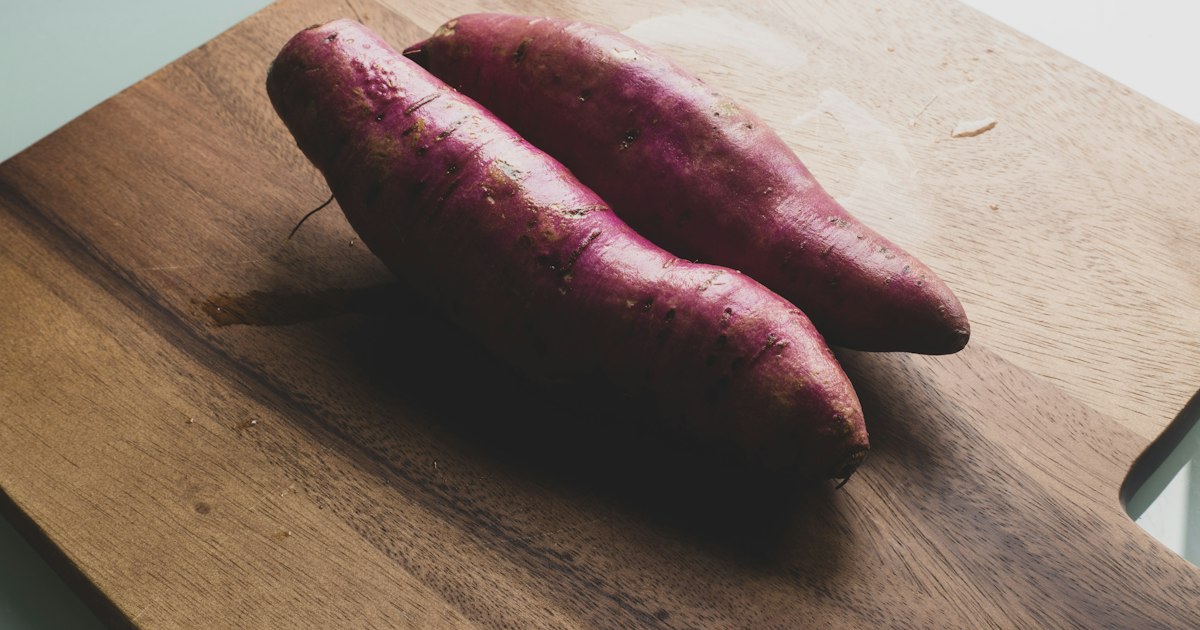
    If you’ve wandered through a Japanese supermarket snack aisle and seen bags of thin, glossy, caramel-colored sticks that look a bit like fried matchsticks, you’ve met imo kenpi (芋けんぴ). It’s deep-fried sweet potato coated in a thin sugar glaze, and while you can find mass-market versions almost anywhere in Japan, the real heartland of the snack is Kochi Prefecture on the island of Shikoku. This guide covers what imo kenpi actually is, where to buy the good stuff in Kochi, how to track it down if your trip doesn’t take you that far south, and the mistakes first-time buyers tend to make.

    What Exactly Is Imo Kenpi?

    Imo kenpi is made by cutting sweet potato into thin batons (the shape that gives it the “kenpi” name, which refers to a stick-shaped confection), deep-frying them until crisp, and then tossing them in hot sugar syrup that hardens into a thin, crackly glaze as it cools. Some shops use kintoki-style reddish sweet potatoes for a deeper flavor and color; others go lighter and starchier. A small amount of salt is sometimes added to the glaze to cut the sweetness, and you’ll increasingly see variations with black sugar (kokuto), honey, matcha, or purple sweet potato.

    Texture is the whole point. Done well, imo kenpi should shatter with a clean snap rather than go soft or chewy — that’s the main quality marker to look for when you’re choosing between brands.

    Why Kochi?

    Kochi has grown sweet potatoes on its volcanic, well-drained soil for generations, and imo kenpi developed here as a way to use surplus potato harvests in a form that keeps for weeks without refrigeration. Today Kochi still produces more imo kenpi than any other prefecture, and the city has multiple shops dedicated entirely to it, some of which fry in-store so you can buy a bag that’s still warm.

    Getting to Kochi takes a bit of effort: the JR Nanpu limited express connects Okayama to Kochi Station in roughly 2.5 hours, or you can fly directly into Kochi Ryoma Airport from Haneda (about 80 minutes) or Itami. If you’re already planning a slower route around Shikoku, it’s also a reasonable stop on a campervan road trip, since several michi-no-eki roadside stations along Shikoku’s coast stock local imo kenpi alongside other prefecture snacks.

    Where to Buy Imo Kenpi in Kochi City

    Hirome Market (ひろめ市場) — This indoor food hall near Kochi Castle is the easiest one-stop option. Most stalls run roughly 8:00 am to 11:00 pm (some close earlier on Sundays), and alongside bowls of katsuo tataki you’ll find a few stands selling bagged imo kenpi and other local sweets, typically ¥400–¥700 for a standard 150–200g bag.

    Imoya Kinjiro (芋屋金次郎) — The best-known dedicated imo kenpi specialty brand, with its roots and a flagship shop in Kochi. The appeal here is freshness: you can often watch potatoes being sliced and fried, and buy bags still warm from the fryer. Expect to pay somewhere in the ¥500–¥900 range for a standard bag, with gift boxes and multi-flavor sets running higher, often ¥1,000–¥2,500 depending on size.

    Obiyamachi Arcade (帯屋町商店街) — Kochi’s main covered shopping street, a short walk from the castle, has several confectionery shops carrying local imo kenpi alongside other Tosa specialties. It’s a good spot to compare a few brands side by side before committing to a gift box.

    Kochi Station and Kochi Ryoma Airport — Both have souvenir shops stocking imo kenpi in travel-friendly packaging, useful if you’re buying on your way out and don’t have time to seek out a specialty shop. Prices run slightly higher than in-town shops, typically ¥600–¥1,000 for a standard bag.

    Buying Imo Kenpi Outside Kochi

    You don’t have to go to Shikoku to find it. Imo kenpi is sold as an everyday snack in supermarkets and convenience stores across Japan, usually in the dried-goods or snack aisle, for roughly ¥200–¥400 a bag — it’s a common, unglamorous pantry item rather than a souvenir in most of the country. Don Quijote and larger Kaldi Coffee Farm branches often carry regional, Kochi-branded bags specifically, and these are a reasonable substitute if your itinerary doesn’t reach Shikoku. If you’re stocking up at a regular supermarket, note that most Japanese grocery stores expect you to bag your own purchases after paying — if that’s new to you, it’s worth a quick read of this guide to self-checkout and bagging in Japan before you’re standing at the register with an armful of snacks. Chains like Don Quijote also run their own point-card schemes, which are covered in this explainer on Japan’s store point card culture if you want to understand whether signing up is worth it for a short trip.

    Price, Flavors, and What to Look For

    As a rough budget guide: everyday supermarket bags run ¥200–¥400, Kochi specialty-shop standard bags run ¥500–¥900, and gift-boxed assortments or multi-flavor sets at a shop like Imoya Kinjiro run ¥1,000–¥2,500. There isn’t really a “splurge” tier beyond the gift boxes — this is fundamentally an inexpensive, everyday snack, which is part of its charm.

    Because it’s deep-fried and sugar-glazed, imo kenpi keeps well — sealed bags are typically good for a month or more unopened, making it one of the more forgiving souvenirs to buy early in a trip rather than on your last day. There’s no strong seasonal window since the potatoes used are harvested in autumn and then processed and stored, but some shops do run limited “shin-imo” (new harvest) batches in autumn with a slightly fresher, less starchy flavor — worth asking about if you’re visiting Kochi between September and November.

    Common Mistakes to Avoid

    • Confusing it with daigaku imo. Daigaku imo (“university potato”) is chunky fried sweet potato in a sesame-studded syrup, a different Kanto-region snack with a softer bite. Imo kenpi is always thin, stick-shaped, and crunchy — if what you’re holding is soft or chunky, it’s not kenpi.
    • Assuming all imo kenpi tastes the same. Sweetness level, glaze thickness, and potato variety vary a lot between brands. If a shop offers samples (many in Kochi do), try before buying a large bag.
    • Buying only at the airport. Airport souvenir prices run higher than in-town shops, and the selection is usually limited to one or two mainstream brands. If you have any time in central Kochi, buy there first.
    • Not checking your home country’s import rules. Commercially sealed, fully cooked snack food is generally fine to bring home in most countries, but travelers heading to places with strict biosecurity rules (Australia, New Zealand) should keep bags in their original sealed packaging and be ready to declare them, since customs forms often ask about anything containing potato.

    Imo kenpi won’t make headlines the way a bowl of katsuo tataki or a plate of Matsusaka beef might, but it’s one of those snacks that’s genuinely worth seeking out at the source — cheap, portable, and a far better souvenir for coworkers back home than another box of mixed senbei.
  • Napolitan: Japan’s Ketchup Spaghetti and the Kissaten Classic

    Napolitan: Japan’s Ketchup Spaghetti and the Kissaten Classic

    Photo by Yeh Xintong on Unsplash

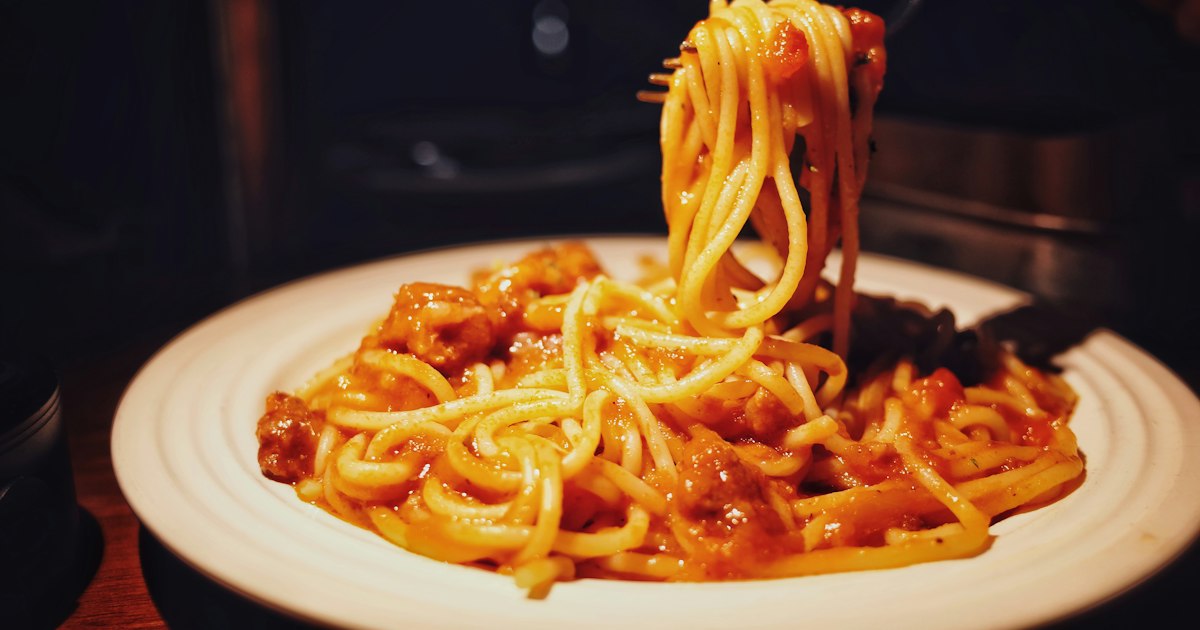
    If an Italian menu in Japan has a dish called “napolitan,” don’t expect anything from Naples. It’s spaghetti tossed in a thick ketchup sauce with sausage, onion, green pepper, and sometimes mushroom, usually topped with a dusting of parmesan and a shake of Tabasco at the table. It’s one of the most purely Japanese dishes you can order precisely because it was invented to taste foreign — and these days it’s harder to find than it used to be, which makes tracking it down at an old-school kissaten (Japanese-style coffeehouse) a genuinely worthwhile detour.

    What Napolitan Actually Is

    Napolitan is softer, slightly overcooked spaghetti pan-fried with butter or oil, ketchup, sliced hot dog or sausage, onion, and green bell pepper. There’s no tomato, basil, or olive oil in sight — the sauce is ketchup reduced on the pan until it clings to the noodles and caramelizes slightly at the edges, giving it a sweet-tangy, faintly smoky flavor that’s closer to a diner’s fried rice than to Italian pasta. Most kissaten serve it with a side of coleslaw or a small salad, a wedge of lemon, and a bottle of Tabasco on the table so you can spike it yourself.

    Expect to pay 700–1,100 yen at an old kissaten, versus 1,000–1,600 yen at a dedicated spaghetti specialist or hotel coffee lounge that plates it more elaborately (some wrap the whole thing in a thin omelet, called “omu-napolitan”). A few department store basement restaurants and Yokohama hotel grills push it to 1,800–2,200 yen for a version with extra shrimp or a fried egg on top.

    Where the Dish Actually Came From

    The most-cited origin story is Hotel New Grand in Yokohama, where a chef in the late 1940s is said to have improvised a ketchup-based pasta for Allied occupation forces who wanted something like spaghetti but couldn’t get fresh tomatoes reliably. Around the same era, Kabuto brand ketchup spaghetti mixes and American-style diner food were spreading through Japan’s postwar coffeehouse culture, and napolitan became a fixture of the kissaten “lunch set” alongside pilaf and curry rice. It’s not Neapolitan at all — the name is a loose, almost decorative gesture at “something Italian-sounding,” the same impulse that gave Japan “Vienna coffee” and “German potato.” If you’re curious about that kissaten world more broadly, the morning-service culture around Nagoya’s ogura toast comes from the same lineage of showa-era coffeehouses serving comfort food built around imported staples.

    Where to Actually Eat It

    Yokohama is the pilgrimage site. Hotel New Grand (2 Yamashitacho, Naka-ku; a 7-minute walk from Nihon-odori Station on the Minato Mirai Line, or about 10 minutes from JR Kannai Station) still serves “Spaghetti Napolitan” in its coffee lounge, roughly 1,900–2,200 yen, as the dish’s most direct link to its origin story. It’s open daily, generally 11:00–21:00 for the café, though hotel restaurant hours shift seasonally, so it’s worth checking same-day.

    Tokyo has several long-running kissaten worth seeking out: Ginza’s older coffeehouses and the Jimbocho/Kanda area (a book and curry district also worth a stop — see BookOff’s secondhand media hunting if you’re browsing nearby) have multiple shops serving napolitan for 800–1,200 yen. Many of these are small, cash-friendly, mom-and-pop operations with no English menu — pointing at a photo or saying “napolitan” works fine, since the name doesn’t change.

    Osaka and Kobe department store basement (“depachika”) restaurant floors, especially older ones in Umeda and Sannomiya, often keep a showa-style yoshoku (Western-influenced Japanese food) counter with napolitan on the menu for 900–1,300 yen, usually served alongside omurice and hayashi rice.

    Best Time to Go and How to Avoid Disappointment

    Kissaten serving napolitan are overwhelmingly a lunchtime phenomenon — most run a set lunch from around 11:00 to 14:00, and many close by late afternoon or only reopen for a light evening coffee menu without the hot kitchen. Arriving right at opening or just after 11:30 avoids both the empty-kitchen risk of a late order and the short lunch-rush queue at well-known spots like Hotel New Grand’s lounge. Weekday lunch is far less crowded than weekends, when nostalgia-seeking Japanese diners and retro-cafe fans fill these small rooms fast — some seat fewer than 20 people total.

    The biggest mistake visitors make is assuming “napolitan” means tomato-and-basil Italian pasta and sending it back as wrong — it isn’t a mistranslation, it’s the dish. The second mistake is skipping it because it sounds like a lesser version of real pasta; judged as its own genre (closer to American diner spaghetti or Japanese-style fried noodles) it’s genuinely satisfying, especially with a squeeze of lemon and a few shakes of Tabasco, which cuts the sweetness of the ketchup. Third: don’t expect it at modern Italian restaurants — younger chefs and upscale pasta bars have mostly dropped it, so you specifically need kissaten, yoshoku restaurants, old hotel grills, or Western-style diners (yoshokuya) rather than anywhere branding itself as authentic Italian.

    Budget, Mid-Range, and Splurge Versions

    For budget, a standalone napolitan plate at a neighborhood kissaten runs 700–1,000 yen and is often the cheapest hot lunch option in a given block, cheaper than most ramen. Mid-range, a napolitan lunch set with coffee, salad, and sometimes dessert at a kissaten or yoshoku restaurant runs 1,100–1,600 yen and is the most common way it’s actually served. For a splurge, seek out the omu-napolitan version wrapped in a thin fried egg, or Hotel New Grand’s historically-rooted plate, both landing around 1,800–2,400 yen — not expensive by Western standards, but a clear step up from the everyday version.

    Getting There and Practical Notes

    None of these spots require reservations for a single diner or small group at lunch; most kissaten are first-come, counter-and-table seating. Cash is still common at older, smaller shops even though card and IC-card payment (Suica/Pasmo) has spread to most hotel restaurants and chain yoshoku spots. If you’re building a Yokohama day around the Hotel New Grand visit, it pairs easily with a walk through Yamashita Park and Chinatown, both within 10–15 minutes on foot, making lunch there a natural midday stop rather than a dedicated trip.

    Napolitan won’t appear on any “best of Japanese cuisine” list, and that’s exactly the point — it’s a window into postwar Japan’s hungry, improvisational relationship with Western food, served today mostly by aging kissaten owners keeping a very specific memory alive one ketchup-stained pan at a time.

  • Goya Champuru: Okinawa’s Bitter Melon Stir-Fry and Where to Try It

    If you only eat one dish in Okinawa, make it goya champuru. It’s the prefecture’s unofficial culinary emblem — a stir-fry of bitter melon, egg, tofu, and pork that tastes like nothing else in mainland Japanese cuisine. It’s also one of the easiest ways to understand why Okinawan food developed so differently from Tokyo’s or Osaka’s: subtropical ingredients, American wartime influence, and a culture built around eating for stamina in brutal heat. Here’s what it actually is, where to try it, and the mistakes first-timers make.

    What Exactly Is Goya Champuru?

    “Goya” is the Okinawan name for bitter melon (nigauri in standard Japanese), a bumpy, pale-green gourd packed with a quinine-like bitterness that’s an acquired taste for most visitors. “Champuru” comes from Okinawan dialect and simply means “something mixed” — the same root word shows up across Okinawan cooking for any stir-fried jumble of ingredients.

    The standard version sautés thinly sliced goya with cubes of shima-dofu (Okinawa’s firmer, denser island tofu), scrambled egg, and either Spam-style canned pork luncheon meat or sliced pork belly, finished with a shower of bonito flakes. Restaurants sometimes soften the bitterness by salting the sliced goya and massaging out some of the moisture before cooking, but a good champuru should still taste distinctly bitter — that’s the point, not a flaw.

    The dish got a huge boost in mainland popularity after it featured heavily in the 2001–2002 NHK morning drama “Chura-san,” set in Okinawa. Before that it was almost entirely a regional home-cooking staple.

    Why Okinawans Eat It

    Goya is a hot-weather crop, and Okinawans have long treated it as a seasonal stamina food — conceptually similar to how mainland Japan eats grilled eel on Doyo no Ushi no Hi to fight off summer fatigue. Bitter melon is genuinely rich in vitamin C (more per gram than a lemon, and the heat-stable kind that survives cooking) plus potassium, which matters in a climate where you sweat out electrolytes fast. Pairing it with protein-dense pork and tofu rounds it into a complete, filling meal rather than a side dish — order it expecting a main course, not a garnish.

    Best Season for Goya

    Goya is harvested from roughly April through August, with the heaviest crop in June and July. Melons picked earlier in the season (April–May) tend to be slightly smaller and milder; the peak-summer harvest is more intensely bitter. Because Okinawa grows goya in greenhouses and it’s shipped fresh from Kyushu as well, restaurants serve it year-round — but if you want the vegetable at its most vivid and the dish at its most “authentic summer” flavor, visiting between May and August is ideal. It also happens to coincide with Okinawa’s rainy-season-to-peak-summer stretch, so you’ll want it for the same reason locals do: it’s hot and you need the stamina boost.

    Where to Try It in Naha

    Budget (¥500–900): Head to Makishi Public Market (Makishi Kosetsu Ichiba) in central Naha, a short walk from Makishi Station on the Yui Rail monorail. The food stalls and surrounding okinawa-soba shops on and around Kokusai-dori serve goya champuru as a set with rice and soup for well under ¥1,000. Many stalls open by mid-morning and wind down by early evening, and some close on a rotating weekday, so it’s worth checking signage or asking your hotel before making a special trip.

    Mid-range (¥900–1,800): Izakaya throughout Naha’s Kokusai-dori and Matsuyama entertainment districts list goya champuru as a standard small plate, usually ¥700–900 on its own, or as part of an Okinawan-cuisine izakaya course alongside rafute (braised pork belly) and mimiga (pig’s ear salad). These courses typically run ¥2,500–4,000 per person with a couple of drinks.

    Splurge (¥4,000–8,000+): Hotel restaurants and dedicated Okinawan kaiseki-style dining rooms in Naha and the resort areas around Onna and Nago plate a refined version of goya champuru as one course within a multi-dish tasting menu, often using Agu pork (Okinawa’s heritage pig breed) instead of standard pork belly. It’s the same dish, but the texture and seasoning are noticeably more delicate.

    Cooking It Yourself

    If your accommodation has a kitchen, goya champuru is genuinely easy to replicate. Fresh goya is sold at any Okinawan supermarket (look for the bumpy pale-green gourds near the other vegetables) and most carry pre-mixed “goya champuru no moto” seasoning packets that take the guesswork out of the sauce — these also make a compact, non-breakable souvenir to bring home. Pick up Spam or thin pork belly and a block of shima-dofu if you can find it (regular firm tofu works too, just press out extra water first). If you’re new to Japanese self-checkout lanes, bagging stations, and the general rhythm of grocery shopping here, our guide on self-checkout and bagging your own groceries in Japan covers the etiquette so you’re not fumbling at the register.

    Mistakes Tourists Make

    • Expecting it to be mild. The bitterness is sharp and lingers — some visitors assume an off taste means the dish is spoiled and send it back. It’s supposed to taste like that.
    • Treating it as a side dish. With egg, tofu, and pork folded in, a full plate of goya champuru is substantial enough to be a meal on its own, especially paired with rice.
    • Only looking for it in summer. It’s a year-round menu item in Okinawa, so don’t rule out a winter trip assuming you’ll miss it — you’ll just be eating greenhouse-grown or shipped-in goya rather than peak-season local harvest.
    • Skipping Okinawa because it feels remote. Naha is a 2.5–3 hour direct flight from Tokyo, Osaka, or Fukuoka, and goya champuru is on nearly every casual restaurant menu once you land — it’s not a dish you need to hunt for.

    Beyond Goya Champuru

    If regional specialty dishes are your travel theme, Okinawa’s goya champuru sits alongside a wider map of Japan’s prefecture-defining foods worth building a trip around — from Matsusaka beef in Mie to Hiroshima’s oyster season. Each one, like goya champuru, tends to taste best when you eat it in season, in the region that invented it, rather than a pre-packaged version back home.

  • Maternity Clothing Shopping in Japan: Where Expecting Travelers Can Buy Maternity Wear

    Maternity Clothing Shopping in Japan: Where Expecting Travelers Can Buy Maternity Wear

    Photo by Tianshu Liu on Unsplash

    Packing light for a Japan trip while pregnant is tricky — your body is changing faster than your suitcase can keep up, and Japanese summers and winters both demand specific layers. The good news is that Japan has an excellent maternity clothing retail scene, from budget chain stores to department store boutiques, and most of it is easy to shop even if you don’t read Japanese. Here’s where to go, what things cost, and the mistakes that trip up first-time maternity shoppers.

    Why Shopping for Maternity Wear in Japan Takes a Bit of Planning

    Unlike general fashion, maternity shopping in Japan is split between suburban big-box chains (cheap, huge selection, often car-dependent) and city-center department stores (pricier, more stylish, train-accessible). If you’re staying in central Tokyo or Osaka without a rental car, you’ll want to prioritize the urban options below rather than chasing the biggest discounts out in the suburbs. If you’re also traveling with a rental car, pairing a maternity shopping stop with something like a road trip in a rental camper van makes the suburban stores much more convenient to reach.

    Akachan Honpo: The One-Stop Baby and Maternity Chain

    Akachan Honpo (“Baby Headquarters”) is the most reliable name in Japanese maternity and baby shopping. It’s owned by Aeon, so you’ll find branches inside Aeon Mall locations nationwide, plus large standalone flagship stores in cities — for example inside Ikebukuro Sunshine City in Tokyo. Stores typically open 10:00–21:00 (mall hours), with no regular closed days.

    Maternity tops run roughly ¥1,500–3,000, maternity bottoms and leggings with adjustable belly panels ¥2,000–4,000, and maternity dresses ¥3,000–6,000. Staff are used to helping first-time buyers figure out sizing, and most stores have a fitting area. If you’re also outfitting for the baby itself, this is also the easiest place in Japan to buy nursing bras, belly bands, and compression wear in one visit — and if you need gear like a stroller or car seat rather than clothing, see renting baby gear delivered to your hotel instead of buying.

    Nishimatsuya and Birth Day: Budget and Suburban Options

    Nishimatsuya is Japan’s rock-bottom-price kids and maternity chain, with maternity tops starting around ¥990 and bottoms around ¥1,500–2,500. The catch is location: most Nishimatsuya stores are standalone roadside shops in suburban areas, built for customers arriving by car, not train. If you’re not driving, it’s rarely worth a special trip.

    Birth Day is Nishimatsuya’s sister brand aimed specifically at maternity and newborn shoppers, with a slightly more fashion-conscious lineup (¥3,000–6,000 for dresses and outerwear) and a presence inside some shopping malls that are easier to reach without a car. Check a mall directory before you go, since not every city has one.

    Department Stores and Boutique Brands for Something Nicer

    If you want maternity wear that doesn’t look like maternity wear, Japan’s department stores are worth the detour. Isetan Shinjuku has long been known among Tokyo mothers for its maternity and baby corner, which brings together multiple domestic maternity labels under one roof — a few minutes’ walk from Shinjuku Station’s New South Gate. Expect ¥5,000–15,000 for dresses, blouses, and belly-panel coats from brands like Doucé Rhythme by Patemo.

    Sweet Mommy is another well-regarded Japanese maternity and nursing-wear brand, known for pieces that double as regular postpartum clothing rather than looking purpose-built. It sells mainly online and through occasional department store pop-ups, so check current stockists before planning a visit around it. This tier is the splurge option — but the fabric quality and styling are a real step up from the chain stores, and much of it works for nursing after the baby arrives too.

    Uniqlo, GU, and Muji: The Stretchy Workaround

    For travelers who just need a couple of comfortable pieces rather than a full maternity wardrobe, Uniqlo and GU are the easiest fallback. Neither brand markets dedicated maternity lines, but their relaxed-fit tops, stretch leggings, and oversized shirts (from around ¥990–2,990) work well through most of a pregnancy, and both chains have large stores in every major station area with English-friendly self-checkout. Muji’s soft-jersey basics are a similarly comfortable, bump-friendly option if you want something simpler and less logo-heavy. None of these require planning a special trip — you’ll pass a branch of each just walking around any city center.

    Sizing, Seasons, and Tax-Free Shopping Tips

    Japanese maternity sizing is usually simplified to M/L based on your pre-pregnancy size, with an adjustable belt or tie at the waist to accommodate growth — which is convenient if you’re not sure how much bigger you’ll get before the trip ends. Regular Japanese women’s clothing uses odd-number sizing (7, 9, 11, 13), roughly corresponding to US 2/4/6/8, but maternity-specific racks mostly skip this system in favor of M/L.

    Timing matters too: maternity swimwear and lightweight, breathable pieces appear on shelves in spring ahead of Japan’s humid June–August summer, while belly-panel coats and warmer outerwear show up from September onward. Clearance sales cluster in January–February and June–July, same as general Japanese retail.

    Clothing qualifies for Japan’s consumption-tax exemption for visitors: spend at least ¥5,000 (before tax) at a single store on general goods in one day, show your passport at the register or tax-free counter, and the 10% tax is waived on the spot or refunded. Chain stores like Akachan Honpo and department stores like Isetan have dedicated tax-free counters for this.

    Common Mistakes to Avoid

    The biggest mistake is assuming every big maternity chain is train-accessible — Nishimatsuya in particular is built around suburban car traffic, so don’t plan a train trip around it without checking the specific branch first. The second is underestimating how different the Tokyo summer feels on a pregnant body; buy breathable layers rather than relying on what you packed from home. Finally, don’t skip trying things on — even with adjustable belly panels, Japanese maternity cuts tend to run slimmer through the shoulders and bust than Western equivalents, so a size that looks right on the hanger can still run tight elsewhere.

    With a little planning around location and timing, maternity shopping in Japan can go from a stressful necessity to one of the more satisfying souvenir runs of the trip — Japanese maternity brands genuinely rival anything you’d find at home, often at a fraction of the price.

  • Fukui Prefectural Dinosaur Museum: Japan’s Best Dino Hall and the Katsuyama Day Trip

    Fukui Prefectural Dinosaur Museum: Japan’s Best Dino Hall and the Katsuyama Day Trip

    Photo by Jorge Escobedo on Unsplash

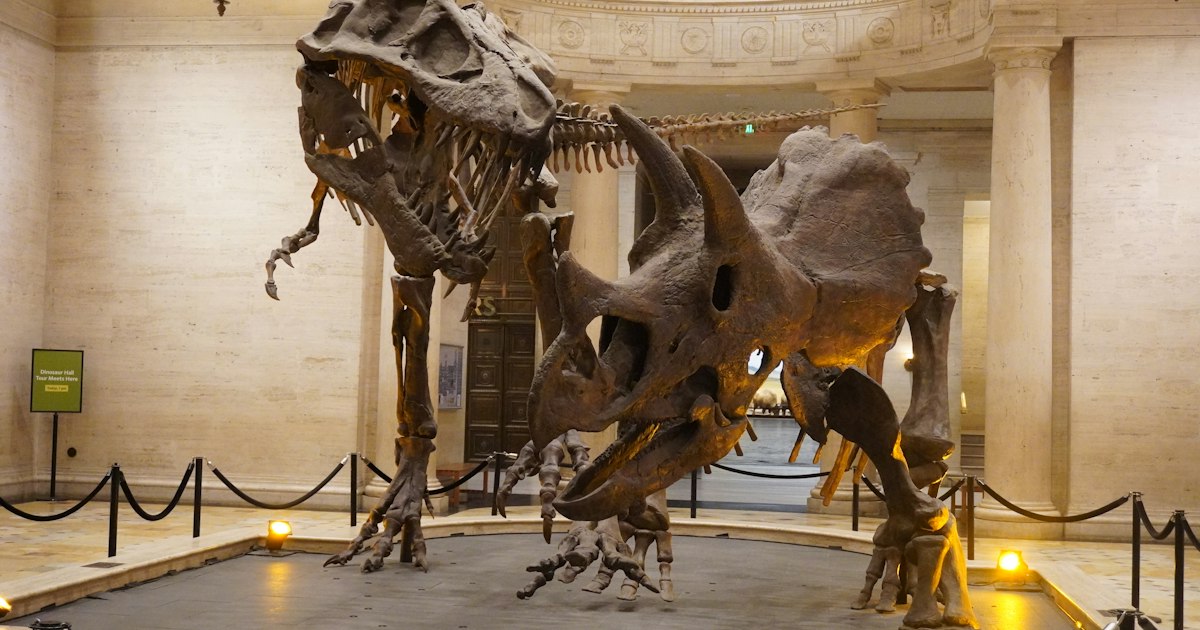
    Tucked into the mountains of Fukui Prefecture, about an hour by rail and bus from the nearest Shinkansen stop, sits one of the finest natural history museums in the world — and most foreign visitors have never heard of it. The Fukui Prefectural Dinosaur Museum in Katsuyama is routinely grouped with Canada’s Royal Tyrrell Museum and China’s Zigong Dinosaur Museum as one of the “big three” dinosaur museums on the planet, and after a major 2023 expansion, it’s bigger, newer, and easier to justify a dedicated day trip for. Here’s exactly what you’ll see, how to get there without wasting half a day in transit, and how to avoid the mistakes that trip up first-time visitors.

    Why Fukui’s Dinosaur Museum Is Worth the Detour

    Fukui Prefecture is Japan’s richest dinosaur fossil site, and the museum sits right on top of the dig. Five dinosaur species were first described from fossils found in the surrounding hills — Fukuisaurus, Fukuiraptor, Fukuititan, Fukuivenator, and Koshisaurus — and you won’t see their skeletons displayed anywhere else in the world at this scale. This isn’t a museum padded out with casts and dioramas; it’s a working research institution with an active quarry a short drive away, which gives the whole visit a sense of “this is still happening” that a lot of static natural history museums lack.

    Inside the Museum: What You’ll Actually See

    The main hall displays more than 40 full-size dinosaur skeletons, roughly 10 of which are genuine fossil specimens rather than replicas — a high ratio for a dinosaur museum anywhere. The building itself is a silver geodesic dome designed by Kisho Kurokawa, and the 2023 renovation added a new wing (Dino Street) that roughly doubled the exhibition space, including new skeletons, interactive fossil-prep displays, and better English signage throughout. Plan for a minimum of two to three hours if you want to read the exhibits properly rather than just photograph the T. rex.

    Getting to Katsuyama from Tokyo, Osaka, or Kyoto

    The trip got meaningfully shorter in March 2024 when the Hokuriku Shinkansen extended service to Fukui Station, cutting the Tokyo–Fukui run to about 3 hours on the Kagayaki or Tsurugi services. From Osaka or Kyoto, take the Thunderbird limited express to Fukui (roughly 1.5–2 hours).

    From Fukui Station, there are two practical options:

    • Train + local bus: Take the Echizen Railway’s Katsuyama–Nagaoka Line from Fukui Station to Katsuyama Station (about 60 minutes), then a community shuttle bus or taxi (roughly 10–15 minutes, around 2,000–2,500 yen by taxi) to the museum. Don’t try to walk it — the museum is about 5 km from Katsuyama Station, too far on foot with kids or luggage.
    • Direct express bus (“Dino Jet”): A direct bus runs from Fukui Station straight to the museum in about 50 minutes, usually timed around weekends and the summer and New Year holiday periods. It’s the most convenient option when it’s running, and combo tickets bundling the bus fare with museum admission are sometimes sold at the station — worth asking at the tourist information counter.

    If you’re already road-tripping around the Hokuriku or Chubu region, Katsuyama is an easy stop by car, with a large free parking lot at the museum itself. Travelers who’ve rented a self-drive vehicle for a longer loop — see our guide to renting a camper van in Japan — can fold this in naturally alongside stops in Gifu or the Japan Alps rather than backtracking through Fukui Station.

    Hours, Tickets, and Avoiding the Line

    The museum is open 9:00–17:00, with last entry at 16:30. It closes on the second and fourth Wednesday of most months (this pauses during the busy summer and spring holiday stretches) and over the New Year period — always check the official museum website calendar before you travel, since closure days shift year to year. Post-renovation admission is 1,000 yen for adults, 800 yen for university and high school students, 500 yen for elementary and junior high students, and free for preschoolers.

    Weekends and the Obon week in mid-August get genuinely crowded, with queues forming before opening time. If you’re visiting in peak season, arrive right at 9:00 or check whether timed-entry tickets are being sold online in advance — the museum has used advance reservation systems during its busiest stretches since the renovation.

    Make It a Full Day: Dinosaur Valley and Katsuyama Town

    The museum itself is only part of the experience. A few minutes away by car is Dinosaur Valley Fukui (Kaseki no Mori), an open-air park where you can try a hands-on fossil excavation experience for a separate fee, typically a few thousand yen depending on the course. This site runs roughly spring through autumn and closes under heavy winter snow, so check seasonal availability before counting on it.

    Katsuyama itself has two underrated add-ons worth the extra hour: the Echizen Daibutsu, a towering Buddha statue most tourists never hear about, and Heisenji Hakusan Shrine, whose moss-blanketed stone approach is one of the most photogenic, least-crowded shrine walks in the Hokuriku region. If your Japan itinerary already includes other small-town day trips in this part of the country, our guide to Gujo Hachiman’s water town in neighboring Gifu pairs well with Katsuyama as a “rural Chubu” theme if you have a few extra days.

    Budget, Mid-Range, and Splurge Planning

    • Budget (around 2,000–3,000 yen round trip from Fukui): Echizen Railway plus the community shuttle bus, basic museum admission, and a packed or convenience-store lunch eaten in the museum’s free-entry plaza area.
    • Mid-range (around 5,000–8,000 yen): Dino Jet direct bus both ways, full admission, lunch at the museum’s restaurant, and a dinosaur-themed souvenir — the gift shop sells genuinely nice replica fossils and kids’ excavation kits that travel well in a suitcase.
    • Splurge: Private taxi from Fukui Station, the hands-on excavation experience at Dinosaur Valley, and an overnight stay at an onsen ryokan in the Katsuyama or Awara area so you’re not rushing back to catch the last convenient train.

    Common Mistakes to Avoid

    The most common error is treating this as a quick stopover — the museum deserves a half day minimum, and the excavation experience and Echizen Daibutsu easily stretch it into a full one. The second is assuming you can walk or casually taxi from Katsuyama Station without checking the shuttle schedule first, especially outside peak season when buses run less frequently. Third, families should know the museum is genuinely stroller- and kid-friendly with wide, flat exhibition floors, but if you’re traveling with gear you didn’t bring from home, it’s worth knowing you can arrange delivery in advance — see our rundown on renting baby gear in Japan. Finally, don’t show up on a closure Wednesday — it’s an easy, entirely avoidable way to waste a travel day in a town that doesn’t have a lot else to fill the gap.

  • Namahage: Akita’s Demon Folklore Festival on the Oga Peninsula

    Namahage: Akita’s Demon Folklore Festival on the Oga Peninsula

    Photo by Finan Akbar on Unsplash

    Every New Year’s Eve on the Oga Peninsula in Akita Prefecture, men in straw capes and fearsome wooden masks stomp from house to house, bang on doors, and roar at children to behave. This isn’t a haunted-house gimmick for tourists — it’s Namahage, a centuries-old ritual recognized by UNESCO as part of Japan’s “visiting deity” (raiho-shin) traditions. For travelers willing to head off the Tokyo-Kyoto-Osaka track in winter, the Oga Peninsula offers one of Tohoku’s most distinctive cultural experiences, plus some of the region’s best cold-weather seafood and hot pot.

    What Is Namahage? Akita’s Demon Who Scares Away Laziness

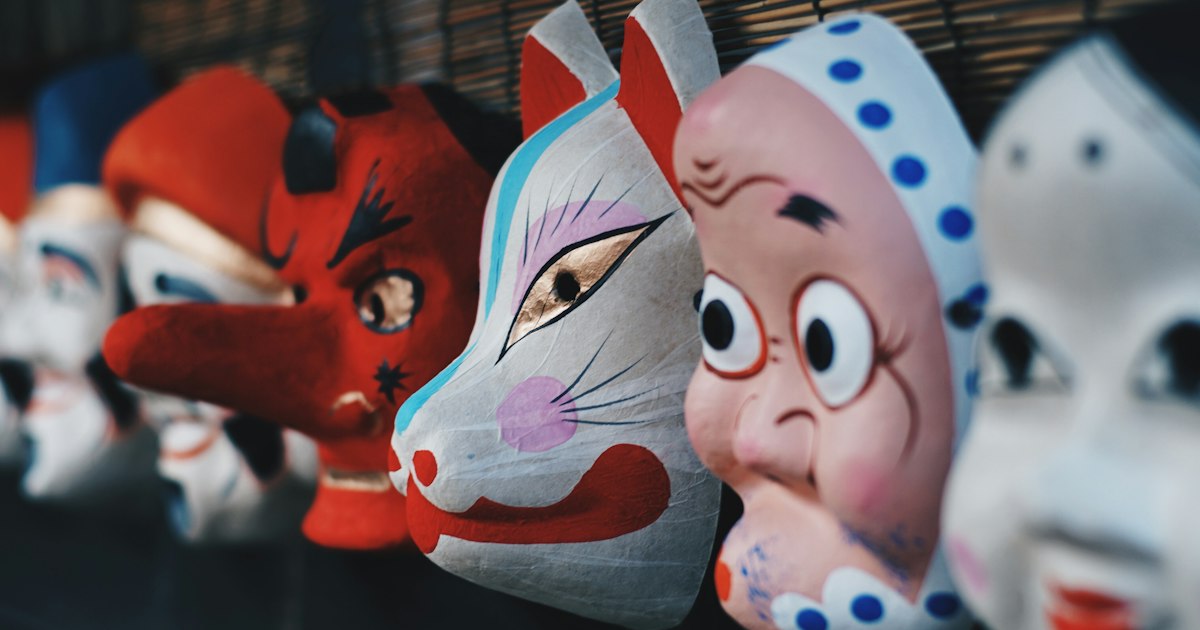
    Namahage aren’t evil spirits — they’re messengers from the mountains who visit homes to drive out laziness, bad behavior, and misfortune for the coming year. The costume is unmistakable: a kera (straw raincoat) over the body, a carved wooden or papier-mâché mask with bulging eyes and real or faux boar tusks, and a large wooden deba knife carried in one hand, a bucket or wooden pail in the other. In traditional village visits, the Namahage barge into a home, stamp around, and demand to know, “Are there any crying children here? Any lazy people here?” Parents play along, the household head offers rice cakes or sake, and the Namahage leaves with a blessing for good harvests and safety. It’s genuinely intense for small children — which is, culturally, the entire point.

    The Namahage Sedo Festival: When and Where to See It

    The private New Year’s Eve house visits (Namahage Shiwasu Mairi) happen inside individual village communities on December 31 and aren’t really set up for outside visitors to watch. The event tourists can actually attend is the Namahage Sedo Festival, held at Shinzan Shrine in Oga City on the second Friday, Saturday, and Sunday of February. In 2027 that falls around February 12–14, but always confirm exact dates on the Oga Tourism site each year since they shift slightly.

    The festival runs in the evening, roughly 5:30pm to 8:30pm, against a backdrop of bonfires and snow. Shrine rituals, taiko drumming, and a Namahage dance performance lead up to a procession of Namahage descending from the mountainside carrying torches, before they mingle with the crowd near the fire. Admission to watch is free, though some tour operators sell packages with reserved seating closer to the bonfire for a few thousand yen — worth it if you’re photographing and want a guaranteed sightline, unnecessary if you’re happy standing with the local crowd. Dress for serious cold: this is an outdoor, after-dark event in a snowy coastal region, so insulated boots and hand warmers matter more than camera gear.

    Namahage Museum and Oga Shinzan Denshokan

    If your trip doesn’t line up with February, you can still get a solid Namahage experience year-round at two adjacent facilities near Shinzan Shrine. The Namahage Museum (Namahage-kan) displays around 150 masks from different villages across the peninsula — no two are quite alike, since each community developed its own style — along with background on the folklore’s history. It’s open daily 8:30am–5:00pm (last entry 4:30pm); admission is roughly ¥550 for adults, about half that for students.

    Next door, the Oga Shinzan Denshokan hosts short live reenactments where local men in full costume perform the house-visit ritual on a stage set up like a traditional living room, narrated in Japanese (English pamphlets are usually available). A single ticket costs about ¥550, but a combined ticket covering both facilities runs around ¥1,000 — worth buying if you’re visiting one, since you’ll likely want both. Reenactment showtimes run several times a day; check the schedule posted at the door since frequency drops slightly in the off-season.

    How to Get to the Oga Peninsula

    Start from Akita Station, reachable via the Akita Shinkansen (around 3.5–4 hours from Tokyo). From Akita, take the JR Ou Line to Oga Station — a local or rapid train takes roughly 50–60 minutes. From Oga Station, the Namahage Museum and Shinzan Shrine area is another 20–30 minutes by local bus or taxi (budget around ¥3,000–4,000 for a taxi one-way).

    Public transit on the peninsula itself is sparse, with buses running only a handful of times a day in winter. If you’re combining Namahage with other Oga Peninsula stops — the dramatic Nyudozaki cape, fishing harbors, or hot spring inns — a rental car makes the day far easier, and renting in Akita City is straightforward even for foreign visitors with an International Driving Permit. If you’re already planning a longer Tohoku loop, renting a camper van is a reasonable way to cover the peninsula’s scattered sights without worrying about accommodation in a region with fewer hotel options than the major cities.

    Best Season and Common Mistakes

    Winter (December through February) is unambiguously the right season: it’s when the Sedo Festival happens, when the peninsula looks its most atmospheric under snow, and when the regional food is at its best. The most common mistake is assuming you can watch the real New Year’s Eve house visits — you generally can’t, since they take place inside private homes within specific village communities and aren’t organized as a public spectator event. Don’t build a December 31 itinerary around seeing Namahage in person; build it around the February Sedo Festival instead, or visit the museum and Denshokan any time of year.

    The second mistake is underestimating travel time and weather. Oga Peninsula roads can close or slow significantly after heavy snow, and the last bus back to Oga Station is earlier than visitors expect — check return times before you commit to staying for the full festival program. Pad your schedule rather than planning a same-day round trip from Akita with no buffer.

    Where to Eat and Warm Up

    Akita’s winter food is a reward in itself. Look for kiritanpo nabe (mashed-rice-stick hot pot with chicken and local vegetables), a prefectural specialty available at restaurants around Akita Station and in Oga. If you’re craving something heartier after a cold evening at the festival, a bowl of botan nabe wild boar hot pot hits the same note of winter comfort food, though it’s more commonly found outside Tohoku — ask your ryokan or a local izakaya if any serve it seasonally. On the walk back from an evening event, roadside yakiimo roasted sweet potato trucks are a classic way to warm cold hands while you wait for a bus.

    Budget, Mid-Range, and Splurge Options

    On a tight budget, a day trip from Akita City covering the museum, Denshokan, and a kiritanpo lunch runs well under ¥5,000 per person including transport. Mid-range travelers should consider staying one night near Oga’s hot spring area, letting you catch the Sedo Festival in the evening without rushing for the last train back to Akita — expect ¥10,000–20,000 for a decent ryokan with dinner included. For a splurge, some travel agencies and local inns package festival-night stays with reserved fireside viewing, a kappo-style kaiseki dinner featuring Akita beef or Oga’s winter seafood, and private transport from Akita Station — a comfortable way to handle a genuinely remote, cold-weather event without logistics stress.

  • Doyo no Ushi no Hi: Japan’s Midsummer Day to Eat Unagi for Stamina

    Doyo no Ushi no Hi: Japan’s Midsummer Day to Eat Unagi for Stamina

    Photo by Zion C on Unsplash

    Walk into almost any Japanese supermarket, department store basement, or neighborhood restaurant in the thick of summer and you’ll see the same banner: a cartoon eel, the character 鰻 (unagi), and a date circled in red. That date is Doyo no Ushi no Hi — the Day of the Ox during the Dog Days — and for one day, grilled eel becomes the most sought-after meal in the country. It isn’t a public holiday, nobody gets the day off, but it’s one of the most quietly consistent food traditions a visitor can actually plan around.

    What Is Doyo no Ushi no Hi?

    The name breaks into two old calendar concepts. “Doyo” (土用) refers to the roughly 18-day transitional window before each of the four seasons changes, a concept borrowed from Chinese five-element theory. “Ushi no hi” (丑の日) means “Day of the Ox” — because historically, days were counted in a repeating 12-day cycle of zodiac animals, the same cycle used for years. So Doyo no Ushi no Hi is simply the day within the pre-autumn doyo period that happens to fall on an “ox” day. Since the doyo window is about 18 days and the zodiac cycle repeats every 12 days, most years there’s one ox day; some years there are two, called ichi no ushi (first ox day) and ni no ushi (second ox day).

    Because it’s tied to a rotating day-count rather than a fixed date, it moves around the Gregorian calendar each year — usually landing somewhere between mid-July and early August. There’s no shortcut formula worth memorizing as a traveler; the easiest way to find the exact date for the year you’re visiting is to check a Japanese calendar (koyomi) app, or simply look at convenience store and supermarket signage once you’re in the country — they start advertising it about two weeks out.

    Why Unagi? An Edo-Period Ad Campaign That Stuck

    The food connection isn’t ancient folk wisdom so much as very effective 18th-century marketing. The most-told version credits Hiraga Gennai, an Edo-period polymath, inventor, and occasional copywriter, with helping a struggling eel shop drum up midsummer business. He leaned on an existing folk belief that foods starting with the sound “u” — umeboshi (pickled plum), uri (melon), udon — helped the body cope with natsubate, the seasonal fatigue and appetite loss that hits in Japan’s brutal, humid summers. Unagi fit the pattern perfectly, and it had a real nutritional case behind it: eel is dense in vitamin A, B1, B2, and fat, genuinely restorative food for a body run down by heat. The slogan worked. Two and a half centuries later, it’s still working.

    How to Order Unagi Like You Know What You’re Doing

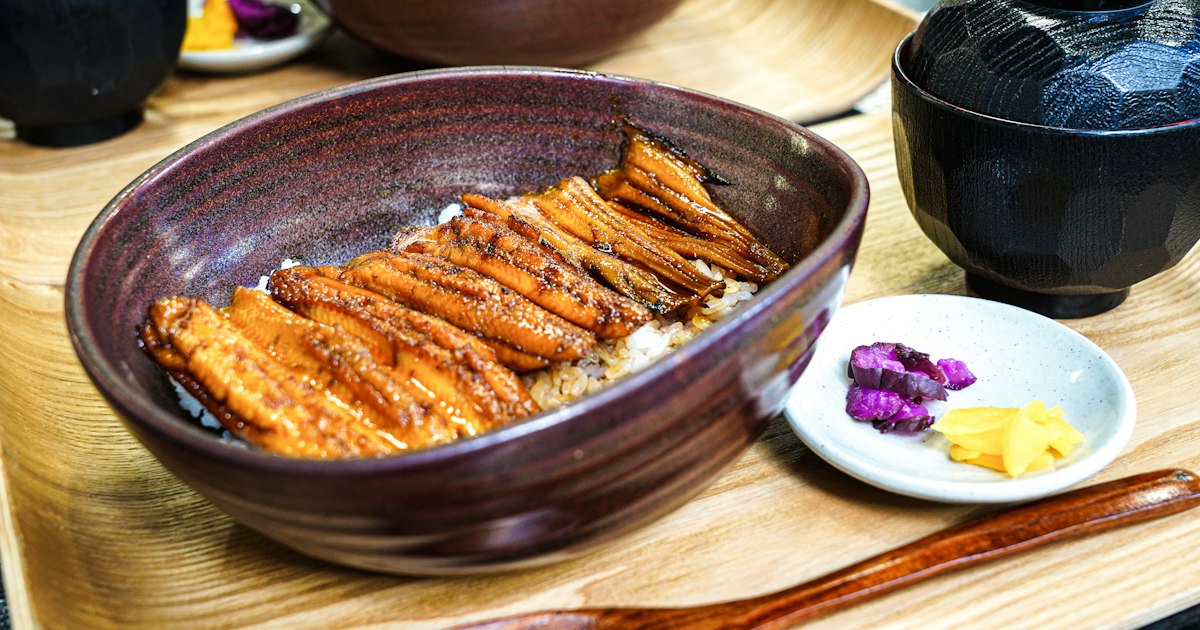
    Most restaurants serve eel as kabayaki — filleted, skewered, grilled, and repeatedly basted in a sweet soy-based tare sauce until it’s glossy and caramelized. If you see shirayaki on the menu, that’s the same fish grilled plain, unsauced, meant to be eaten with a dab of wasabi and soy so you taste the fish itself rather than the glaze.

    • Unadon — eel over a donburi (rice bowl). The simpler, usually cheaper format.
    • Unaju — the same idea served in a lacquered box (jubako), generally considered a step up in presentation and price.
    • Hitsumabushi — Nagoya’s regional specialty: chopped eel over rice in a wooden tub, eaten in three stages — plain, with condiments like nori, wasabi, and scallion, then as ochazuke with hot dashi poured over the last portion.

    A sprinkle of sansho pepper, the citrusy, faintly numbing Japanese peppercorn, is on the table at nearly every unagi restaurant — use it, it cuts the richness.

    Where to Eat It: Budget to Splurge

    Budget (¥1,000–¥2,000): Supermarkets and convenience stores sell pre-grilled kabayaki fillets and unaju bento specifically timed to this day — you just reheat at home or at your hotel. Note that prices for fresh eel often climb in the days right around Doyo no Ushi no Hi due to demand, so the sale-priced packs disappear fast; shop early in the day. If you’re buying one to self-checkout, it’s worth knowing the etiquette first — see our guide to self-checkout and bagging your own groceries in Japan, since fish trays and bento boxes need careful bagging to avoid a crushed lunch.

    Mid-range (¥2,500–¥4,500): A standard unadon or unaju set at a neighborhood eel restaurant, usually served with miso soup, pickles, and sometimes a small chawanmushi on the side — that savory steamed egg custard shows up as a common companion dish to eel sets across the country. Expect lunch service roughly 11:30–14:00 and dinner 17:00–21:00, with many shops closed one weekday (often Monday or Tuesday) and some closing early once they run out of eel for the day, especially around the ox-day rush.

    Splurge (¥6,000–¥15,000+): Long-established specialty shops treat unagi as their entire identity. Tokyo’s Nodaiwa in Azabu-Juban has been grilling eel since 1675 and remains one of the most-recommended old-school spots. In Nagoya, Atsuta Horaiken (founded 1873) is the standard-bearer for hitsumabushi. If you’d rather road-trip to the source, Hamamatsu in Shizuoka Prefecture — reachable in about 90 minutes from Tokyo on the Tokaido Shinkansen — and its Lake Hamana are where Japan’s modern eel farming industry began in the Meiji era, and the city is still thick with eel restaurants. It also sits conveniently along a route if you’re already renting a camper van in Japan and working your way along the coast. If eel isn’t for everyone in your group, Mie Prefecture’s Matsusaka beef makes a solid alternative splurge meal in roughly the same region and price bracket.

    Common Mistakes Tourists Make

    • Assuming it’s a holiday. It isn’t. Shops, trains, and offices run on a completely normal schedule — only restaurant demand spikes.
    • Walking into a famous shop on the day itself without a reservation. Historic unagi restaurants are genuinely overwhelmed on Doyo no Ushi no Hi; waits of an hour or more are common, and some take reservations specifically for that date weeks in advance. If you have a must-visit shop in mind, call or book ahead rather than show up.
    • Confusing unagi with anago. Unagi is freshwater eel, usually grilled with the sweet tare glaze; anago is saltwater conger eel, lighter, often served at sushi counters rather than eel specialty shops. They look similar on a menu photo but taste and cook differently.
    • Over-ordering. Eel is fatty and filling. A single unaju set with rice, soup, and pickles is a full meal — you don’t need to add extra sides to feel like you got your money’s worth.
    • Not checking the actual date for that year. Because it moves on the Gregorian calendar, travelers who plan around “late July” sometimes land a week off. Confirm the date once you’re in-country.

    Worth Knowing: Sustainability

    Japanese eel (Anguilla japonica) is listed as endangered by the IUCN, and wild-caught stock has been declining for decades. The vast majority of unagi served in restaurants and supermarkets today is farm-raised from wild-caught juveniles (glass eels), which is a separate issue from wild adult fishing but still a point of ongoing debate in Japan. It’s not something that should stop you from trying a dish this central to Japanese food culture, but it’s worth knowing the context if you’re the type of traveler who likes to.

    Planning It Into a Summer Trip

    Doyo no Ushi no Hi lands at the same time as some of Japan’s best-known summer festivals, so it’s easy to build a few days of travel around it. Gifu’s Gujo Hachiman water town and its all-night Gujo Odori dance festival runs deep into the summer and pairs naturally with a Nagoya-area eel detour, since Atsuta Horaiken and the hitsumabushi restaurants are a short trip away. Whatever else is on the itinerary, just remember the eel part of the plan needs a phone call ahead of time — everyone else in Japan is thinking about lunch on that day too.

  • Botan Nabe: Japan’s Wild Boar Hot Pot and Where to Eat It in Winter

    Botan Nabe: Japan’s Wild Boar Hot Pot and Where to Eat It in Winter

    Photo by Alexandre Valdivia on Unsplash

    When the mountains get their first real cold snap, menus across rural Japan quietly change. Deer, duck, and wild boar start showing up on chalkboards outside family-run restaurants, and one dish in particular draws people out of the cities: botan nabe, a miso-based hot pot built around thinly sliced wild boar. It’s hearty, a little rustic, and tied so tightly to winter that ordering it in July would get you a blank stare. Here’s what it actually is, when it’s on the menu, and where to go eat it.

    What Is Botan Nabe, and Why Is It Shaped Like a Flower?

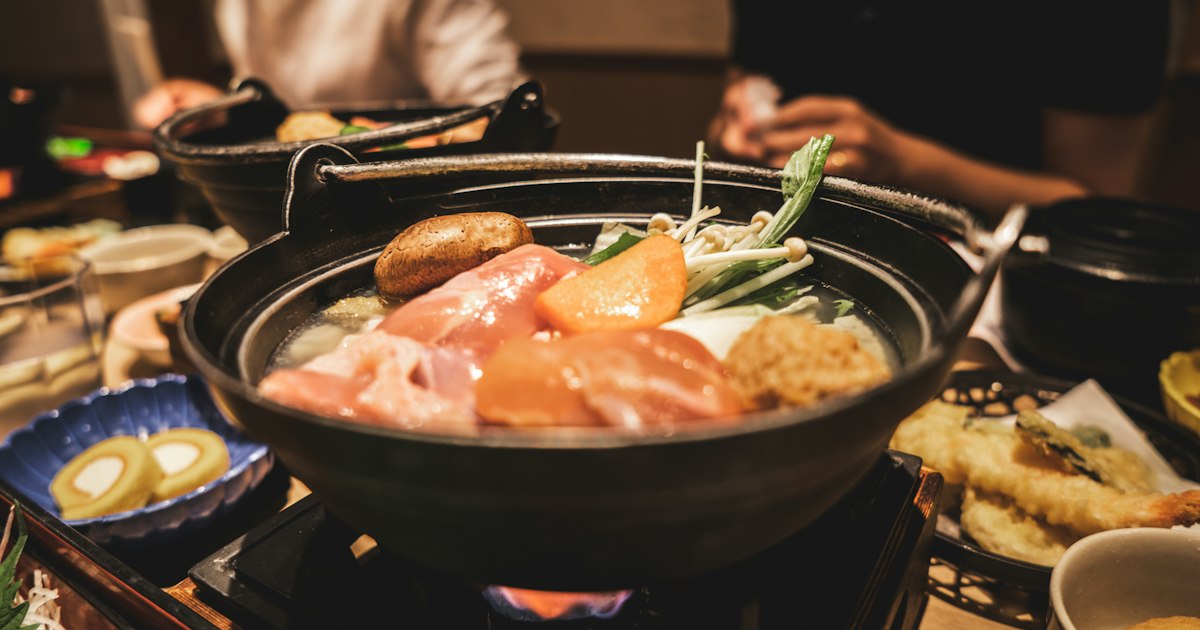
    Botan nabe (牡丹鍋) is a hot pot of wild boar (inoshishi) simmered with vegetables in a miso-flavored broth — usually napa cabbage, burdock root, carrot, mushrooms, tofu, and konnyaku, with the boar providing a rich, slightly sweet fat that the miso balances out. The name comes from presentation: thinly sliced raw boar meat is fanned out in overlapping circles on the serving plate before cooking, resembling the layered petals of a botan (peony) flower.

    That naming convention isn’t unique to boar. During the Edo period, eating four-legged animals carried a Buddhist stigma, so cooks gave game meats flower or plant code names: horse meat became sakura nabe (cherry blossom), venison became momiji nabe (maple leaf), and boar became botan nabe. The names stuck, and you’ll still see all three on menus in game-meat restaurants today — useful to know so you don’t accidentally order horse when you wanted boar.

    When to Go: Wild Boar’s Narrow Winter Window

    This is a genuinely seasonal dish. Wild boar hunting in Japan is tied to designated seasons that run roughly from mid-November through February, varying slightly by prefecture, and restaurants serving botan nabe generally only have it on the menu during these colder months — typically November through March, tapering off once spring arrives. Outside that window, even restaurants known for boar hot pot may switch to other game or take it off the menu entirely, so don’t build a summer itinerary around it.

    The sweet spot is December through February, when the meat is considered fattiest and best, since boar put on weight heading into winter. If you’re already planning a cold-season trip, this pairs naturally with other winter-only street food — keep an eye out for yakiimo trucks roasting sweet potatoes on street corners, another seasonal marker that shows up around the same time.

    Tokyo’s Easiest Option: Momonjiya in Ryogoku

    You don’t have to leave the city to try it. Momonjiya, in Tokyo’s Ryogoku neighborhood (a 5–7 minute walk from JR Ryogoku Station or the Toei Oedo Line Ryogoku Station), has been serving wild game since 1718, making it one of Tokyo’s oldest continuously operating restaurants. It specializes in exactly this kind of cuisine — boar, venison, and other game — and botan nabe is its signature winter dish.

    It’s old-fashioned in the best and most inconvenient sense: expect limited seating, a traditional interior, and a strong recommendation to reserve ahead rather than walk in, especially on winter weekends. Course meals here run firmly into splurge territory, but you’re paying for three centuries of history as much as the meal itself. Ryogoku is also home to the Sumo Museum and Edo-Tokyo Museum, so it’s easy to fold into a half-day in the area.

    Tanba Sasayama, Japan’s Botan Nabe Capital

    If you want the dish in its heartland, head to Tanba Sasayama in Hyogo Prefecture, widely considered the spiritual home of botan nabe. The surrounding mountains have long supplied boar fattened on acorns and chestnuts, and the old castle town — with its preserved Edo-era streets — fills with boar-hotpot banners every winter.

    Getting there: from Osaka or Kyoto, take a limited express “Kounotori” train on the JR Fukuchiyama Line to Sasayama-guchi Station (roughly an hour from Osaka), then transfer to a local bus for about 15–20 minutes into the historic town center. It’s a comfortable day trip, though staying overnight lets you catch the castle town in the early morning before day-trippers arrive. Local shokudo and minshuku throughout town serve boar sets from November into March — walk the main streets and you’ll see handwritten menus advertising it everywhere.

    Other Regions Worth the Detour

    Sasayama isn’t the only option. A few other areas have their own strong boar hot pot traditions:

    • Kutsuki, Takashima (Shiga Prefecture) — a mountain district near Lake Biwa known locally for its own version of shishi nabe, popular with day-trippers from Kyoto and Osaka.
    • Hida region (Gifu Prefecture) — better known for Hida beef, but mountain inns here often serve boar hot pot alongside it in winter, giving you two specialties in one trip.
    • Boso Peninsula (Chiba Prefecture) — wild boar numbers have grown sharply here in recent years, and local restaurants near the coast and inland hills increasingly feature inoshishi dishes as a result.

    Many of these spots sit well outside train access and are far easier to reach with your own wheels — if you’re building a longer winter itinerary through rural Japan, renting a camper van is a practical way to chase boar hot pot towns without worrying about the last bus back.

    Budget, Mid-Range, and Splurge Prices

    Prices scale with how much of a production the meal is:

    • Budget (around 3,000–4,500 JPY per person) — a single-pot botan nabe set at a casual local shokudo or izakaya, usually just the hot pot with rice and pickles.
    • Mid-range (around 5,000–8,000 JPY per person) — a fuller set at a restaurant specializing in game meat, often including boar sashimi or tataki alongside the hot pot, plus noodles or rice cooked in the leftover broth at the end.
    • Splurge (10,000–20,000 JPY per person) — multi-course kaiseki-style meals at historic restaurants like Momonjiya, or a ryokan stay in Tanba Sasayama with a full boar-centric dinner included in the room rate.

    Some specialty butchers in boar-hunting regions also sell processed boar meat and boar-based croquettes to go — worth a look if you’re already seeking out butcher shops for good korokke, since the same shops sometimes carry both.

    Common Mistakes First-Timers Make

    A few things trip people up with this dish specifically:

    • Assuming it’s available year-round. It isn’t. Outside roughly November to March, don’t expect to find it, even at restaurants that feature it prominently in winter.
    • Expecting a strong “gamey” taste. Properly processed Japanese wild boar, slow-simmered in miso broth, tends to be mild and rich rather than pungent. A heavy gamey smell is usually a sign of poor processing, not authenticity — don’t assume that’s how it’s supposed to taste.
    • Not booking ahead. Many of the best places are small, family-run, and seasonal, with limited tables. Winter weekends in places like Sasayama fill up fast with domestic visitors, so reserve where you can, especially at well-known spots.
    • Mixing up the flower-coded names. If a menu lists sakura nabe or momiji nabe alongside botan nabe, remember those are horse and venison, respectively — easy to order the wrong animal if you’re going on name alone.

    Timed right, botan nabe is one of the better reasons to brave a cold Japanese winter — a slow, warming meal that’s deeply tied to the season and the mountains it comes from, rather than something you’ll find on offer any time you happen to ask for it.

  • Tsushima Island: Japan’s Border Isle of Deer, Wildcats and Korea Views

    Tsushima Island: Japan’s Border Isle of Deer, Wildcats and Korea Views

    Photo by Nichika Sakurai on Unsplash

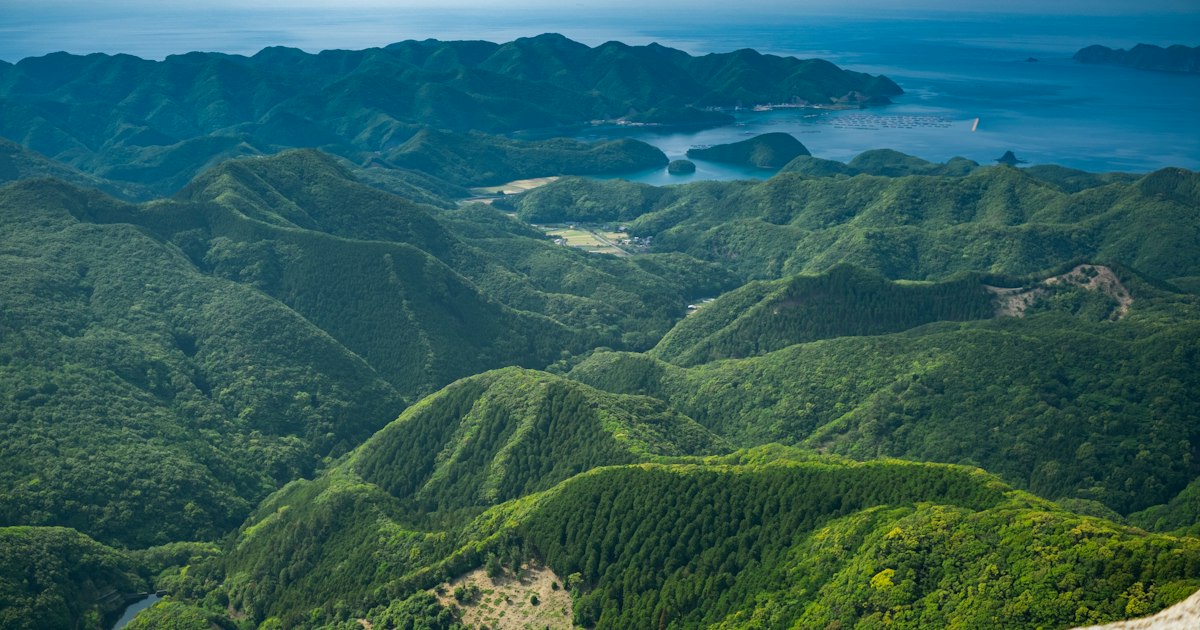
    Tsushima sits in the strait between Kyushu and the Korean Peninsula, closer to Busan (about 50 km) than to mainland Japan (over 130 km). It’s a ragged, heavily forested island of deep inlets, ancient shrines, and more deer than people in some villages — plus one of the rarest cats on earth hiding in its hills. Few foreign visitors make it out here, which is exactly the appeal: you get a genuinely remote corner of Japan that’s also, on a clear day, a place to literally see another country.

    Where Tsushima Is and Why It’s Worth the Trip

    Administratively part of Nagasaki Prefecture, Tsushima is really two linked islands (Upper and Lower Tsushima) split by the deeply indented Aso Bay, which looks like a fjord more than a typical Japanese coastline. The main town, Izuhara, sits in the south; Hitakatsu, the north’s gateway port facing Korea, is where ferries from Busan dock. Historically Tsushima made its living as a trading post between Japan and the Korean kingdoms — you’ll see that history at Kaneda Castle’s seventh-century stone ramparts and at Watatsumi Shrine, whose torii gates stand half in the sea.

    Getting There: Ferry or Flight from Fukuoka

    Most travelers come via Hakata Port in Fukuoka. Kyushu Ferry runs a slower car ferry to Izuhara and Hitakatsu (roughly 4.5–5 hours, from around ¥7,500 one-way in 2nd class), while the Venus high-speed jetfoil cuts that to about 2–2.5 hours for roughly ¥14,000 one-way. Both can be cancelled in rough seas without much warning, especially in winter, so build in a buffer day if you have an onward international flight — don’t book a same-day connection.

    Flying is the other option: Tsushima Yamaneko Airport (TSJ) near Izuhara has short hops (about 35 minutes) from Fukuoka and Nagasaki operated by Oriental Air Bridge, usually ¥10,000–¥20,000 one-way depending on how early you book. There’s also a direct international ferry from Busan to Hitakatsu (around 1–2 hours), which is why Hitakatsu’s signage, restaurants, and convenience stores are often as much in Korean as Japanese. If you’re entering Japan this way rather than through a major airport, it’s worth pre-registering your customs and immigration details through Visit Japan Web beforehand so the border check is quick.

    Meeting the Deer — and the Island’s Famous Wildcat

    Sika deer are everywhere on Tsushima, particularly in the north around Kamitsushima, where overpopulation has become a real agricultural problem — don’t be surprised to see them grazing roadside shoulders at dusk or crossing in front of your rental car. Resist feeding them; this isn’t a tame deer park like Nara.

    The island’s true celebrity is the Tsushima leopard cat (Tsushima yamaneko), a critically endangered wild subspecies found nowhere else, with an estimated population in the low hundreds. Realistically you will not see one in the wild — they’re nocturnal and skittish. Instead, visit the Tsushima Wildlife Conservation Center in Kamitsushima, which has rescued cats in large naturalistic enclosures, exhibits on the conservation program, and (depending on the day) a chance to see one through the viewing windows. It’s closed Mondays, entry is free or a token fee, and it’s a 10–15 minute drive from the northern ferry port — easy to combine with a Korea-viewing stop on the same day. Night driving anywhere on the island warrants caution for both deer and the occasional wildcat crossing signs you’ll pass.

    Catching a Glimpse of Korea

    This is Tsushima’s signature experience. On a clear day — most reliably in winter when the air is driest, but also possible on crisp autumn mornings — you can see the outline of Busan’s coastline and mountains from the island’s northern tip. The purpose-built Korea Observatory (Kankoku Tenboujo) near Kamitsushima has telescopes and panel displays explaining exactly what you’re looking at, while the Eboshidake Observatory above Hitakatsu gives a wider sweeping view over Aso Bay with Korea visible beyond on good days. Bring your own binoculars if you have them; the coin-operated telescopes have limits on how long you get. Humid summer haze usually blocks the view entirely, so don’t plan a trip around this alone if you’re visiting June–August.

    Getting Around Once You’re There

    Public buses exist but run only a handful of times a day and don’t cover most of the scenic coastal roads, and taxis are scarce outside Izuhara and thin out completely after dark. A rental car is close to mandatory — book one at the airport or ferry terminal in Izuhara or Hitakatsu through the usual agencies (Toyota Rent-a-Car, Nissan, ORIX all have counters). If you’re already touring Kyushu in a rented vehicle and considering something like a camper van, note that rental agreements almost always prohibit taking the vehicle across on a ferry — plan to rent locally on Tsushima instead and treat the island as its own separate leg. Roads are narrow and winding around Aso Bay, so budget more driving time than the map distance suggests; a loop that looks like an hour can easily take two.

    Best Season and Common Mistakes

    Spring (April–May) brings mild weather and fewer ferry cancellations; autumn (October–November) offers the clearest skies for Korea-viewing and comfortable hiking temperatures. Summer is hot, humid, and carries typhoon risk from August into September, which is when ferries and flights get cancelled most often. Winter is cold and rough-sea cancellations spike, but it’s also when the air is clearest for spotting Korea.

    • Trying to day-trip from Fukuoka: the jetfoil alone eats 4–5 hours round trip; plan at least one overnight.
    • Mixing up Izuhara and Hitakatsu: they’re over an hour apart by car. Book accommodation in the port matching your ferry/flight, not the other one.
    • Assuming cards work everywhere: many small restaurants and guesthouses outside Izuhara are cash-only. Bring enough yen.
    • Expecting a wild leopard cat sighting: go in with the conservation center as your realistic goal, not a roadside encounter.
    • No weather buffer: don’t schedule an international flight out of Fukuoka or Busan for the same day you leave Tsushima.

    Where to Eat and Stay

    Tsushima soba — made with a distinctive rotary stone-milling method some claim is the origin point of Japanese soba — is worth seeking out in small Izuhara noodle shops, often for ¥700–¥1,000 a bowl. The surrounding waters are known for squid (ika) and other fresh seafood; look for set lunches at harborside restaurants in Izuhara or Hitakatsu for roughly ¥1,200–¥2,000. For a souvenir with more shelf life, Tsushima’s small-scale Japanese honeybee honey makes a distinctive, harder-to-find pick than the usual regional snacks.

    Budget travelers can find simple business hotels in Izuhara from around ¥6,000–¥9,000 a night, with minshuku guesthouses offering home-cooked meals for a similar range. Mid-range options are a step up in comfort near the Izuhara waterfront; there’s no large luxury resort on the island, so “splurge” here mostly means a nicer ocean-view room or a private onsen-style bath at one of the better guesthouses rather than a five-star property. Camping near Aso Bay is also an option in warmer months if you want to wake up on the water rather than drive to it.

  • Kuzumochi: Kanto’s Fermented Kudzu-Starch Jelly Cake and Where to Try It

    If you ask for “kuzumochi” in Osaka and in Tokyo, you will get two completely different desserts. In Kansai, kuzumochi is a delicate, clear jelly made from real kudzu root starch, eaten warm or at room temperature. In Kanto — specifically around Tokyo and Kawasaki — kuzumochi is something stranger and more interesting: a dense, slightly tangy, amber-colored jelly cake made from wheat starch that has been fermented in water tanks for over a year before it’s ever steamed into shape. This is the version locals mean when they talk about kuzumochi in Tokyo, and it’s one of the more genuinely unusual regional sweets you can seek out on a trip to Japan.

    What Kanto-Style Kuzumochi Actually Is

    Despite the name, Kanto kuzumochi contains no kudzu (the kuzu vine) at all. It’s made from the starch that settles out when wheat flour is washed to make gluten — a byproduct that used to be considered waste. That raw starch is submerged in water and left to ferment naturally with lactic-acid bacteria for roughly 450 days, which breaks it down and gives it a faint, cheese-like sourness. The fermented starch is then steamed, which sets it into a firm, wobbly, translucent brown block. It’s cut into rectangles and served cold, almost always doused in kuromitsu (dark, molasses-like brown sugar syrup) and dusted with kinako (toasted soybean flour).

    The texture is the whole point: much firmer and chewier than mochi, with a clean snap when you bite it, followed by a slightly sour, fermented note under the sweetness of the syrup. First-timers who expect something like warabimochi or regular mochi are often surprised — this isn’t a sticky, stretchy sweet, it’s closer to a very soft jelly cake. People who grew up eating it tend to be fiercely loyal to it; people trying it cold for the first time either love the tang immediately or need a second bite to come around.

    Where It Comes From

    Kuzumochi is tied to two places in particular: Kawasaki Daishi (Heiken-ji Temple) in Kawasaki, and Kameido in eastern Tokyo, near Kameido Tenjin Shrine. Both are old pilgrimage and shrine-visiting spots, and kuzumochi developed as the snack sold to pilgrims and shrine-goers on their way in or out — similar in spirit to how other regional sweets grew up around temple approach streets. The most famous name in Kanto kuzumochi is Funabashiya, founded in 1805, which still runs its original shop near Kameido Tenjin and a well-known branch on the approach to Kawasaki Daishi. If you only try one brand, Funabashiya is the benchmark everyone else in Tokyo gets compared to.

    Where to Try It

    • Funabashiya Kameido Main Shop — a few minutes’ walk from JR Kameido Station (Sobu Line) or Tobu Kameido Line Kameido Station. There’s a sit-down tea room (kissa) attached to the retail counter, so you can eat your kuzumochi fresh with hot tea rather than taking it away in a box. A single eat-in portion with tea runs roughly ¥700–900. Boxed takeout starts around ¥450–550 for a single-serving size and goes up to ¥1,500–3,000+ for gift boxes meant for sharing. Hours are generally around 9:00 AM–6:00 PM, with the tea room closing earlier than the shop; it’s worth checking the current schedule before you go, since kissaten-style shops like this often trim hours on weekdays.
    • Funabashiya’s Kawasaki Daishi branch — on the temple approach (sando) near Keikyu Daishi Station, about a 10-minute walk, or Keikyu Kawasaki Station on the main line. Combine it with visiting Heiken-ji itself; the approach street has several kuzumochi sellers, which makes for an easy side-by-side taste comparison if you want to see how shops differ in sourness and sweetness level.
    • Department store basement food halls (depachika) in Tokyo, such as those at major Shinjuku, Shibuya, or Nihonbashi stores, which frequently carry Funabashiya and other kuzumochi brands pre-packed for takeout — useful if a trip to Kameido or Kawasaki doesn’t fit your itinerary.

    Budget travelers can treat this as a sub-¥1,000 dessert stop; if you want to splurge, the larger lacquered gift boxes designed for bringing home to family or coworkers are the “special occasion” version of the same product.

    Best Season and Timing to Visit

    Kuzumochi is sold year-round and isn’t a seasonal sweet, but it’s served cold, which makes it especially appealing in Japan’s hot, humid summer months (June–September). Visiting Kameido or Kawasaki Daishi on a weekday morning avoids both the lunchtime crowd at the tea room and the weekend shrine-visitor rush at Kawasaki Daishi, which gets busy with worshippers, especially around the 1st, 8th, 15th, and other ritual days of the month. If you’re coming specifically for the tea room experience rather than takeout, arriving shortly after opening gives you the best shot at a seat without a wait.

    Common Mistakes to Avoid

    • Confusing it with Kansai kuzumochi. If you’ve had the clear, kudzu-root version in Kyoto or Osaka, don’t expect the same thing here — the Kanto version is firmer, darker, and fermented, not a smooth starch jelly made from the actual kuzu plant.
    • Letting it sit too long before eating. Kuzumochi has no preservatives and is meant to be eaten within a day or two of purchase; it’s not a souvenir you can carry around for a week. If you’re buying a box to bring back to a hotel or to share later in the day, keep it cool and eat it the same day if possible.
    • Skipping the kuromitsu. Some travelers try to eat it plain to “taste the real flavor,” but the syrup and kinako aren’t optional garnish — they’re balancing the fermented tang, and the dessert is noticeably less pleasant without them.
    • Assuming any convenience store sells it. Unlike more ubiquitous snacks you’ll find in every konbini, kuzumochi is a specialty-shop item; you need to go to Kameido, Kawasaki Daishi, or a department store food hall, not a corner Lawson or 7-Eleven.

    Pairing It With the Rest of Your Trip

    Kameido and Kawasaki Daishi are both easy half-day additions to a Tokyo itinerary rather than full-day destinations on their own. If you’re building out a day of old-school Tokyo food culture, it pairs naturally with a stop at a kissaten for something like ogura toast if you happen to also be routing through central Japan, or with another traditional “where to try it” stop like chawanmushi at a set-meal restaurant the same day. Travelers staying near Tokyo Bay who want to stack a morning market visit before an afternoon temple-and-dessert outing could also work in the Toyosu Market tuna auction, since both Toyosu and Kawasaki are reachable without much backtracking from central Tokyo.

    The Bottom Line

    Kanto kuzumochi is cheap, easy to reach, and genuinely different from the mochi and jelly sweets most visitors already expect from a Japan trip — which makes it a good pick if you’re looking for a food stop that’s distinctive rather than photogenic-but-generic. Go to the source at Funabashiya in Kameido or Kawasaki Daishi, eat it cold with kuromitsu and kinako the same day you buy it, and treat it as a ¥500–900 detour rather than a meal in itself.