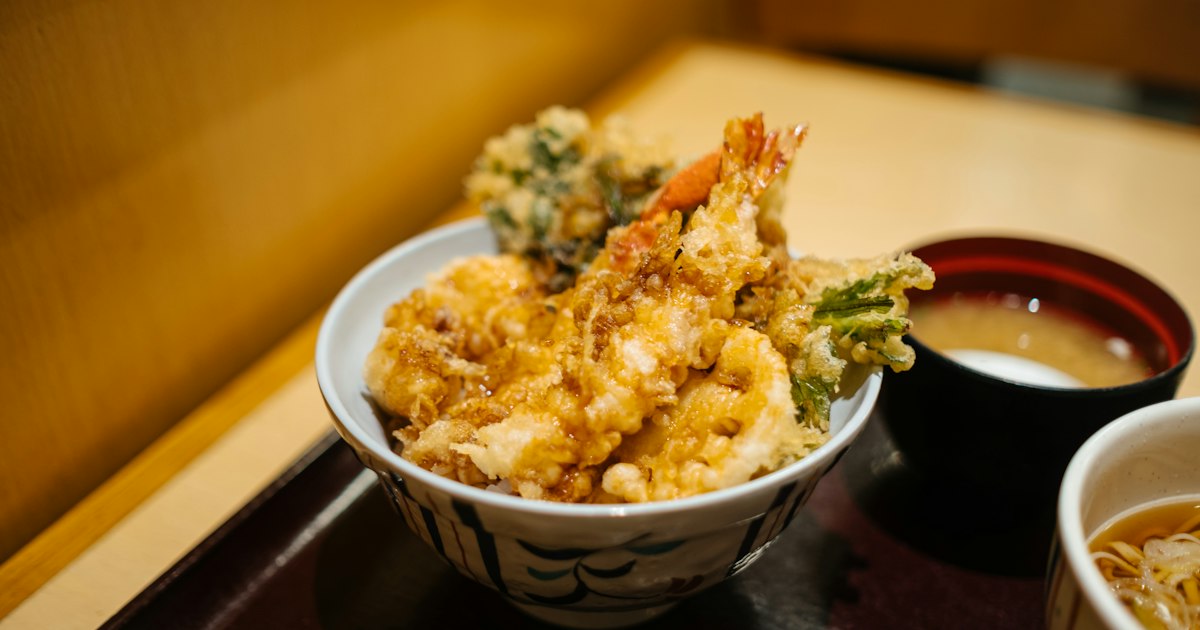
Photo by bady abbas on Unsplash
Tempura looks simple — batter, hot oil, a few seconds in the pot — but the gap between a convenience-store tempura rice bowl and an eight-course counter meal at a specialist restaurant is enormous. Knowing where that gap is, and how to navigate an omakase-style tempura counter without feeling lost, is the difference between a forgettable fried snack and one of the best meals of your trip. Here’s how to find good tempura at every budget and how to handle yourself once you’re sitting at the counter.
What Actually Makes Tempura Different
Tempura arrived in Japan with Portuguese traders and missionaries in the mid-1500s, and the technique was adapted over the following centuries into something distinctly Japanese: an ultra-light, lacy batter made from cold water, flour, and sometimes egg, fried quickly at a precise temperature so the coating stays crisp and nearly transparent rather than thick and bready. Good tempura chefs fry each ingredient individually, adjusting oil temperature and timing by what’s going into the pot — a slice of eggplant needs longer than a shrimp — which is exactly why an omakase counter, where a chef fries to order and serves piece by piece, produces dramatically better results than a buffet tray that’s been sitting under a heat lamp.
Oil matters too. Old-school shops often fry in a blend that includes sesame oil, which gives the batter a faint nutty aroma and a slightly deeper color than the pale, almost white tempura you’ll get at casual chains using pure vegetable oil.
Where to Eat It: Budget, Mid-Range, and Splurge
Budget (¥800–¥1,800): Tendon (tempura over a bowl of rice, drizzled with a sweet-savory sauce) is the easiest entry point. Casual tendon and soba shops serve a solid bowl for ¥900–¥1,500 at lunch, and department store basement food halls almost always have a tempura counter selling fresh-fried pieces by weight or piece for an afternoon snack.
Mid-range (¥2,500–¥6,000): Set-course tempura restaurants plate a fixed selection — usually shrimp, white fish, squid, and two or three vegetables — with rice, miso soup, and pickles, no counter theatrics required. Tsunahachi in Shinjuku and Tempura Daikokuya and Funabashiya in Asakusa are long-running, tourist-friendly options in this range; expect a wait on weekends since they don’t always take reservations for small groups.
Splurge (¥8,000–¥30,000+): This is the omakase counter tier — Michelin-starred rooms like Tempura Kondo in Ginza or Mikawa Zezankyo near Monzen-Nakacho, where lunch omakase runs roughly ¥8,000–¥15,000 and dinner can climb well past ¥20,000 per person. These seats need reservations weeks to months in advance, often only by phone or through your hotel concierge, and many don’t accept same-day walk-ins at all.
How an Omakase Tempura Counter Actually Works
At a proper tempura omakase, you sit directly in front of the fryer, and the chef serves each piece the moment it’s done — no shared plate, no waiting for the whole table. The typical sequence moves from something light and delicate (a small fish like kisu, or a single shrimp) through richer items, builds toward the seasonal vegetable course, and usually finishes with anago (conger eel) or a kakiage (a mixed vegetable or shrimp fritter) served over rice, plus miso soup and pickles to close the meal. A full course commonly runs twelve to fifteen pieces over roughly ninety minutes, so pace yourself — this isn’t a meal to rush.
You’ll typically be given a choice between dipping each piece in tentsuyu (a light dashi-based sauce) or a small mound of flavored salt, sometimes matcha salt or yuzu salt. Good chefs will tell you which is better suited to each piece; it’s completely normal to ask.
What to Order by Season
Tempura is a year-round dish, but the best counters change their lineup constantly to track what’s in season, which is a big part of the appeal of eating it as omakase rather than off a fixed menu.
- Spring: bamboo shoots, fresh shiso leaves, and sakura shrimp (tiny shrimp fried into a crisp fritter)
- Summer: anago, sweet corn kakiage, and myoga ginger buds
- Autumn: matsutake mushroom, kabocha squash, and ginkgo nuts
- Winter: oysters, lotus root, and firmer white fish like kisu
If you want to taste a season at its peak, ask your server what’s freshest that week rather than pointing at a photo on a menu — at omakase counters the chef is often buying from the same handful of fish and vegetable sellers every morning, so the answer changes daily.
Etiquette and Common Mistakes
The single biggest mistake is letting tempura sit. It’s served piece by piece specifically so you eat it within seconds of it leaving the oil — if you wait for everyone at the table to be served, or stop to take photos of every piece, the batter goes soft and you lose the entire point of eating at a counter. Eat as it arrives.
Other things to know before you sit down:
- Don’t drown the piece in tentsuyu — a quick dip is enough; too much sauce turns the crisp batter soggy instantly.
- Mention allergies and dislikes (especially shellfish) when you book, not after you sit down — omakase means the chef is choosing, and substitutions are much easier to arrange in advance.
- Many high-end counters are cash-only or card-only in ways that vary shop to shop, so confirm payment methods when you reserve.
- Reservations for dinner at well-known counters often need to be made 2–4 weeks out, sometimes longer around holidays; lunch is usually easier to get same-week.
- Most traditional tempura shops close one day a week, commonly Sunday or Monday, and some shut for a few days around New Year — always check before making a special trip.
Getting There and Planning Your Visit
Tokyo’s classic tempura neighborhoods are Ginza, Asakusa, and Nihonbashi — the latter a historic merchant district where several tempura houses trace their roots back well over a century; if you’re exploring the area’s old shopping streets and department stores, read our guide to Nihonbashi’s historic merchant district for what else to see nearby. If you’re based in Osaka instead, you don’t need a reservation at all to get a tempura fix — stalls inside Kuromon Ichiba Market fry fresh seafood tempura to order as part of a street food crawl.
A small bowl of tsukemono almost always comes with your tempura set or course, acting as a palate cleanser between the richer fried pieces — don’t skip it, and don’t be surprised if an omakase counter serves a different pickle than the shop down the street. If your dinner reservation runs late and the trains have stopped, a short cab ride back to your hotel is often easier than it sounds; our guide to hailing a taxi in Japan with apps like GO and S.Ride covers fares and etiquette so you’re not caught off guard.
Whichever budget tier you pick, the rule stays the same: tempura is a dish best eaten the second it’s served, in a place where someone is frying it fresh for you specifically. Build fifteen minutes of slack into your evening, sit at the counter if you can get a seat, and let the chef decide the order.