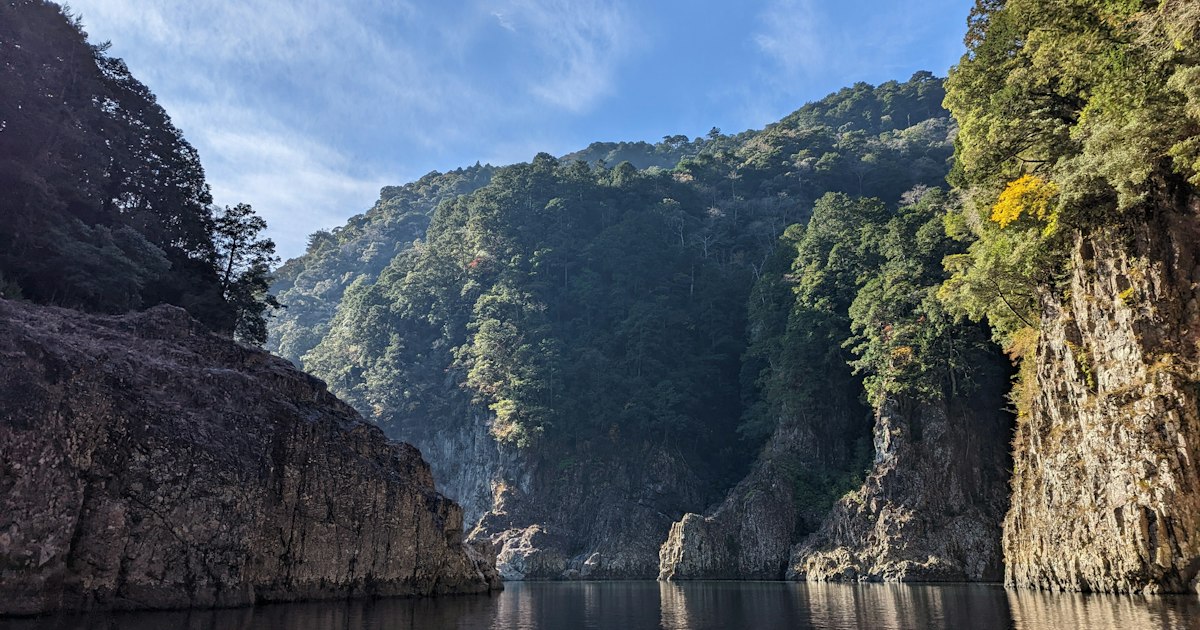
Photo by Derin Cag on Unsplash
Ninety minutes north of Tokyo, Minakami swaps neon for pine forests, river canyons, and some of Gunma’s most atmospheric hot springs. It’s one of the few places in the Kanto region where you can spend the morning getting soaked on a Class III-IV rapid and the evening soaking silently in a mountain onsen. Here’s how to plan the trip properly, with real prices and the mistakes that trip up first-timers.
Getting to Minakami
The fastest route from Tokyo is the JR Joetsu Shinkansen from Tokyo or Ueno Station to Jomo-Kogen Station (around 70-75 minutes). From there, local buses run to Minakami town and the main onsen district (Yubiso), taking another 30-40 minutes and costing roughly 700-900 JPY one way. Buses are timed loosely around train arrivals but are not frequent, so check the schedule before you leave rather than assuming one will be waiting — this is the single most common planning mistake visitors make here.
If you’re building the trip around a Shinkansen ride, it’s worth knowing the difference between reserved and non-reserved seats; Jomo-Kogen is a quieter stop so non-reserved cars are rarely full, which can save you a booking fee.
The budget alternative is the JR Joetsu Line local line from Takasaki straight to Minakami Station, which takes about 70-80 minutes and lands you closer to the rafting outfitters’ pickup points than Jomo-Kogen does. If you already hold a Seishun 18 Ticket, this is the route to use — it covers the whole journey from Tokyo on local trains for a fraction of the Shinkansen fare, though it adds well over an hour of travel time. Once in town, taxis are limited and don’t cruise for fares the way they do in cities, so if you need one, call ahead or ask your ryokan — the general etiquette and fare logic in our guide to taxis in Japan still applies.
Whitewater Rafting on the Tone River
Minakami sits on the upper Tone River (Tonegawa), and its rafting season typically runs from late April through early November, with outfitters such as Canyons, Jack, and Outdoor Support Center NOA running multiple daily departures from bases around Minakami and Doai. A standard half-day rafting trip runs about 2-2.5 hours on the water and costs roughly 9,000-10,500 JPY per adult, usually including wetsuit, helmet, and a hot shower or onsen voucher afterward — ask when booking, as this varies by company.
Timing matters more here than at most rafting destinations. Late April through June is snowmelt season, when water levels are highest and the rapids are at their most aggressive — this is the window serious rafters target. By mid-to-late summer (July-August) flows drop and the ride becomes noticeably gentler and more family-friendly, with some companies accepting children from around age 8-10. Early autumn adds pleasant foliage views along the gorge but water is cold by October, so a wetsuit (provided) is non-negotiable even if the air feels warm.
Book at least a few days ahead in peak season (May weekends and August) — walk-up slots do exist but fill fast. Bring a swimsuit to wear under the wetsuit, a towel, and a full change of clothes; the river water is cold year-round because it’s glacier- and snowmelt-fed, and underestimating that is the second most common mistake after missing the bus.
Beyond Rafting: Bungee, Canyoning, and Tanigawa-dake
If rafting isn’t adrenaline enough, Minakami is also home to one of Japan’s few permanent bungee jumps, operated at the old Doai Bridge by Bungy Japan — a roughly 42-meter drop over the gorge, priced at around 16,000-17,000 JPY per jump (repeat jumps are discounted). Canyoning — rappelling and sliding down waterfalls in a wetsuit — runs through similar outfitters to rafting, roughly May through September, for about 10,000-12,000 JPY for a half day.
For a quieter adventure, Tanigawa-dake is one of Japan’s most storied (and historically dangerous on its technical routes) peaks, but the Tenjindaira ropeway on its flank gives casual hikers access to alpine trails without the technical climbing. The ropeway runs roughly April through November depending on snow conditions, with a round trip costing around 2,600 JPY.
Onsen Culture: Rustic Baths to Legendary Outdoor Pools
Minakami’s hot springs are spread across several hamlets rather than one central bath street, and they range from simple public baths to destination ryokan. Takaragawa Onsen Osenkaku is the headline attraction — a network of large riverside outdoor baths (some mixed-gender, with rental yukata for those who prefer coverage) set against forest and rock. Day-use entry is typically around 1,500-1,800 JPY, generally available from morning until mid-afternoon (hours shift seasonally, so confirm before you go); it gets busy on weekends, so arrive early.
Houshi Onsen Chojukan, further up the valley, is far smaller and quieter — a creaky wooden bathhouse dating back centuries, prized for its atmosphere rather than scale. Both are a bus or taxi ride from Minakami Station, and neither is walkable from the station, so factor that into your schedule if you’re day-tripping.
If you’d rather skip transfers, Minakami Onsen and Yubiso Onsen have smaller public bathhouses right near the station area, usually 500-700 JPY for day use — a good option if you’ve arrived tired from rafting and don’t want another bus ride.
Where to Stay
Budget travelers can find simple guesthouses and minshuku around Minakami Station from roughly 5,000-7,000 JPY per person, though options thin out compared to a city — if you’d rather play it safe with a familiar standard, the nearest reliable chain hotels are back in Takasaki or Jomo-Kogen area; our rundown of business hotel chains in Japan is more useful for that connecting city than for Minakami itself. Mid-range travelers should look at the ryokan clustered in Yubiso and Jomo, often 12,000-20,000 JPY per person including a kaiseki-style dinner and breakfast. For a splurge, a night at Takaragawa Osenkaku with dinner included — so you can use the baths at leisure after the day-trippers leave — runs roughly 25,000-40,000 JPY per person depending on room and season.
Best Time to Visit and Common Mistakes
For rafting thrills, go late April to June; for a calmer, warmer trip with family, July-August; for scenery with your onsen, October’s foliage is hard to beat, though rafting operators start winding down by then. Winter (December-March) shuts down rafting almost entirely but opens up Minakami’s ski resorts (Kagura and Tanigawadake Tenjindaira among them) as a different kind of day trip.
The mistakes worth avoiding: treating Minakami like a walkable town (it’s spread out, and buses are infrequent — plan routes in advance); skipping a wetsuit on a “warm” summer day (the river itself stays cold); and trying to pack rafting, bungee, and a leisurely onsen soak into a single rushed day trip from Tokyo. Minakami rewards an overnight stay far more than a frantic there-and-back — the whole point of the place is slowing down once you’re out of the water.