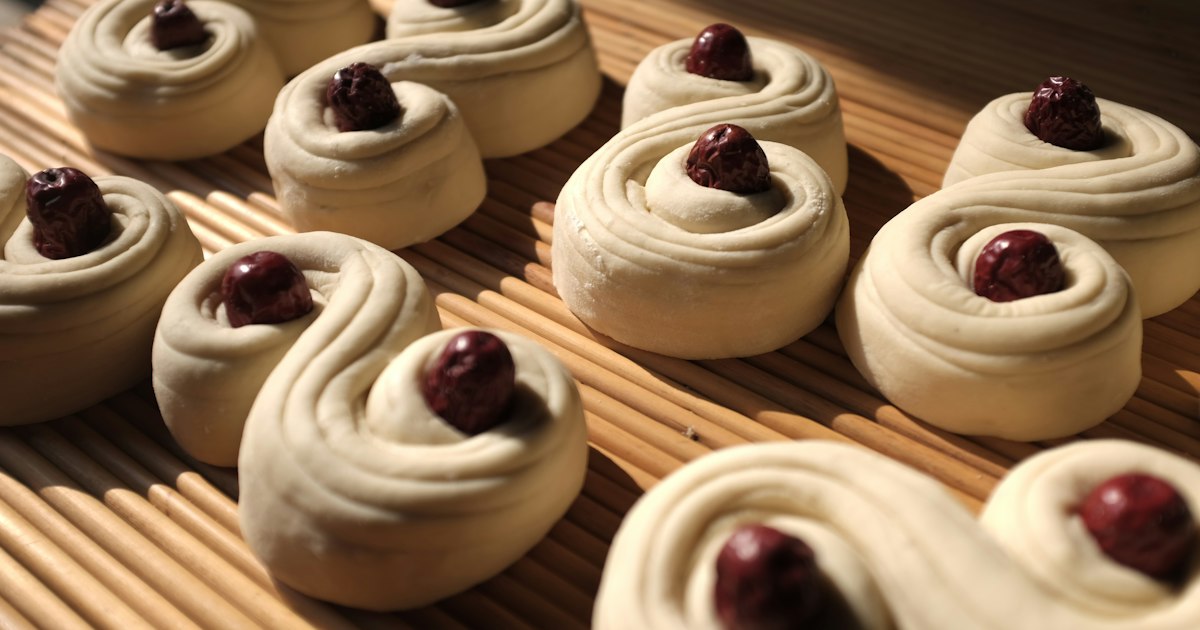
If you’ve spent even a day in Japan, you’ve probably walked past a stack of soft, slightly glossy round buns with a dark filling inside, usually sitting near the register at a convenience store or piled in a bakery window. That’s anpan — one of Japan’s oldest Western-style breads, and the unlikely inspiration for one of the country’s most beloved children’s characters. This guide covers what anpan actually is, where to find the best versions at every budget, and how a century-old bun became a cartoon superhero with his own museums.
What Anpan Actually Is
Anpan is a soft, yeasted bun filled with anko (sweetened red bean paste), either smooth (koshian) or chunky (tsubuan). It was invented in 1874 by Yasubei Kimura, a former samurai who opened a bakery in Tokyo’s Ginza district after Japan opened to Western trade. At the time, bread was a novelty import that most Japanese people found bland and strange. Kimura’s solution was to stuff Western-style yeast bread with a filling Japanese palates already loved — and anpan became Japan’s gateway bread, eventually leading to an entire category of “kashi-pan” (sweet breads) that includes melon pan, cream pan, and curry buns. If you want to see where that lineage led on the savory side, our guide to kare pan, Japan’s curry-filled bread, covers the other branch of the same family tree.
Most anpan also has a small navel-like indent on top, often pressed with a few grains of poppy seed (for red bean), sesame (for white bean), or a cherry blossom salt petal (for sakura-flavored versions in spring). That indent isn’t decorative — Kimura reportedly borrowed the idea from Japanese sweets traditions to distinguish fillings at a glance.
Where to Buy It — Budget to Splurge
Anpan is sold everywhere in Japan, but quality varies enormously by price tier.
- Budget (¥110–¥160): Every convenience store (7-Eleven, Lawson, FamilyMart) and supermarket bakery section sells individually wrapped anpan. Yamazaki is the most common mass-market brand. It’s perfectly fine for a quick breakfast but noticeably sweeter and softer than bakery-fresh versions.
- Mid-range (¥180–350): Local neighborhood bakeries (machi no pan-ya) bake anpan fresh daily, usually selling out of the morning batch by early afternoon. Look for a bakery with a wood-fired or visible oven and a line of regulars — that’s your signal.
- Splurge (¥400+): Ginza’s Kimuraya, the original 1874 bakery, still operates from its flagship location and sells a sakura anpan (cherry blossom and leaf folded into the dough) that’s considered the standard-bearer. It’s a short walk from the Omotesando shopping area if you’re already out that way — see our guide to Omotesando’s shopping streets for context on the area. Kimuraya Ginza’s main store is open daily, roughly 10:00–21:00, and is a two-minute walk from Ginza Station.
Best Season and Timing
Anpan is sold year-round, but two windows are worth planning around. Sakura (cherry blossom) anpan, filled with a pickled cherry leaf and sometimes white bean instead of red, appears from late March through April to coincide with hanami season — Kimuraya in particular is known for this version. Bakeries also sell out of their best anpan early: arrive before 10am for the freshest stock at popular shops, since afternoon batches are often the previous day’s dough reheated or a smaller, less carefully baked second run.
The Anpanman Connection
Anpanman (literally “Anpan Man”) is a superhero with a red bean bun for a head, created by illustrator and writer Takashi Yanase in 1973 and turned into a long-running anime in 1988. His origin story ties directly to the bread: Anpanman was conceived during Japan’s postwar years as a hero who literally feeds the hungry by letting people tear off and eat pieces of his bun head, regenerating a fresh one from a bakery run by his creator character, Uncle Jam. Yanase, who had experienced wartime famine firsthand, wanted a hero whose heroism was as simple and unglamorous as giving someone food.
Anpanman is now one of the most-watched children’s franchises in Japan, and his face appears on everything from onigiri wrappers to bath toys. There are dedicated Anpanman Children’s Museums in five cities — Yokohama, Kobe, Nagoya, Sendai, and Fukuoka — each combining indoor play areas with a bakery selling character-shaped bread. The original and largest is the Yokohama Anpanman Children’s Museum & Mall, open daily 10:00–17:00 (museum floor; the mall stays open later), with museum admission around ¥2,200–¥2,600 for anyone over age 1 and free entry to the attached shopping mall and bakery if you just want the character bread and merchandise without paying for the play area. It’s about a 7-minute walk from Minatomirai Station on the Minatomirai Line.
Merchandise and Common Mistakes
Anpanman goods are sold far beyond the museums — in department store character shops, at Tokyo Station’s character street, and occasionally as prizes in crane game machines, similar to what’s covered in our guide to UFO catchers and how to win at them. Limited-edition Anpanman figures and plush toys also occasionally turn up as prizes in blind-box lottery draws at convenience stores, the same format explained in our guide to Ichiban Kuji at Lawson and Loppi, though Anpanman runs are aimed more at families than collectors and sell out fast when they appear.
A few common mistakes to avoid: don’t assume all “anpan” is red bean — some bakeries sell shiro-an (white bean) or even matcha versions under the same name, so check the label or ask if you have a preference. Don’t buy anpan expecting cream-pan softness and sweetness; it’s denser and less sugary than Western-style sweet rolls, which surprises some first-time visitors. And at the Yokohama or Kobe museums, don’t skip the bakery counter even if you don’t pay for museum admission — the character-shaped bread sold there (plain stores don’t carry these shapes) is reason enough to stop by, and it typically runs ¥250–¥450 per piece.
Pairing Anpan With the Rest of Your Trip
Anpan travels well, which makes it a good train-platform or hotel-room breakfast if you’re staying at a budget chain like those compared in our business hotel chains guide — most come with a simple breakfast but convenience-store anpan is a solid backup for early departures. It also keeps for a day at room temperature, so it’s a reasonable snack to tuck into a bag before a long ferry or rail trip, like the routes described in our guides to Hakodate’s ferry access. However you encounter it — straight from a convenience store shelf or fresh from Kimuraya’s Ginza oven — anpan is one of the cheapest, most historically interesting bites you can try in Japan, and now you know why a flying bread-headed superhero is named after it.