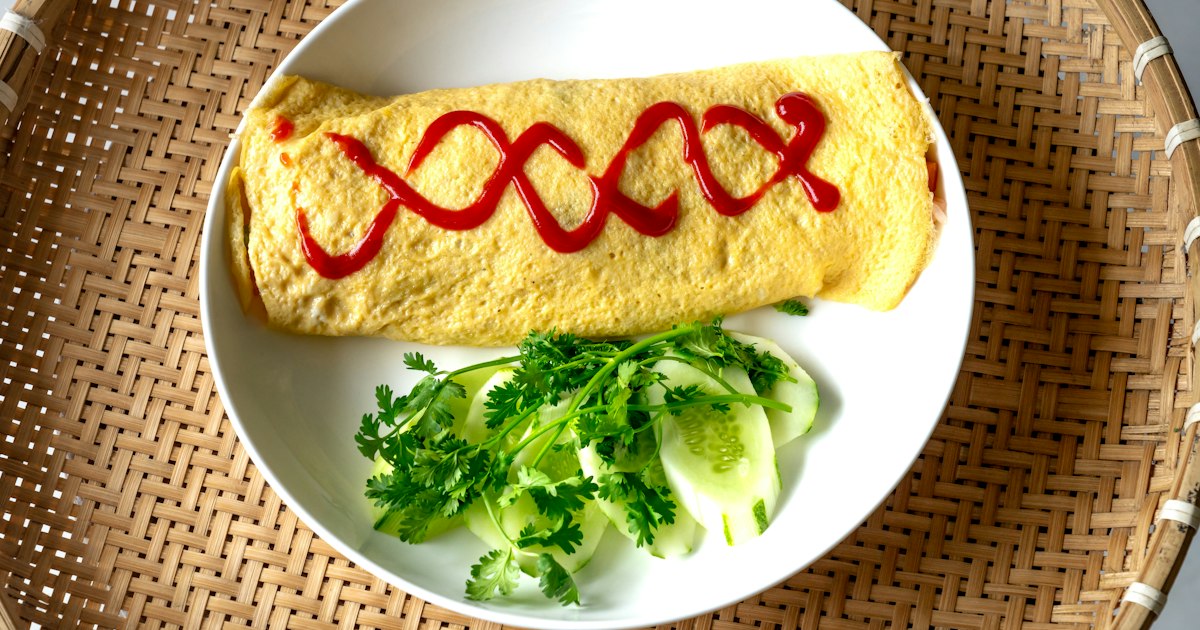
Photo by Quang Nguyen Vinh on Unsplash
Omurice is the dish that convinces a lot of first-time visitors that Japanese comfort food isn’t all ramen and sushi. It’s a mound of ketchup-fried rice wrapped in a thin, often jiggly, sheet of egg, usually finished with a squiggle of more ketchup on top. It looks like a kid’s lunch and tastes like one too — in the best way. But it’s also a quietly serious dish, with specialist restaurants in Tokyo and Osaka that have been perfecting the egg-to-rice ratio for over a century. Here’s how to find the good versions, what they cost, and how to order without embarrassing yourself.
What omurice actually is, and where it came from
Omurice (オムライス, a portmanteau of “omelette” and “rice”) belongs to a category of Japanese food called yoshoku — Western-style dishes that Japanese cooks adapted and made entirely their own starting in the Meiji era (1868–1912), when Japan opened up to foreign influence and home-grown versions of European food became fashionable in Tokyo’s new Western-style restaurants. Tonkatsu, curry rice, and gyudon’s cousin hayashi rice all come from the same movement — Western ingredients and techniques, filtered through Japanese kitchens until they became something new. If you’ve already read our guide to tonkatsu, omurice is its tablemate: both are yoshoku staples you’ll find on the same old-school menus.
Two Tokyo restaurants claim to have invented it, and both are still open and worth the detour. Taimeiken in Nihonbashi (founded 1931) serves the original “Omurice Taimeiken,” where a thin egg sheet is draped over ketchup rice — around ¥2,600 for the signature version with demi-glace sauce. Renga-tei in Ginza, open since 1895, claims an earlier version from the 1900s and serves a more rustic, home-style take for roughly ¥1,600–¥1,900. Both are sit-down, cash-friendly, lunch-counter-style places rather than tourist spectacles, so go hungry and expect a short wait at peak lunch hours (12:00–13:00).
The two main styles you’ll encounter
There isn’t just one omurice — regional and generational variations matter:
- Classic wrapped style: A thin, firm omelette is laid over the rice and tucked under at the edges like a parcel, then topped with ketchup, demi-glace, or a white cream sauce. This is what Taimeiken and most old-school yoshoku-ya serve.
- Torori (molten) style: Popularized by chef Kichisei Kimura and widely imitated since the 1980s–90s, the egg is cooked soft and barely set, then sliced open at the table so it flows over the rice like a sauce. This is the Instagram-famous version and the one most specialty omurice restaurants in Osaka and Tokyo now compete over.
- Omu-soba, dry-curry, and demi-glace variants: Some shops swap the ketchup rice for curry rice or yakisoba underneath — worth trying once you’ve had the standard version.
Where to eat it: budget to splurge
Budget (¥500–900): Family restaurants are the easiest entry point — Saizeriya, Jonathan’s, and Denny’s Japan all have omurice on the menu, and it’s a reliable, no-surprises version. Some convenience stores and department store basement food halls (depachika) sell cold or reheat-at-home omurice bento for ¥500–700, handy if you’re assembling a picnic lunch alongside a tamago sando and a can of ramune.
Mid-range (¥1,000–1,800): This is where the dedicated omurice specialists live. Kichikichi in Kyoto (near Nishiki Market) is famous for its theatrical torori-style service, where the chef flips the omelette with exaggerated flair before slicing it open tableside — book ahead, as it’s a small counter and routinely sells out; dishes run roughly ¥1,500–2,500. Hokkyokusei in Osaka’s Shinsaibashi, another claimed birthplace of the dish (dating to 1922), serves it for around ¥1,300–1,900 and is open late, useful if you’re already out in the izakaya part of an evening and want something to soak it up, albeit in a different city.
Splurge (¥2,500+): A few hotel grill restaurants and old-guard Western-style dining rooms serve omurice with wagyu demi-glace or topped with foie gras as a nostalgic nod to yoshoku’s upscale origins — worth it once if you want to see how far the concept stretches, but not necessary to enjoy the dish properly.
How to order it without fumbling
Most places that specialize in omurice use ticket machines or simple laminated menus with photos, so pointing works fine. Useful phrases: “ketchup omurice” gets you the standard version; if a menu offers a choice of sauce, “demi-glace” (デミグラス) is richer and slightly savory, while plain ketchup is sweeter and more acidic — a good split if you’re dining with someone who wants something different. At torori-style counters, don’t cut into the egg yourself if the chef is clearly about to do it tableside; that’s part of the show, and it’s bad form to beat them to it.
Common mistakes
- Expecting fried rice. The rice inside is usually simple ketchup-fried rice with chicken or onion, not the soy-sauce-based fried rice you’d get at a Chinese restaurant in Japan — don’t go in expecting char siu or mixed vegetables.
- Skipping the egg-to-rice ratio question. At specialist shops, egg quality and doneness are the entire point — ordering the cheapest set menu sometimes gets you a thicker, firmer egg rather than the torori version, so check photos or ask if you specifically want the molten style.
- Showing up at peak lunch without a reservation. The famous counters (Kichikichi especially) are tiny — single-digit seats in some cases — and fill up fast with both tourists and locals. Reserve by phone or through the restaurant’s booking page where available, or go right at opening.
- Assuming it’s kid food and skipping it. It’s unpretentious, but a well-made omurice — with properly seasoned, slightly caramelized ketchup rice and a silky egg — is a genuine test of a cook’s basics, which is exactly why Japanese chefs take it seriously.
Best time to go
Omurice isn’t seasonal, so any time of year works, but lunch service (11:30–14:00) at the specialist counters tends to be calmer on weekdays than weekends. If you’re building a food-focused day, pair an early lunch at one of the Kyoto or Osaka spots with a market crawl — Nishiki Market is a five-minute walk from Kichikichi — and save richer regional specialties like Osaka’s okonomiyaki or Kyoto’s kaiseki for dinner.
Bringing the idea home
Omurice is easy enough to recreate without special equipment: ketchup, day-old rice, chicken, onion, and eggs get you most of the way there. If you want souvenirs that nod to the yoshoku tradition rather than the dish itself, Japanese kitchenware shops sell the thin, flat-bottomed frying pans (tamagoyaki pans work fine) used for the omelette sheet, and a good bottle of Japanese-style ketchup — slightly sweeter and less vinegary than the Western kind — travels well in checked luggage if it’s sealed. It’s a small, low-effort souvenir that actually gets used, unlike most of what ends up in a suitcase.