Some links below are affiliate links. If you book through them, Japan Trove may earn a small commission at no extra cost to you.
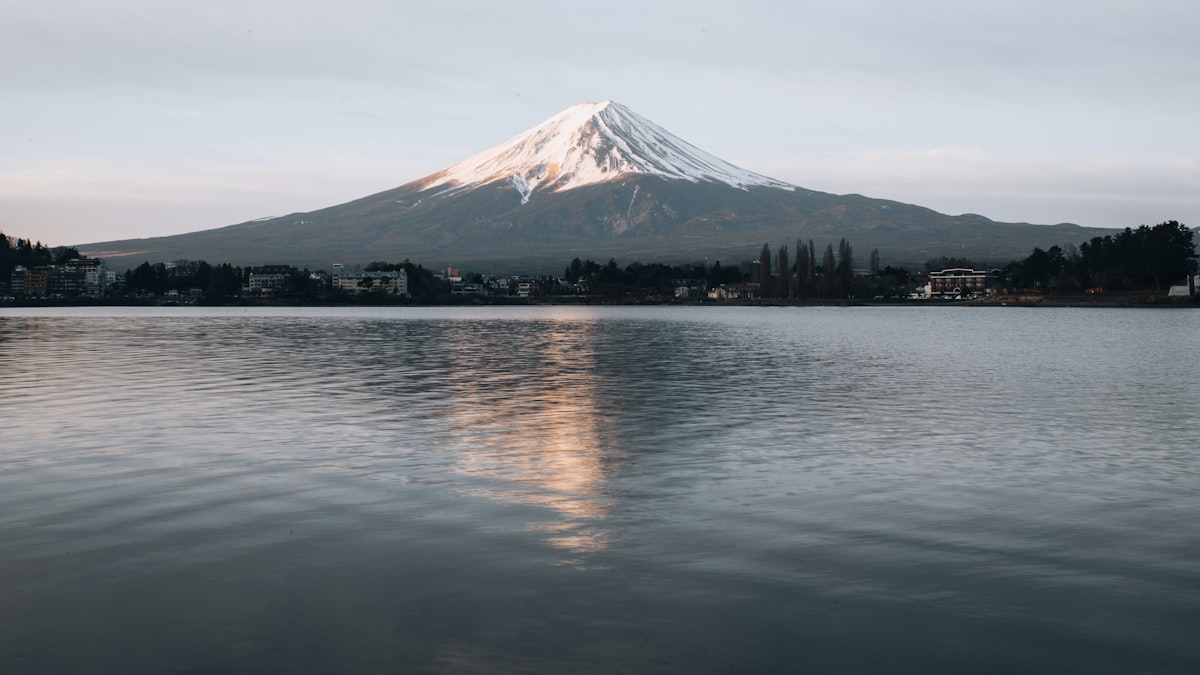
For the classic Mt. Fuji view — the mountain mirrored in a lake — head to Kawaguchiko and the Fuji Five Lakes. It’s the best base for seeing and photographing Fuji. Here’s how to visit.
Why Kawaguchiko
Lake Kawaguchiko is the most accessible of the Fuji Five Lakes, with postcard reflections of Mt. Fuji, hot springs, and easy transport. It’s the go-to spot for that iconic shot — see our wider how to see Mt. Fuji guide.
Best things to do
- Lakeside Fuji views & reflections — best on calm, clear mornings.
- Chureito Pagoda — the famous five-storied pagoda with Fuji behind (nearby Fujiyoshida).
- Mt. Kachi Kachi Ropeway — quick panoramic views over the lake and mountain.
- Oishi Park — seasonal flowers framing Fuji.
- Onsen ryokan with Fuji-facing baths — see our ryokan guide.
When to go for clear views
- Autumn and winter mornings offer the clearest skies; Fuji often hides behind cloud midday and in summer haze.
- Build in a flexible day or two to chase a clear window. See best time to visit.
Getting there
- Direct buses from Tokyo (Shinjuku) to Kawaguchiko (~2 hours), or train via Otsuki.
- It pairs well with Hakone for a Fuji-and-onsen loop. See day trips from Tokyo.
- Book Fuji-view stays early — compare on Booking.com .
Tips
- Stay overnight for the best odds of a clear morning Fuji.
- Bring layers — it’s cooler by the lakes. See our packing list.
Costs & how long to stay
- Direct highway buses from Shinjuku to Kawaguchiko run about JPY 2,000-2,200 one-way and take roughly 2 hours; reserve ahead on weekends and holidays when buses sell out.
- The Kachi Kachi Ropeway round-trip costs about JPY 900-1,000 and takes only a few minutes each way, making it an easy add-on rather than a half-day commitment.
- One night is enough to try for a clear-morning view, but two nights meaningfully improves your odds if weather is uncertain — Fuji hides behind cloud more often than postcards suggest, especially outside the clearest autumn and winter windows.
Common mistakes to avoid
- Visiting on a single summer day and expecting a clear view — summer haze obscures Fuji far more often than autumn or winter mornings; if summer is your only option, keep expectations modest and treat any sighting as a bonus.
- Booking a Fuji-view room without confirming which direction it actually faces — some “Fuji view” listings mean a distant partial view; check recent reviews or photos before paying a premium.
- Skipping Chureito Pagoda because of the stair climb — it’s a genuine uphill walk (roughly 15-20 minutes), but the reward is one of the most photographed views in Japan and worth the effort for most visitors.
Best time of day & season
Fuji is most often visible in the first couple of hours after sunrise, before daytime heating builds cloud cover around the peak — an early start dramatically improves your odds regardless of season. Combine with our Mt. Fuji guide for a wider comparison of viewing spots beyond the Kawaguchiko area.
Pairing with Hakone
Kawaguchiko and Hakone both offer Fuji views and onsen culture but with a different feel — Kawaguchiko is quieter and more nature-focused, while Hakone has more museums, the Owakudani volcanic valley, and better transit connections back to Tokyo, making a combined 3-4 day loop a popular way to see both sides of the mountain.