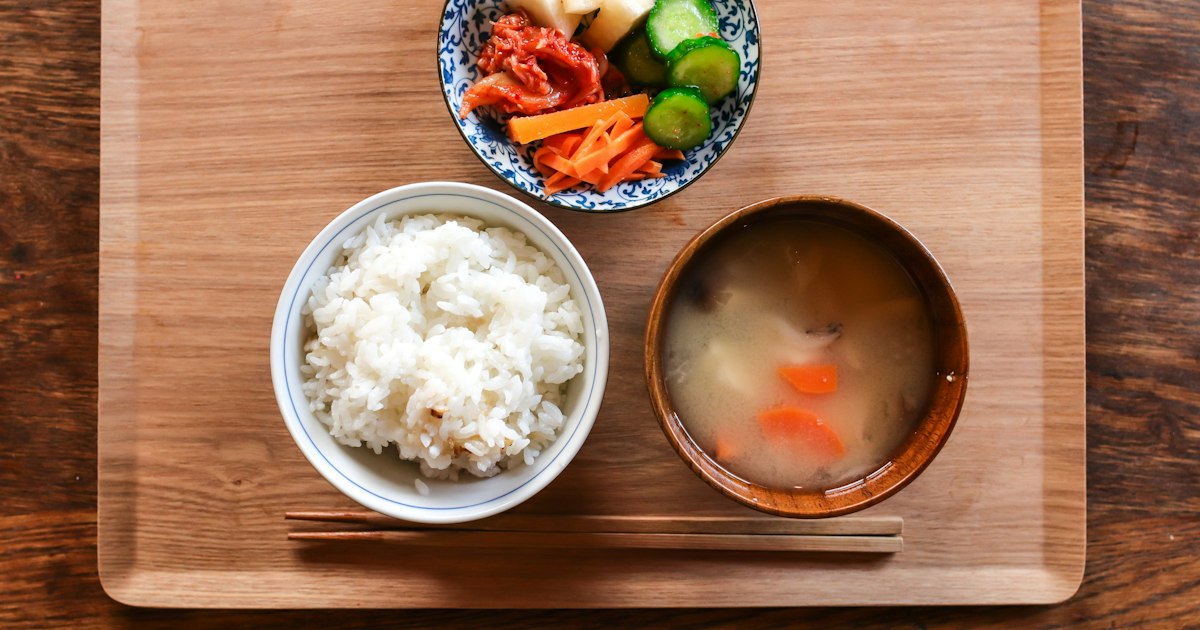
Photo by Takafumi Yamashita on Unsplash
Walk into almost any Japanese restaurant at lunchtime and you’ll see the same thing on most tables: a tray holding a bowl of rice, a bowl of miso soup, a small mound of pickles, and one main dish. This is teishoku (定食) — the set-meal lunch that keeps Japan’s office workers, students, and truck drivers fed quickly, affordably, and well. It’s one of the easiest ways to eat a real, balanced Japanese meal without speaking much Japanese or spending much money, but it does have its own small set of rules. Here’s how to find a good teishoku-ya and order like you’ve done it before.
What exactly is a teishoku?
Teishoku means “fixed meal” — a main dish (grilled fish, fried pork cutlet, simmered vegetables, karaage, whatever the shop specializes in) bundled with rice, miso soup, and tsukemono (pickles) for one set price. It’s different from a bento, which is packed to go, and different from donburi, which is everything piled into one rice bowl. A teishoku arrives on a tray with everything in separate dishes, and in most shops the rice and miso soup are refillable — look for a sign reading gohan okawari jiyu (rice refills free) or just ask “okawari dekimasu ka?”
The format descends from ryokan and temple meal service, but the modern teishoku-ya as a fast, cheap lunch counter took shape in the postwar decades around train stations and factory districts, which is still exactly where you’ll find the best ones today.
Where to find a good one
Skip the restaurants with English menus and photos taped to the window near major stations — they’re priced for tourists. The real teishoku-ya are usually one street back, often with a vertical fabric curtain (noren) at the door, a handwritten paper menu, and a lunch crowd of local office workers between 11:30am and 1:30pm. Chains like Ootoya, Yayoiken, and Miyamoto Mutsugoro are reliable, English-menu-friendly entry points if you want a safe first try; independent, family-run shops near train stations, markets, or business districts are where you’ll eat better for less. If you’re near Saga and want to see where a lot of that fish actually comes from before it lands on a teishoku plate, the Yobuko morning fish market near Karatsu is worth the detour.
Most teishoku-ya open for lunch around 11:00am or 11:30am and close the kitchen by 2:00pm or 2:30pm, then either close entirely until dinner or reopen around 5:00pm or 6:00pm with a different, pricier dinner menu. Going right at opening or after 1:00pm avoids the worst of the lunch rush; between 12:00pm and 12:45pm, expect a short line at anything popular.
What it costs: budget to splurge
Price is the whole appeal of teishoku. In most cities:
- Budget (¥700–¥1,000): Standard lunch sets at neighborhood shops — saba shioyaki (grilled salted mackerel), karaage, or a simple katsu set with rice, soup, and pickles included.
- Mid-range (¥1,000–¥1,800): Chain restaurants like Ootoya, or independent shops using better-sourced fish or pork, often with a choice of sides or a small bowl of extra vegetables added.
- Splurge (¥2,500–¥6,000+): Lunchtime teishoku at restaurants that serve kaiseki or wagyu at dinner, offering a scaled-down, lunch-only version of their evening cooking at a fraction of the price. If you’re ever near Yamagata, a lunch teishoku built around Yonezawa beef is a genuine way to try a historic wagyu brand without paying dinner-course prices.
Tax is included in the displayed price at almost all teishoku-ya, and there’s no tipping — service is already baked into what you pay.
How to actually order
Many teishoku-ya, especially chains, use a vending-machine ticket system (shokken) at the entrance: you pay first, select your set from buttons or photos, take the printed ticket, and hand it to staff when you sit down. At independent shops, you’ll instead sit down, and either point at a numbered item on a wall-mounted menu or just say the dish name plus “teishoku” — “saba teishoku, kudasai” gets you the grilled mackerel set, for example.
A few phrases make this smoother:
- “Kore, onegaishimasu” — pointing at a menu photo and saying “this, please”
- “Gohan, sukuname de” — “small portion of rice,” useful if you don’t want a full bowl
- “O-kaikei, onegaishimasu” — “check, please,” since table service rarely brings it unasked
When your food arrives, you’ll usually get a hot towel first — see our oshibori etiquette guide if you’re unsure what to do with it. It’s for wiping your hands before eating, not your face or the table.
Common mistakes foreign visitors make
The biggest one is treating teishoku-ya like a restaurant where you linger — these are fast-turnover lunch counters, and sitting for an hour over coffee after finishing is noticeably out of place during the 12:00–1:00pm rush. Order promptly, eat, and clear out if there’s a line.
Another common slip is trying to split or customize a set — asking to swap the fish for extra rice, or split one set between two people. Teishoku are priced and portioned as fixed combinations; substitutions are rarely possible and asking repeatedly will just confuse the staff. If you want less food, order a smaller set from the menu rather than trying to modify a bigger one.
Visitors also sometimes miss that miso soup is drunk directly from the bowl (no spoon) while rice is eaten with chopsticks held in the other hand, switching between bowls rather than mixing everything onto one plate. And don’t pour soy sauce over the whole tray — it’s meant for dipping specific items like fish or tofu, not as a general seasoning poured over rice.
Best times and seasons to go
Teishoku is a year-round, everyday meal rather than a seasonal specialty, but the main dish often changes with what’s in season — expect more grilled fish like sanma (Pacific saury) in autumn, and cold soba or somen-based sets in midsummer. Lunch hours are busiest Monday to Friday near office districts and stations, since teishoku-ya largely serve the local workday crowd; weekends can mean shorter hours or closure entirely in business areas, while shops in residential or shopping neighborhoods stay busy throughout the week. If you’re traveling during peak school trip months, note that teishoku-ya near major temple and sightseeing circuits in Kyoto and Nara can get crowded with student groups — our guide to shugaku ryoko season covers the calendar if you want to plan around it.