Photo by Taewoo Kim on Unsplash
If you’ve ever stood on a Japanese train platform holding your Suica or Pasmo card up to a vending machine, wondering whether it will beep green or just sit there blinking, you’re not alone. IC card tap-to-pay is one of the most convenient things about traveling in Japan, but it is not universal — and the gap between “this machine takes IC cards” and “this machine only takes coins” trips up even people who’ve been in the country for weeks. Here’s how to actually tell the difference, where the good machines live, and what’s worth buying from them.
Why Some Vending Machines Take IC Cards and Others Don’t
Japan has roughly 2.2 million vending machines nationwide, and the overwhelming majority of them — the ones outside convenience stores, on random street corners, in apartment building lobbies — are still coin-and-bill only, or at most accept a handful of mobile payment QR codes. IC card readers cost the operator extra money to install and maintain, so they tend to show up where the operator has a direct relationship with a card network’s parent company.
That’s exactly the case inside train stations. JR East, Tokyo Metro, and the private railways (Odakyu, Tokyu, Keio, and others) run or license vending machines through subsidiary brands, and because Suica and Pasmo are literally railway-company products, equipping station machines with IC readers is cheap and strategically useful — it keeps you spending inside the fare-gate ecosystem. Look for the small green Suica penguin logo or the IC card symbol (a radiating-wave icon) printed near the coin slot. If you see it, tap works; if you don’t, assume cash only.
The Acure Machines: JR East’s Tap-to-Pay Network
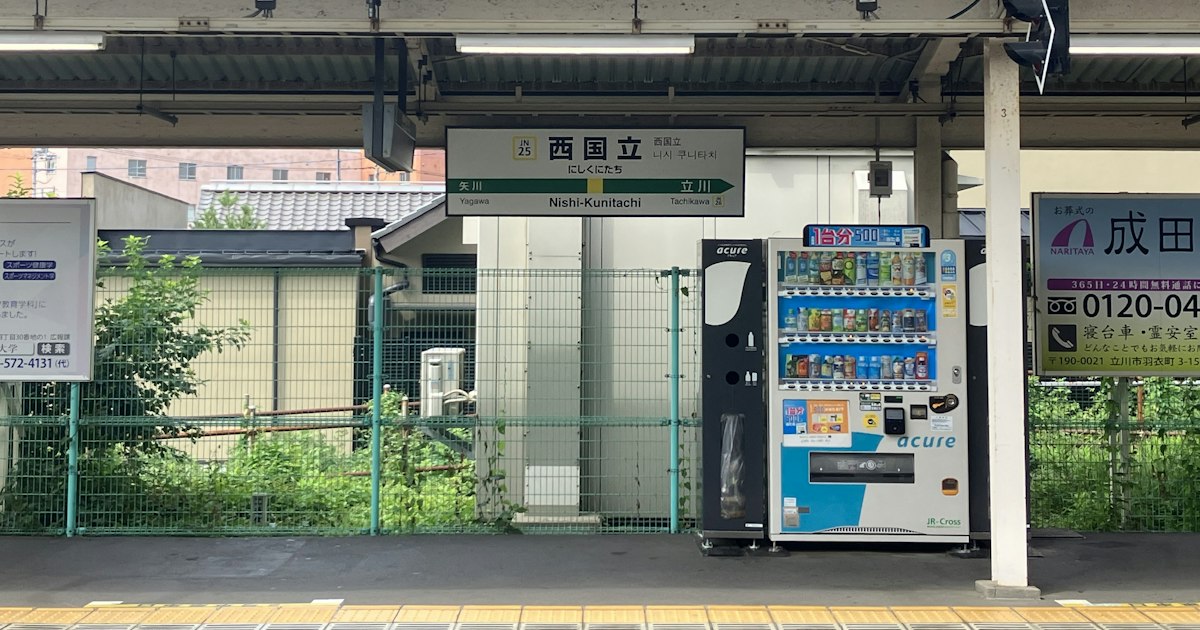
The brand to recognize is acure (アキュア), JR East’s in-house vending machine operator. Acure machines are everywhere inside JR East stations in the Tokyo, Yokohama, and northern Kanto area — on platforms, in corridors between gates, and clustered near station exits. Nearly all of them accept Suica (and by extension Pasmo, Icoca, and the other nine regionally issued IC cards that are mutually compatible under Japan’s “10 card” transportation IC alliance).
- Drink machines: standard canned and bottled drinks run about ¥130–¥160, with some “hot & cold” specialty machines charging ¥180–¥280 for items like fresh-brewed coffee or seasonal fruit drinks.
- Acure Bakery machines: these are the fun ones — vending machines that dispense actual fresh bread (melon pan, curry pan, custard-filled rolls) baked that morning, priced around ¥280–¥420. You’ll find them at larger stations like Shinagawa, Omiya, and Tachikawa.
- Snack and ice cream machines: chips, chocolate, and ice cream bars in the ¥150–¥300 range, often tucked near platform benches.
Machines located inside the ticket gates (after you’ve tapped in) are more consistently IC-enabled than ones in the station’s outer concourse, since those are squarely within JR East’s own retail footprint. If you’re killing time waiting for a train, that’s the better hunting ground.
What About Pasmo, Icoca, and Other Regional Cards?
Because of the nationwide IC interoperability agreement, a Pasmo card works identically to Suica at these machines — same tap, same speed, same beep. The same goes for Icoca (Kansai), Sugoca (Kyushu), Toica (Tokai), and the other regional cards, as long as you’re using them within Japan. Mobile Suica and Mobile Pasmo on your phone (via Apple Pay or Google Pay) work the same way — just hold the phone near the reader, no need to unlock it.
One real limitation: Welcome Suica and other tourist-oriented temporary IC cards work exactly the same as regular Suica at vending machines, so there’s no downside there. The actual gotcha is balance — unlike at a ticket gate, a vending machine will usually just reject the tap silently if your balance is too low, rather than telling you how much you’re short. Top up with at least a few hundred yen of buffer before you start browsing snacks.
Beyond Vending Machines: Newdays and Station Kiosks
Don’t limit yourself to the vending machine wall — JR East’s Newdays convenience stores, which sit inside or right outside the gates at nearly every JR East station, accept Suica/Pasmo at the register for anything in the store: onigiri, bento boxes, canned coffee, regional snack boxes, even umbrellas on a rainy day. These aren’t technically vending machines, but they function the same way for a tourist’s purposes — tap, grab, go, no cash needed. If you’re caught in a sudden downpour and don’t have an umbrella, it’s also worth knowing about iKasa, Japan’s umbrella-sharing app, which has rental stands at many of the same stations and is often a cheaper option than buying a ¥500 convenience store umbrella outright.
Common Mistakes Tourists Make
- Assuming all vending machines are the same. A machine ten meters from an IC-enabled one, operated by a different company, may be coins-only. Check the logo every time rather than assuming based on the last machine you used.
- Forgetting Shinkansen platform machines are different. Many bullet train platform vending machines are run by JR Central or JR West rather than JR East’s acure network, and IC acceptance varies more there — some still want coins or bills for drinks, especially older machines on regional Shinkansen lines.
- Tapping twice. If a tap doesn’t register instantly, resist the urge to tap again immediately — some readers need a full second to process, and a second tap mid-transaction can cause a double charge that you’ll need to sort out at a station fare adjustment machine.
- Overbuying drinks to carry home. If you’re stocking up on Pocari Sweat or other Japanese drinks as souvenirs, remember liquids over 100ml can’t go in carry-on luggage — see our guide on TSA rules for liquids and locks on your flight home before you load up your suitcase.
Timing and Practical Tips
Vending machines never close, but restocking schedules matter for the bakery machines specifically — acure Bakery units are typically refilled in the early morning and again in the early afternoon, so items can sell out by evening rush hour (around 6–8pm) at busy stations. If you want the full selection of fresh bread, aim for mid-morning (10am–noon) when the morning commute crowd has thinned but stock hasn’t been picked over yet.
For drinks specifically, Japan’s ion and electrolyte drinks — Pocari Sweat, Aquarius, and the medical-grade OS-1 — are stocked in most of these same machines and are worth understanding before you grab one, since OS-1 in particular is formulated for rehydration therapy rather than casual refreshment. Our full breakdown of Japan’s ion-drink culture covers which one you actually want on a hot summer platform versus after a long flight.
Budget-wise, a vending machine snack run rarely breaks ¥500 even if you grab a drink and a bread item, which makes it one of the cheapest ways to eat on the move in Japan — no need to leave the station, no language barrier, and increasingly, no need to carry cash at all.