Photo by Denys Nevozhai on Unsplash
Most Tokyo neighborhoods are named after a shrine, a river, or an old castle gate. Ebisu is named after a beer. In 1890, the Japan Beer Brewing Company built a brewery here and named its flagship lager Yebisu, after the Japanese god of fishermen and good fortune. A rail spur built to haul beer kegs to the port gave the surrounding stop its name — Ebisu Station — and the neighborhood grew up around it. The brewery itself relocated outside Tokyo decades ago, but its site is now Yebisu Garden Place, a mixed-use complex that still keeps the beer history alive, and the streets around the station are packed with izakaya and standing bars that make Ebisu one of the best places in Tokyo for an evening of eating and drinking without the Shibuya-level crowds.
Getting to Ebisu
Ebisu Station sits on the JR Yamanote Line, just one stop (about 2 minutes) south of Shibuya, and is also served by the JR Saikyo and Shonan-Shinjuku lines and the Tokyo Metro Hibiya Line. From Shinjuku it’s roughly 15 minutes on the Yamanote Line; from Tokyo Station, about 25 minutes via the Yamanote or Marunouchi/Hibiya transfer. There’s no need to book anything in advance — just tap in with an IC card (Suica/Pasmo) like anywhere else in the city.
From the station’s East Exit, follow the signs for the “Skywalk,” a roughly 400-meter covered moving walkway that carries you directly to Yebisu Garden Place in about 5 minutes without crossing a single street. It’s a small, easy-to-miss convenience that makes Ebisu one of the more pleasant stations to arrive at with luggage or in the rain.
Yebisu Garden Place and the Museum of Yebisu Beer
Yebisu Garden Place opened in 1994 on the former brewery grounds and now holds offices, the Yebisu Garden Hall event space, restaurants, and the Tokyo Photographic Art Museum. At its center is the Museum of Yebisu Beer (Yebisu Beer Kinenkan), a compact museum run by Sapporo Breweries that traces the beer’s history with old bottles, posters, and brewing equipment.
- Hours: roughly 11:00–18:00; closed Mondays (and around New Year’s) — check the day you visit, as hours shift seasonally.
- Admission: the self-guided exhibition area is free to enter.
- Tasting: a small tasting lounge on site sells flights of a few different Yebisu varieties by ticket machine, usually a few hundred yen per glass — a cheap, easy way to compare the brewery’s lineup side by side.
- Guided tours: paid, Japanese-language tours of the brewing history exhibits run on a set schedule and are worth booking ahead if your Japanese is good enough to follow along; otherwise the exhibition alone is enough for most visitors.
The square outside the museum, under the glass-roofed Chateau Restaurant building, hosts a famous Baccarat crystal chandelier each winter — more on timing below.
Ebisu Yokocho: The Neighborhood’s Beer Hall at Night
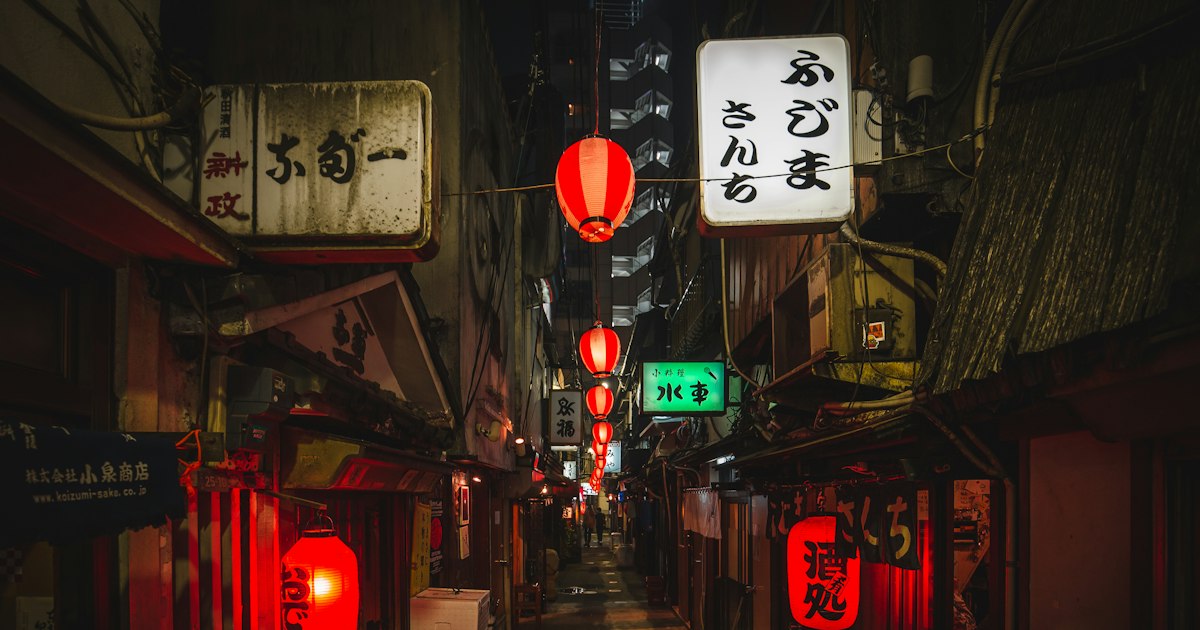
If Yebisu Garden Place is the neighborhood’s daytime history lesson, Ebisu Yokocho is its nighttime payoff. Tucked just northwest of the station along a street lined with pachinko parlors, this covered alley was once a Showa-era black market and is now a cluster of around 20 tiny stalls serving yakitori, oden, sushi, and grilled seafood, all sharing a few long communal tables down the center. Most stalls open around 17:00 and stay busy until midnight or later; it gets loud, smoky, and genuinely fun, especially on weekends.
Budget-wise, a few skewers and a mug of draft Yebisu run about ¥2,000–3,000 per person; order from two or three different stalls and you’ll have tried more of the alley than if you’d settled into one spot. It’s standing-room informal rather than a sit-down restaurant, so it pairs well with the kind of fast, cheap, stand-and-eat culture you’ll also find at Tokyo’s standing sushi bars — Ebisu has a few of those too, scattered on the streets south of the station.
Best Time to Visit
Ebisu works year-round, but a few windows make it better:
- Winter evenings (mid-November to early January): Yebisu Garden Place runs a seasonal illumination, and the Baccarat chandelier in the central square is lit — it’s free to see and one of the better low-key Christmas-light spots in Tokyo, without Marunouchi-level crowds.
- Weeknight early evening (17:00–19:00): the best window to grab seats at Ebisu Yokocho before it fills up; arrive after 19:30 on a Friday and you may be standing.
- Summer: Yebisu Garden Place occasionally hosts a beer garden on its open plaza — a nice outdoor option if you’re there on a warm evening, though it’s seasonal and not guaranteed every year.
Avoid treating this as a rainy-day indoor destination — the beer museum itself is small (30–45 minutes is plenty), so the appeal of Ebisu is really the walk between the brewery history and the alley food scene, which is more pleasant in dry weather. If rain catches you anyway, the Skywalk covers the station-to-Garden Place stretch, and a basic clear vinyl umbrella from a convenience store will handle the rest.
Beyond the Beer: What’s Within Walking Distance
Ebisu’s location makes it a good base for stringing together a half-day without hopping trains. Daikanyama, home to the flagship Tsutaya Books T-Site, is about a 12–15 minute walk northwest, and Nakameguro’s canal-side cafes are another 10 minutes past that. If you’d rather see a different side of Tokyo neighborhood life entirely, both Monzen-Nakacho and Gotokuji Temple make good contrasts — quieter, more residential, and nowhere near as beer-focused.
Common Mistakes to Avoid
- Arriving at the beer museum expecting a full brewery tour. The actual Yebisu brewing has long since moved elsewhere; this is a history museum and tasting room, not a working factory tour. Set expectations accordingly and budget it as a 30–45 minute stop, not a half-day.
- Showing up to Ebisu Yokocho for lunch. Most stalls don’t open until late afternoon. If you’re hungry at midday, look toward the main streets around the station instead.
- Skipping cash. Several of the smaller Yokocho stalls are cash-only or have low card minimums — carry a few thousand yen in small bills.
- Confusing Ebisu with Ebisu-cho or other similarly named stops. Make sure your train app has you on the Yamanote/Hibiya Ebisu Station, not a different “Ebisu” exit on a local bus route.
For a one-word summary: Ebisu rewards an evening visit far more than a daytime one. Come for the museum if you’re curious about the beer’s backstory, but come back after dark for the part of the neighborhood that actually earned it a reputation — the alley, the draft taps, and the crowd spilling out of Ebisu Yokocho onto the street.