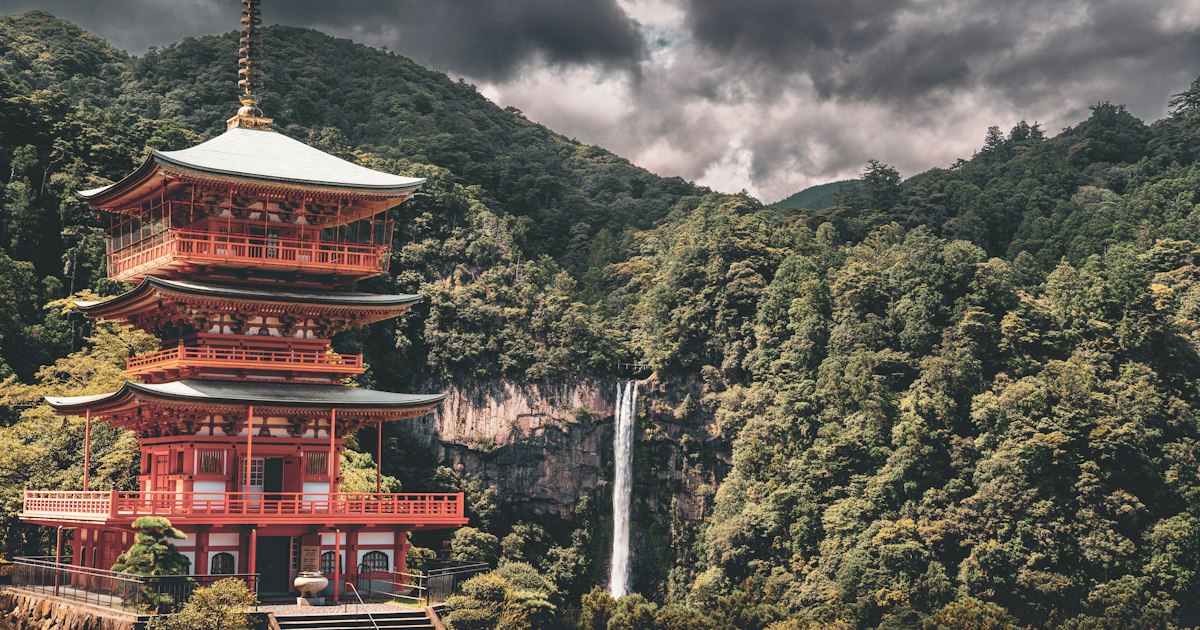
Long before Mount Fuji became the pilgrimage mountain foreign visitors know, Edo-period Tokyoites were climbing a smaller peak just across the Sagami Plain: Oyama, in Kanagawa Prefecture. They came for Afuri Shrine, for the waterfalls where pilgrims purified themselves before the ascent, and for the tofu restaurants that still line the approach. It’s a genuine mountain hike, not a theme-park shrine visit, and you can do the whole round trip from Shinjuku in a single day for well under the cost of a Hakone excursion.
Why Oyama Is Tokyo’s Original Pilgrimage Day Trip
Oyama (“Big Mountain”) rises to 1,252 meters and has drawn worshippers since at least the Nara period. During the Edo era, “Oyama-mairi” became one of the most popular pilgrimages for commoners from Edo (old Tokyo) — guilds and neighborhood associations would send representatives up the mountain to pray for rain, good harvests, and protection, often carrying a wooden sword to dedicate at the shrine. You’ll see Oyama pilgrims depicted in ukiyo-e prints by Hiroshige and others. The modern draw is the same combination that made it popular 300 years ago: a manageable hike, a dramatic shrine complex split across two levels, sacred waterfalls, and tofu cooked with the mountain’s spring water.
Getting to Oyama from Shinjuku
Take the Odakyu Odawara Line from Shinjuku Station to Isehara Station — a rapid express (kaisoku kyukō) takes about 70–80 minutes and costs roughly ¥480 one-way. A handful of Romancecar limited express trains also stop at Isehara, shaving off 10–15 minutes for an added reserved-seat surcharge of around ¥600–700. From Isehara Station’s north exit, catch a Kanagawa Chuo Kotsu bus bound for “Oyama Cable” (大山ケーブル) — about a 25-minute ride for roughly ¥310. If you’re also weighing a Hakone trip on this visit, it’s worth comparing transport passes first; our Fuji Hakone Pass vs Hakone Free Pass guide explains why neither pass actually covers Oyama, so budget this trip separately rather than assuming overlap.
The Pilgrim’s Route: Tofu Street, Temple Maples, and the Cable Car
From the bus terminus, you’ll walk up Koma-sando, a steep stone-stepped shopping street lined with tofu restaurants, sake shops, and stalls selling amazake and sekihan. Budget about 15 minutes to climb it at an easy pace. Partway up, a side path leads to Oyama-dera, a Kannon temple famous for its maple corridor — around 400 trees that turn brilliant red in mid-to-late November, with evening illuminations during peak season. Admission is roughly ¥400. Continue past the temple to the lower cable car station, Oyama Cable Station, where the Oyama Cable Car climbs to Afuri Jinja Station in about six minutes. Cars run roughly every 20 minutes, from about 9:00 am to 5:00 pm (shorter hours in winter — don’t assume the last car down runs as late as summer). Fares are approximately ¥660 one-way / ¥1,120 round trip for adults, half price for children. If your knees would rather skip it, a hiking trail runs parallel to the cable car and takes about 40–50 minutes on foot.
Nitanotaki Waterfall and the Shimosha Shrine
Near the base of the mountain, a short detour trail leads to Nitanotaki, a twin waterfall historically used by pilgrims for suigyo — ritual purification under cold water — before they continued up to the shrine. It’s free to visit and makes a good cooldown stop on a hot day; the pools are shallow and shaded by cedar. From the top cable car station, a short uphill walk brings you to Afuri Shrine’s Shimosha (lower shrine), perched at about 700 meters with a wide stone terrace looking out over the Sagami Plain to Sagami Bay — and, on a clear winter morning, Mount Fuji on the horizon. This is where most day-trippers stop, and it’s a legitimate, satisfying visit on its own.
Pushing to the Summit: Honsha and the View
If you want the full pilgrimage, the trail continues from Shimosha to Honsha, the shrine’s main sanctuary at the 1,252-meter summit. Plan on roughly 90 minutes to 2 hours one-way over stone steps and root-covered forest trail — count on a 3 to 3.5-hour round trip from the cable car station including rest stops. This is a real hike, not a paved walkway: wear proper shoes with grip, bring water, and start early enough to be back down before the last cable car. The summit area has a couple of simple rest huts selling drinks and snacks, but don’t rely on them being open outside peak season.
Best Season and Timing
Mid-to-late November is peak season, when Oyama-dera’s maples turn and the shrine grounds fill with color — expect bus and cable car queues on weekends. Winter (December–February) brings the clearest air and the best odds of seeing Fuji from Shimosha, though the summit trail can have icy patches above the treeline. Summer is lush and good for the waterfall detour, but June’s rainy season turns the stone steps genuinely slippery — go on a dry day or skip the summit push. Spring is quieter than autumn and still comfortable for hiking. Whatever the season, go on a weekday if you can; Koma-sando and the cable car queue noticeably on weekends and holidays.
Common Mistakes, Budgets, and Where to Eat
The most common mistake is treating this as a quick shrine photo-stop and underestimating the Shimosha-to-Honsha hike — it’s a mountain trail with real elevation gain, not a continuation of the paved temple approach. The second is wearing sandals or slick-soled sneakers on wet stone steps. The third is assuming cards are accepted at the tofu restaurants on Koma-sando; most are cash-only, so carry yen. Check the cable car’s last-descent time before you commit to the summit trail, since missing it means a long walk down in the dark.
For budgets: a no-frills day — bus, walking instead of the cable car, a tofu set lunch — runs about ¥1,500–2,500 total beyond train fare. Mid-range travelers can add the cable car round trip (¥1,120), Oyama-dera admission (¥400), and a proper yudofu (hot tofu) course at one of the sando’s ryokan-style restaurants for ¥2,500–3,500. For a splurge, several shukubo (pilgrim lodges) along Koma-sando still take overnight guests for a full Oyama-mairi experience with a kaiseki dinner built around local tofu and mountain vegetables, typically ¥15,000–25,000 per person with two meals — and Isehara’s own hot spring, Oyama Onsen, is a good way to end the day if you’d rather not share a bath; see our guide to booking a private onsen room if that’s more your style. If you enjoy this kind of low-key, history-layered countryside detour, Kyoto’s Kayabuki-no-Sato thatched village is a similarly rewarding day trip for a different leg of your itinerary.