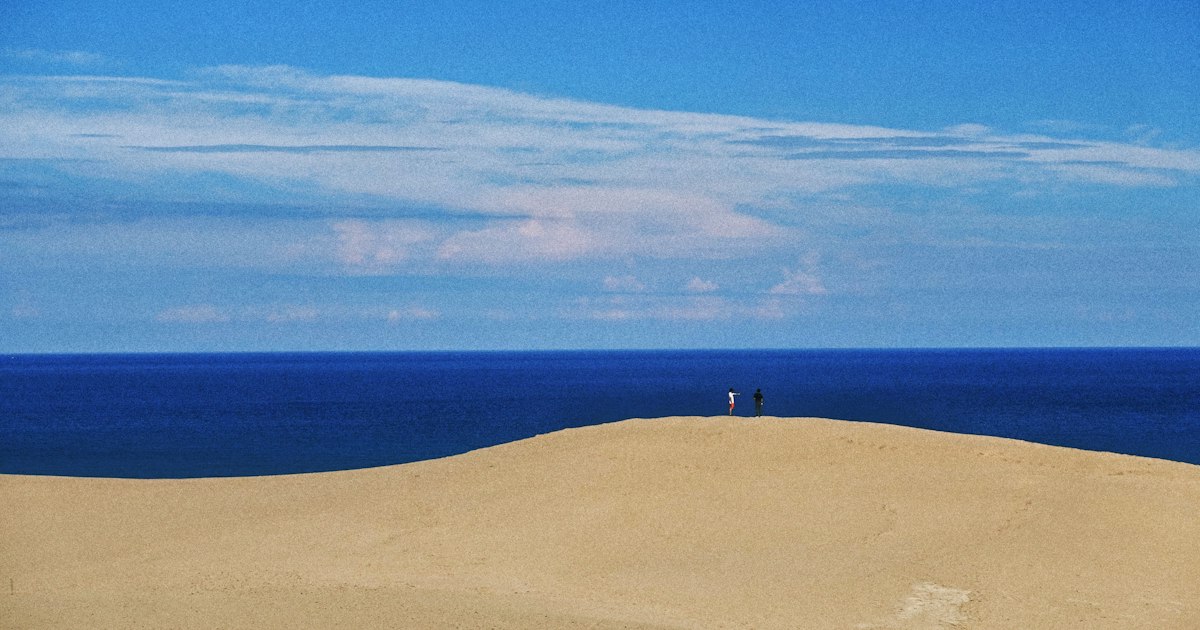
Photo by Nakaharu Line on Unsplash
Most people picture rice paddies and neon cities when they think of Japan, not rolling sand dunes that stretch to the horizon. The Tottori Sand Dunes (Tottori Sakyu), on the Sea of Japan coast in Tottori Prefecture, are the exception — a genuinely strange and photogenic landscape that feels closer to Inner Mongolia than to Kyoto. They’re one of the easiest “wow” day trips in the quieter San’in region, and far less crowded than anything in the Kansai or Kanto tourist circuits.
What Makes the Tottori Sand Dunes Unique
Formed over roughly 100,000 years by sand carried down the Sendai River and reshaped by coastal winds, the dunes stretch about 16 km along the coast and up to 2.4 km inland, with some peaks reaching over 45 meters high. They’re part of the San’in Kaigan UNESCO Global Geopark, and the whole area is free to enter and open 24 hours a day — there are no gates or admission fees for the dunes themselves, only for the paid attractions around them.
The signature feature is Umanose (“horse’s back”), the tall central ridge that gives you a sweeping view of the Sea of Japan on one side and the dune field on the other. Climbing it takes 15–20 minutes through soft sand and is more of a workout than it looks — wear shoes you don’t mind filling with sand, or go barefoot like many locals do.
How to Get There
Tottori City has no shinkansen station, which is part of why it stays uncrowded. Realistic routes:
- From Kyoto or Osaka: the JR “Super Hakuto” limited express runs directly to Tottori Station in about 2.5–3 hours (around ¥6,000–7,000 one-way, covered by some JR passes).
- From Okayama: the JR “Super Inaba” limited express takes about 2 hours and is the fastest shinkansen-plus-transfer combination from Tokyo or Hiroshima direction.
- By plane: Tottori Airport has flights from Tokyo Haneda (about 1 hour 15 minutes), which is often the quickest option if you’re coming from eastern Japan.
From Tottori Station, take the Loop Kirinjishi bus or a regular route bus bound for “Sakyu” (sand dunes) from bus stop 0 or 1 outside the station’s north exit. The ride takes about 20–25 minutes and costs roughly ¥370–420 each way; a one-day bus pass is worth it if you’re also stopping at the Sand Museum. If you’re arriving with luggage, don’t drag it to the dunes — Tottori Station has coin lockers in various sizes near the ticket gates, so it’s worth checking our guide to coin lockers in Japan for sizes and pricing before you go.
Best Time and Time of Day to Visit
Spring (April–May) and autumn (October–November) offer the most comfortable temperatures for walking in loose sand. Summer is workable but the sand surface can get hot enough to burn bare feet by midday, and humidity makes the climb up Umanose tougher than it looks. Winter brings a real chance of snow dusting the dunes — beautiful in photos but cold and windy, with occasional closures of the paid attractions.
Whatever season, aim for early morning (right after sunrise) or the two hours before sunset. Not only is the light better for photos and the wind ripples (“fūmon”) on the sand more visible, but the crowds and tour buses thin out dramatically outside midday hours.
What to Do Once You’re There
Beyond the walk up Umanose, a cluster of activities sits near the main entrance:
- Sand dune lift (Sakyu Center): a paid conveyor/escalator system that carries you partway up so you skip the steepest climb, roughly ¥650–700 round trip. Useful if you have mobility concerns or just want to save energy for the walk back.
- Camel rides: photo-only sits on a camel run about ¥1,300, while a short guided ride is closer to ¥3,000. It’s touristy but genuinely fun for kids, and it leans into the “desert” theme.
- Sandboarding: board rental is available near the entrance for a few hundred yen per hour if you want to try sliding down the steeper slopes.
- Paragliding: tandem flights are offered seasonally by local operators for a splurge-level experience (typically several thousand yen), weather permitting.
The Sand Museum Next Door
Right by the bus stop is the Tottori Sand Museum, the only museum in the world exhibiting sand sculptures indoors. A completely new set of sculptures — carved from imported sand by international artists — goes up around a different country or theme roughly once a year. Entrance runs about ¥800–900 for adults, and hours are typically 9:00–17:00 (extended in peak summer months), with a closure period between exhibits, usually in early January, so check the current schedule before building your trip around it. Budget 45–60 minutes to walk through.
Common Mistakes to Avoid
- Wearing the wrong shoes. Sand gets everywhere; sandals or shoes you can easily empty out beat sneakers with high sides.
- Underestimating the walk. The dunes look flat from photos but the climb to Umanose and back can take 45 minutes to an hour round trip in soft sand — bring water, especially in summer.
- Treating it as a half-day trip from Kyoto or Osaka. Travel time alone eats 5+ hours round trip; plan to stay overnight in Tottori City or the nearby Kaike Onsen area if you want to see the dunes at both sunrise and sunset.
- Skipping local food. Tottori Prefecture is known for its snow crab in winter and for Tottori Wagyu beef — if you’re curious how it compares to Kobe or Hida beef, our wagyu grades guide explains what the grading letters and numbers actually mean before you order.
Making It Part of a Bigger San’in Trip
The Tottori Sand Dunes work well as an anchor for a slower loop through the San’in coast, an area most first-time visitors to Japan skip entirely. If you enjoyed the idea of an unusual, low-crowd coastal destination, the boathouse village of Ine no Funaya in Kyoto Prefecture makes a similarly offbeat stop along the same general region, combining well with Tottori if you’re routing through by rental car or local rail rather than doubling back to Kyoto or Osaka each time.
On a budget, the dunes themselves plus bus fare can be a sub-¥1,000 outing; add the lift, Sand Museum, and a camel photo and you’re comfortably mid-range at ¥3,000–4,000 per person. For a splurge day, pair a paragliding flight with a hotel overlooking the coast and a crab or wagyu dinner in town — a fitting way to close out a visit to one of Japan’s most unexpected landscapes.