Photo by Babs Gorniak on Unsplash
If you’re spending a cold afternoon around Mt. Fuji or the Fuji Five Lakes and want something heartier than ramen, order hoto. It’s a thick, hand-cut noodle stewed straight in a miso broth with kabocha pumpkin and root vegetables, served bubbling in its own iron pot. It’s Yamanashi Prefecture’s signature comfort food, and unlike a lot of regional specialties, it’s genuinely easy for visitors to track down and try — you don’t need a reservation, a car is optional, and a full bowl rarely costs more than a fast-food combo meal in Tokyo.
What Is Hoto, Exactly?
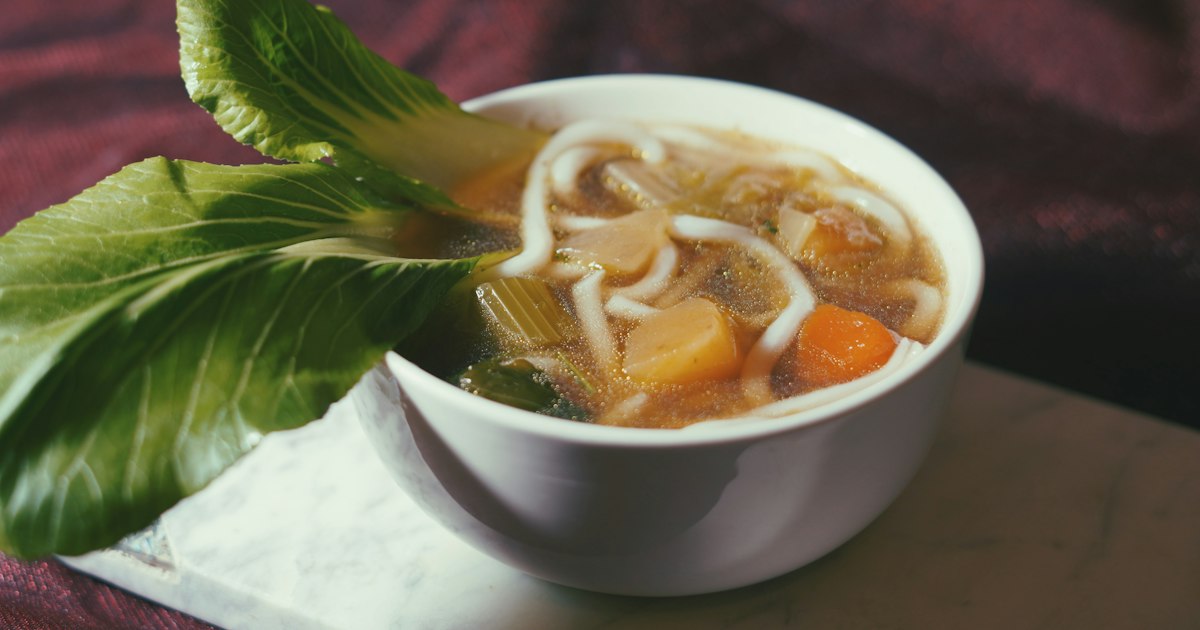
Hoto (ほうとう) is flat, wide, udon-like noodles simmered directly in a miso-based vegetable soup — usually with kabocha squash, carrot, daikon, mushrooms, and sometimes pork or chicken. The dish is closely tied to Yamanashi’s mountainous terrain: wheat grew better than rice here historically, and pumpkin and root vegetables kept well through winter. Local legend credits the 16th-century warlord Takeda Shingen with popularizing it as a fast, one-pot meal for his troops (whether or not that’s strictly historical, it’s part of how every restaurant menu tells the story).
Hoto is technically a type of nabe (hot pot) — if you enjoy Japan’s hot-pot culture, it’s worth comparing to the other major styles covered in Shabu-Shabu vs Sukiyaki: Japan’s Hot Pot Styles Explained. Hoto is less about dipping and more about one long, slow-simmered bowl that arrives already finished.
What Makes the Noodles Different
The key difference from udon or soba is that hoto noodles are never pre-boiled. They go into the soup pot raw, unsalted, and slightly thick and uneven by hand. As they cook, they release starch directly into the broth, which is what gives hoto its distinctive thick, almost stew-like consistency instead of a clear soup. This also means the noodles have a dense, chewy, sometimes slightly doughy bite — closer to a flat dumpling than a typical noodle. If you’re expecting udon’s smooth, springy texture, hoto will feel unfamiliar at first; that’s normal and part of the dish’s character, not a sign of a bad bowl.
Because the noodles cook in the pot from raw, hoto also takes longer to prepare than most noodle dishes — expect 15–20 minutes from order to table at most restaurants, and it typically arrives still at a rolling boil in a cast-iron or clay pot set on a portable burner. Don’t rush the first bite.
Where to Try It Near Mt. Fuji
The Fuji Five Lakes area, especially around Kawaguchiko, is the easiest place for visitors to eat hoto, since it’s already a major tourist base with English-friendly signage.
- Hoto Fudo (ほうとう不動) — A well-known local chain with several branches around Kawaguchiko and Fujiyoshida (the Kawaguchiko Interchange and Nishiko branches are the most visitor-accessible). Broth here tends to be on the lighter, saltier side. A bowl runs roughly ¥1,000–1,300. Most branches open around 11:00 and close by early evening (roughly 19:00), though hours shift seasonally, so check the current schedule if you’re planning a late lunch.
- Kosaku (ほうとう小作) — Yamanashi’s most famous hoto chain, with a thicker, richer miso broth and generous portions. It has locations in Kawaguchiko, Fujiyoshida, and Kofu. Expect roughly ¥1,300–1,700 for the classic kabocha hoto, with heartier versions (adding pork, or a “special” mixed-vegetable version) closer to ¥1,800–2,000. Kosaku’s dining rooms are large and can seat groups easily, which makes it a reliable choice if you’re traveling with others.
Both are walkable or a short taxi ride from Kawaguchiko Station, and neither typically requires a reservation outside of peak lunch hours (12:00–13:30) in high season.
Where to Try It in Kofu
Kofu, Yamanashi’s prefectural capital, is the more “local” alternative if you’d rather eat hoto away from the Fuji tourist crowds. Kosaku has a Kofu branch, and the area around Kofu Station has several smaller, family-run hoto shops that lean more traditional — thicker noodles, more rustic presentation, and prices generally in the same ¥1,200–1,700 range. Kofu is also a reasonable base if you’re combining hoto with a visit to nearby vineyards or the Shosenkyo Gorge, since the city sits at the geographic center of the prefecture.
Best Season and How to Get There
Hoto is served year-round, but it’s at its best from autumn through winter, when the weather makes a bubbling pot of hot broth genuinely appealing and kabocha from the summer harvest is at its sweetest after a few months of storage. Winter is also when the Fuji Five Lakes area runs seasonal illumination events, so a bowl of hoto pairs naturally with an evening out — see Japan’s Winter Illuminations: Best Light Festivals and Where to See Them if you’re building a cold-weather itinerary around the area.
From Tokyo, the two main approaches are:
- To Kawaguchiko: A direct highway bus from Shinjuku’s Busta Shinjuku terminal takes about 1 hour 45 minutes and costs roughly ¥2,000–2,200 one-way. Alternatively, take the JR Chuo Line to Otsuki and transfer to the Fujikyuko Line to Kawaguchiko Station (around 2 hours total).
- To Kofu: The JR Chuo Line Limited Express (Azusa or Kaiji) runs direct from Shinjuku to Kofu in about 1.5 hours, with reserved seats typically costing ¥4,000–5,000 one-way.
If you’re also stopping at an onsen town on the same trip — the Fuji Five Lakes area has several — a bowl of hoto afterward is a classic combination locals actually follow; you’ll often see the same restaurants full of people in yukata after a soak. For more on hot-spring food traditions, see Onsen Tamago: Japan’s Hot-Spring-Cooked Eggs and Where to Try Them.
Budget, Mid-Range, and Splurge Options
Hoto is inherently a budget-friendly dish, so the “splurge” tier here is modest compared to other Japanese specialties:
- Budget (~¥1,000–1,300): Standard kabocha hoto at Hoto Fudo or a small local shop in Kofu.
- Mid-range (~¥1,300–1,800): Kosaku’s signature bowl, or versions with added pork, mushroom, or extra vegetables.
- Splurge (~¥2,000+): Ryokan or inn dinners in the Kawaguchiko/Fuji-Yoshida area that serve hoto as part of a multi-course kaiseki-style set, often with local Yamanashi wine, freshwater fish, or seasonal mountain vegetables alongside it.
Common Mistakes to Avoid
- Expecting udon. The noodles are intentionally thicker, denser, and less uniform — that’s not a quality issue.
- Ordering it as a quick bite. Because noodles cook from raw in the pot, hoto takes noticeably longer than ramen or standard udon. Build in time, especially if you have a bus or train to catch.
- Digging in immediately. The pot arrives at a full boil and stays hot for a while — the broth and noodles near the surface cool faster than what’s underneath, so stir gently before your first bite.
- Assuming it’s a light meal. Portions are large and the broth is filling; one bowl is usually enough per person, even after a day of walking around the lakes.
- Skipping it outside winter. Some travelers assume hot pot dishes are only for cold months and avoid it in summer — but the pumpkin and vegetable base makes it satisfying even in the shoulder seasons, and restaurants serve it year-round regardless of temperature.
Hoto isn’t flashy, but it’s exactly the kind of dish that rewards a short detour — cheap, filling, tied to a specific place, and easy to fit around a Fuji-viewing day without needing advance planning.