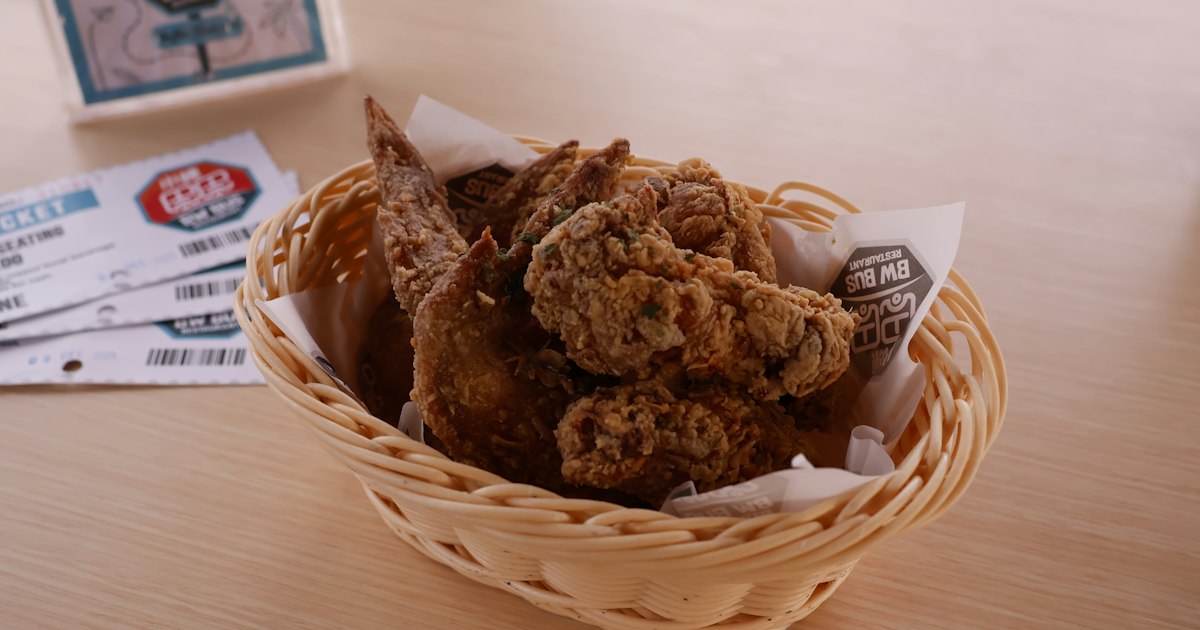
Ask any resident of Japan what they’d want for their last meal, and karaage will come up more often than sushi. This deep-fried, marinated chicken — crunchy outside, juicy inside — shows up at izakayas, convenience stores, train station bento counters, and dedicated specialty shops from Hokkaido to Okinawa. It’s cheap, fast, and endlessly variable. Here’s how to understand what you’re eating and where to track down the versions worth a detour.
What makes karaage different from “fried chicken”
Karaage (唐揚げ) refers to bite-sized pieces of chicken — usually thigh, sometimes breast — marinated before frying, rather than battered and fried like Western-style fried chicken or coated in a thick tempura batter. The marinade is the heart of the dish: soy sauce, sake, grated ginger, and garlic are the base, sometimes with a touch of sesame oil or sugar. The chicken is then dusted lightly in potato starch (katakuri-ko) or a wheat-starch blend, which fries up thinner and craggier than flour, giving karaage its signature shattering crust without a heavy shell. Double-frying at a lower then higher temperature is common at serious shops, which is why the best karaage stays crisp even after it cools — a trait that matters a lot once you realize how often it’s eaten as takeout or in a bento.
Where to eat it: budget, mid-range, and splurge
Budget (¥100–¥400): Convenience stores (7-Eleven, Lawson, FamilyMart) sell hot karaage from a heated case near the register — usually 2-3 pieces for around ¥200–¥300. It’s genuinely decent and a great late-night or train-platform snack. Supermarket deli counters sell trays of 4-6 pieces for ¥300–¥500, often fried fresh in the afternoon before dinner rush.
Mid-range (¥600–¥1,200): This is where dedicated karaage specialty shops and izakayas shine. A standard izakaya order of 5-6 pieces runs ¥600–¥900 and pairs naturally with a cold beer — if you want to see how locals structure a casual drinking session around small fried and grilled plates, it’s worth reading about tachinomi standing bars, where karaage is a standard order alongside a quick glass of something cold. Fast-casual karaage-don (fried chicken over rice) at chain shops like Karayama or Karaage Bou runs ¥600–¥800 for a full meal.
Splurge (¥1,500 and up): Some izakayas and specialty restaurants use branded regional chicken (jidori) — Nagoya Cochin, Satsuma jidori, or Awa Odori Chicken from Tokushima — fried to order in small batches. Expect ¥1,500–¥2,500 for a plate at a proper sit-down restaurant specializing in this. It’s a noticeably different texture: firmer bite, more chicken flavor, less filler.
Regional karaage worth traveling for
Karaage has genuine regional identity in Japan, and a few places have built reputations around it:
- Nakatsu, Oita (Kyushu): Widely considered the spiritual home of modern karaage specialty shops, with dozens of takeout counters competing on marinade recipes. If you’re routing through Kyushu, Fukuoka is the natural base — and while there, don’t miss the open-air food stalls covered in our guide to Fukuoka’s yatai food stalls in Nakasu, several of which serve excellent karaage alongside ramen and yakitori.
- Kochi, Shikoku: Known for “tosa jiro” chicken karaage with a garlic-forward marinade, often sold as street food.
- Tokushima: Home to Awa Odori Chicken, a branded local breed used in upscale karaage. If your trip includes the summer dance festival, pairing a visit with the food scene is easy — see our guide to Awa Odori and how to join in.
How to order and what to look for
Most karaage specialty shops (look for signs reading 唐揚げ専門店) sell by weight or by piece count, typically in 100g increments (around ¥250–¥350 per 100g). You’ll often be asked to choose a sauce or flavor: shio (salt), shoyu (soy, the classic), mayo, or spicy mayo. If it’s your first time, order plain shoyu or shio to taste the marinade itself before branching out. At izakayas, karaage usually arrives with a wedge of lemon and Kewpie mayonnaise on the side — squeezing lemon directly on someone else’s portion without asking is a minor faux pas, so squeeze onto your own plate or ask first.
Common mistakes to avoid
- Ordering it stone cold from a convenience store fridge: Always check it’s from the heated case (hot snack counter), not the refrigerated sandwich shelf — cold, pre-packaged karaage is a different, much worse product.
- Assuming all karaage is the same: Breast-meat karaage (mune) is leaner and drier; thigh (momo) is the standard for juiciness. If a menu doesn’t specify, thigh is the safer default.
- Skipping takeout because you think it won’t stay crisp: Good karaage shops fry to order specifically because it travels well — it’s a legitimate option for a train journey or a hotel room dinner, unlike most fried foods.
- Not asking about spice level: Some shops offer a chili-spiked version (karashi or piri-kara) that can be much hotter than expected — ask if you’re unsure.
Best timing and practical tips
Karaage isn’t seasonal — it’s a year-round, any-time-of-day food — but freshness windows matter more than season. Supermarket deli counters restock hot trays around 5-6pm for the dinner rush, so that’s the best window for fresh, never-sat-under-a-heat-lamp pieces. Specialty takeout shops near stations tend to have lines forming around lunch (12-1pm) and again in early evening; arriving right after opening (many open around 10-11am) avoids both. Most standalone karaage shops don’t take reservations and are cash-friendly but increasingly accept IC cards like Suica and Pasmo. If you’re building out a broader food itinerary around Japan’s regional specialties, it’s worth also looking at dishes tied to a specific place and season, like the firefly squid season in Toyama or Nagoya’s hitsumabushi — karaage travels well as an anytime anchor between more time-sensitive food stops.