Some links below are affiliate links. If you book through them, Japan Trove may earn a small commission at no extra cost to you.
Two weeks in Japan is the sweet spot — enough to pair the classic cities with a few deeper detours without rushing. Here’s a balanced 14-day route for first-timers.
At a glance
- Days 1–4: Tokyo
- Day 5: Hakone or Nikko (Fuji views / nature)
- Days 6–8: Kyoto
- Day 9: Nara + Osaka
- Days 10–11: Osaka + Himeji/Kobe
- Day 12: Hiroshima & Miyajima
- Days 13–14: Back to Tokyo (or Kanazawa detour) & departure
Tokyo (Days 1–4)
Ease into the country: Asakusa, Shibuya, Shinjuku, teamLab, and day trips. Full ideas in our Tokyo guide and day trips. Get a Suica/Pasmo and an eSIM first.
Hakone / Nikko (Day 5)
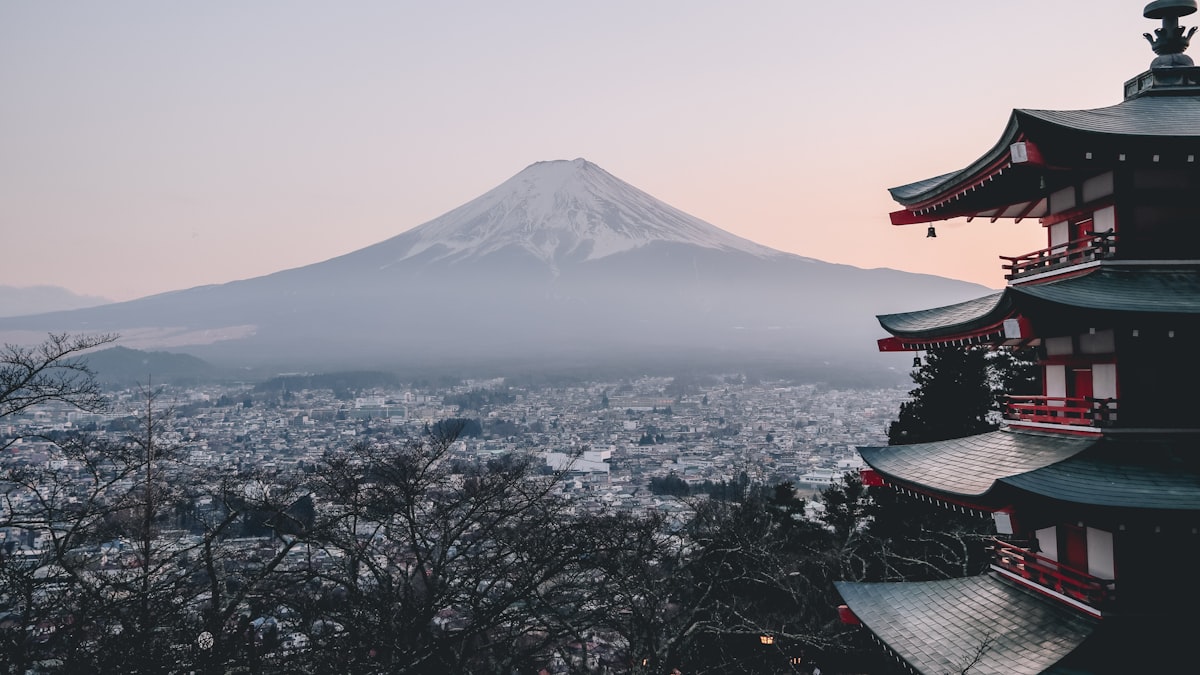
Break up the cities with hot springs and Mt. Fuji views, or Nikko’s shrines and forest.
Kyoto & Nara (Days 6–9)
Temples, bamboo groves, and geisha districts — see Kyoto and a Nara day trip. Ride the shinkansen down from Tokyo.
Osaka, Hiroshima & beyond (Days 10–12)
Osaka’s food scene (Osaka guide), Himeji Castle, then Hiroshima’s Peace Park and the floating torii of Miyajima.
Getting around & saving money
- With this much long-distance travel, price out the Japan Rail Pass — a 2-week trip may justify a 7-day pass for the busiest stretch.
- Use luggage forwarding between cities to travel light.
- Book hotels early for peak seasons — compare on Booking.com and Agoda .
Tips
- Don’t over-pack the schedule — leave slack for weather and rest.
- Shorter on time? Use our 7-day itinerary instead.
- First trip? Read first-timer tips and money in Japan.
Budgeting for 14 days
- A mid-range 14-day trip covering this route typically runs JPY 350,000-550,000 per person excluding flights, given the number of long-distance legs and multi-night city stays involved.
- With this many far-apart stops, the 14 or 21-day nationwide JR Pass is genuinely worth pricing out carefully — see our JR Pass guide, since a route touching Tokyo, Kyoto, Osaka, and Hiroshima is close to the profile where the nationwide pass pays off.
- Luggage forwarding between each multi-night base (roughly JPY 2,000-3,000 per bag per hop) is worth budgeting for on a trip with this many city changes.
Common mistakes on a 14-day itinerary
- Packing every single day with sightseeing — a 14-day trip is long enough that at least one genuinely unplanned or slow day (a park, a cafe, a neighborhood wander) meaningfully improves overall trip satisfaction compared to a nonstop schedule.
- Skipping the Kanazawa detour option without considering it — for travelers who’ve done the classic Tokyo-Kyoto-Osaka route before, swapping a day of repeat sightseeing for Kanazawa’s gardens and old town adds real variety.
- Not confirming the JR Pass exchange process on Day 1 — passes require online purchase in advance and a specific pickup process at designated exchange offices; sort this out early rather than on a day you need to travel.
Adjusting the pace for repeat visitors
First-timers benefit from this itinerary’s breadth, but travelers who’ve already done Tokyo and Kyoto once might use a 14-day trip to go deeper instead — swapping some city time for a Kumano Kodo hike, a longer Hokkaido leg, or extended time in Kyushu, using this route as a template to modify rather than follow exactly.
What to eat along a 14-day route
A route this long naturally covers Japan’s major regional food styles — Tokyo’s sushi and ramen, a Hakone or Nikko ryokan’s kaiseki dinner, Kyoto’s tofu and seasonal cuisine, Osaka’s street food, Hiroshima’s layered okonomiyaki, and Kanazawa’s fresh Sea of Japan seafood if you add that detour — making food alone a strong reason to follow the full itinerary rather than shortening it.